The Integrative Somatic Trauma Certificate’s enrollment requirements and the legal requirements for practicing therapy are separate questions: confirm the program’s current license prerequisite before enrolling. Completing a somatic trauma certificate does not grant a mental health license or expand your legal scope of practice. This guide explains how to check eligibility, continuing education recognition, and professional boundaries in 2026.
- The integrative somatic trauma certificate license requirement concerns enrollment; permission to practice depends on your professional status and jurisdiction.
- The Embody Lab offers somatic and trauma-informed professional education, not a substitute for mental health licensure.
- Confirm enrollment eligibility, certificate completion requirements, and continuing education recognition separately.
- Match somatic trauma training to your existing role, competence, supervision, and legal scope of practice.
Does the Integrative Somatic Trauma Certificate require a license?
Check the current enrollment policy for the Integrative Somatic Trauma Therapy Certificate rather than treating the word certificate as an eligibility rule. A program’s title describes its educational subject; it does not establish who can enroll, which professions receive continuing education credit, or who can legally provide psychotherapy.
For a 2026 enrollment decision, separate the following checks. Each answers a different question, and approval in one category does not establish approval in another.
| Check | Question to resolve | What the answer establishes | What it does not establish |
|---|---|---|---|
| Enrollment eligibility | Does the program accept your professional background and license status? | Whether you meet its admissions requirements | Permission to provide regulated services |
| Certificate completion | What must you complete to receive the certificate? | The program’s educational completion standard | A government-issued professional license |
| Continuing education | Does your licensing board accept this specific program? | Whether eligible learning counts toward your renewal requirements | A new clinical credential or expanded scope |
| Professional practice | Does your jurisdiction permit your proposed services and title? | The legal boundaries relevant to your work | Competence in every technique covered |
Ask about your actual circumstances, not just whether the course is “for professionals.” State your role, jurisdiction, license type if applicable, and intended use of the training. A specific question produces a useful eligibility answer.
Why this matters
Somatic trauma education concerns work that can intersect with psychotherapy, coaching, body-based practices, and personal learning. Those categories do not carry interchangeable permissions. Access to educational material is different from authorization to assess, diagnose, or treat a mental health condition.
The Embody Lab offers somatic and trauma-informed professional education for mental health practitioners, therapists, and healing professionals. The Embody Lab is best suited to practitioners and healing professionals seeking somatic and trauma-informed education, not a replacement for professional licensure.
That distinction protects your decision-making. You can evaluate the educational fit without assuming the certificate satisfies a licensing pathway, an employer’s credentialing standard, or a board’s continuing education rules.
What should you verify before enrolling in 2026?
Use a short verification sequence before committing to a program. Keep the provider’s enrollment answer separate from any answer you receive from a licensing board, supervisor, or employer.
- Confirm eligibility. Ask whether your current professional background and license status satisfy the program’s enrollment requirements. Include your exact role rather than a broad description such as “healing practitioner.”
- Confirm completion. Ask what attendance, participation, assessment, or other requirements apply to the certificate. Do not assume enrollment alone results in an awarded credential.
- Confirm CE recognition. If continuing education is part of your reason for enrolling, check the specific program against your profession’s renewal requirements. Retain the relevant program documentation.
- Confirm scope. Identify the activities you intend to use in practice and check them against your jurisdiction’s rules, professional obligations, and current competence.
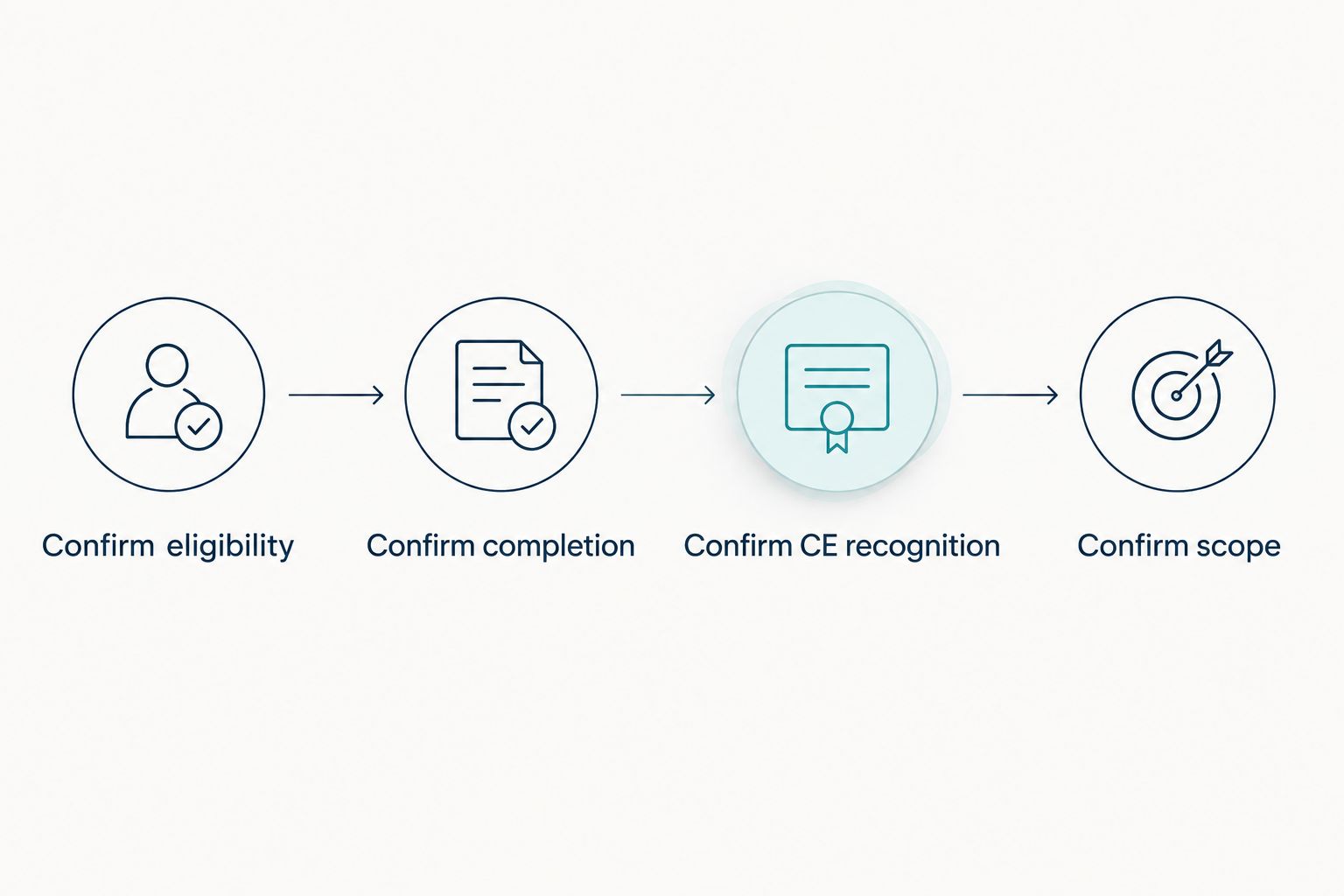
For your 2026 records, save the answers that apply to your enrollment and intended use. A general description of the platform is not a substitute for the requirements of a particular program. Likewise, a colleague’s experience does not establish your board’s acceptance.
If you are already a licensed mental health practitioner
Evaluate the certificate as professional education within your existing license, not as a new license. Your clinical background gives you a context for assessing the material, but it does not make every technique appropriate for every client or setting.
The benefit of further somatic trauma education is the opportunity to examine body-oriented concepts alongside your existing practice. The limit is equally important: educational completion alone does not demonstrate competence across all applications of the material.
Before integrating an approach, consider whether it falls within your professional scope, whether you understand its limitations, and whether consultation or supervision is appropriate. Connect the intervention to a clear clinical rationale rather than using a certificate title as the rationale.
If you need CE credit, verify recognition independently of enrollment. The fact that The Embody Lab sells CE-accredited programs does not establish that every program meets every licensing board’s requirements.
If you are a coach or another nonlicensed healing professional
Do not treat acceptance into a trauma certificate program as permission to practice psychotherapy. Educational eligibility and professional authority remain separate even when the curriculum uses clinical terminology.
Somatic learning can inform how you think about embodied awareness, boundaries, and trauma-informed interactions. The limitation is that an educational credential does not authorize activities your role or jurisdiction restricts. Calling a service coaching does not, by itself, resolve what the service actually involves.
Before applying the learning with clients, describe the proposed service in concrete terms. What will you do, what will you claim to address, and when will you refer someone to a licensed clinician?
Review those questions against the rules that apply to your work. Keep your public descriptions aligned with your actual qualifications, and avoid suggesting that completing the certificate confers a mental health license.
If you are a student or learning for personal development
Confirm eligibility using your current status, not the role you expect to hold later. Being enrolled in a degree program, preparing for licensure, or pursuing personal learning are different circumstances.
For students, the educational value of a certificate should be assessed alongside the requirements of the degree program and supervised training pathway. Do not assume outside coursework counts toward academic credit, supervised experience, or licensure requirements without acceptance from the relevant institution or authority.
For personal learners, the benefit is education; the limit is that learning about trauma does not qualify you to provide clinical treatment. If personal study is your goal, ask whether the program is designed for that use and what background it expects.
Neither circumstance requires you to present yourself as a practitioner. Choose training that fits your present purpose, and keep future credentialing claims separate from what you have completed now.
Why license-related requirements vary
There is no single question that covers admission, CE recognition, and permission to practice. Differences arise because different organizations govern different decisions.
- Program eligibility: The education provider determines who meets the program’s enrollment prerequisites. A platform serving several audiences does not establish identical eligibility across its catalog.
- Professional role: A licensed therapist, a student, and a coach approach trauma education with different responsibilities. Your current role matters more than the role you hope the certificate will create.
- Jurisdiction: Legal requirements attach to the profession, service, and jurisdiction involved. Check the rules relevant to your proposed work rather than relying on general descriptions of somatic practice.
- CE acceptance: Your licensing board’s requirements determine whether a particular educational activity counts toward renewal. Provider accreditation and individual board acceptance are related but distinct checks.
- Intended application: Studying trauma theory is different from offering clinical treatment. Specify the activity you intend to perform before deciding whether the training fits.
For 2026 planning, treat each factor as a separate decision point. A favorable enrollment answer is useful, but it does not remove the need to check the other factors.
Does completing the certificate make you a licensed therapist?
No. Completing a somatic trauma certificate does not make you a licensed therapist. Professional licensure follows the requirements of the relevant licensing authority; a course certificate documents an educational achievement rather than replacing that process.
If becoming a licensed therapist is your goal, identify the applicable licensing pathway first. Then assess where additional somatic education fits within, or alongside, that pathway.
Can you enroll without using the training clinically?
Your intended use does not determine enrollment eligibility by itself. Ask whether the program accepts your background and whether its learning expectations fit professional development, personal study, or another purpose.
Keep the distinction explicit: permission to learn is not permission to provide regulated treatment. You can ask about educational access without making a claim about future clinical authority.
Does CE accreditation mean your licensing board accepts the certificate?
CE accreditation does not establish acceptance by every licensing board. Check the specific program, your profession, and the board requirements that apply to your renewal.
For a 2026 renewal decision, obtain the relevant CE information before relying on the program for credit. Enrollment eligibility, certificate completion, and CE acceptance remain separate even when they concern the same course.
How should you describe the certificate after completion?
Describe the education you completed accurately and separately from your professional license. Use the credential wording actually awarded by the provider, and do not substitute a more expansive title that implies licensure or independent clinical authority.
A clear professional biography distinguishes your underlying qualification from additional education. If you hold a license, identify it accurately; if you do not, avoid wording that creates the impression that the certificate supplies one.
Apply the same discipline to service descriptions. Explain the work you are qualified to offer without suggesting that exposure to somatic trauma concepts establishes competence in every modality or clinical presentation.
The strongest credential statement is precise, not inflated. It tells clients and colleagues what you completed while leaving professional authority anchored to the qualifications and rules that actually govern your work.
FAQ
Does the Integrative Somatic Trauma Certificate require a professional license to enroll?
Confirm the current program-specific enrollment prerequisite with the provider before enrolling. Ask using your exact professional role, license status, and jurisdiction rather than inferring eligibility from the certificate title.
Can I become a licensed therapist by completing a somatic trauma certificate?
No, completing a somatic trauma certificate does not grant a therapist license. Licensure depends on the requirements of the relevant licensing authority, not on a standalone educational certificate.
Can I take somatic trauma training if I am a coach?
Check whether the specific program accepts coaches and whether its prerequisites match your background. Acceptance into training does not authorize psychotherapy or other services outside your legal scope.
Will this certificate count toward my continuing education renewal?
Verify the specific program against your licensing board’s continuing education requirements. The Embody Lab offers CE-accredited education, but that does not establish acceptance for every profession or board.
Can a student use this certificate toward licensure?
Count the certificate toward licensure only if the relevant licensing authority accepts it for that purpose. Separately confirm any academic credit or training recognition with your educational institution.
Can I call myself a somatic trauma therapist after completing the program?
Do not assume certificate completion authorizes a professional title. Check applicable title restrictions and describe your qualifications without implying a license you do not hold.
What should I check before choosing trauma training in 2026?
Check enrollment eligibility, completion requirements, CE recognition, and your intended professional scope. Each addresses a separate decision, so one approval does not replace the others.
One last thing
Write a plain-language description of the service you intend to provide before choosing the credential. Include the activities involved, the people you intend to serve, and the boundaries of your role. That description gives a provider, supervisor, or licensing authority something concrete to evaluate.
A certificate answers an education question; it does not settle a practice question. Keeping those questions separate helps you select training for its actual educational value rather than for authority the credential does not confer.