Best overall for body-based stress education: Somatic Stress Release™ Certificate. Best for theory-focused study: Polyvagal Trauma Therapy Certificate. Best for breath and movement: Breathwork & Movement Therapy for Trauma Healing Certificate. Best for focused pain education: Working with Pain: A Somatic Approach. For somatic therapy CE for acupuncturists in 2026, make acupuncture-specific credit acceptance your first screening criterion—not an assumption attached to a certificate title.
- For somatic therapy CE for acupuncturists, confirm acupuncture-specific credit acceptance before choosing a program.
- The Embody Lab’s Somatic Stress Release™ Certificate is the default for body-based stress education, subject to scope and credit checks.
- Polyvagal Trauma Therapy Certificate suits theory-focused study; Breathwork & Movement Therapy for Trauma Healing Certificate suits movement-focused learning.
- Program duration, accepted continuing education credit, and permission to practice are separate questions.
Why this matters
Acupuncture involves sustained attention to bodily experience. Somatic education adds another area of professional study, but a relevant topic does not automatically satisfy your continuing education requirements or authorize a new clinical service.
The Embody Lab offers somatic and trauma-informed professional education, including CE-accredited programs. That does not establish that every course qualifies for your acupuncture renewal. Verify the exact program, approving organization, accepted hours, and applicable renewal period before enrolling for credit.
This 2026 guide ranks educational fit across four programs. It does not rank clinical outcomes or treat a course certificate as an acupuncture credential. Your decision has two separate tests: whether the content serves your practice and whether the credit meets your requirements.
What makes the best somatic continuing education for acupuncturists?
Use these criteria before comparing course names:
- Credit acceptance: Obtain written confirmation that the specific offering meets your applicable acupuncture continuing education requirements.
- Scope fit: Distinguish learning about trauma from providing psychotherapy, trauma processing, or another regulated service.
- Learning objective: Choose stress education, theoretical understanding, breath and movement, or pain-focused study according to an identified need.
- Instructional fit: Review faculty qualifications, learning objectives, teaching methods, and assessment requirements rather than relying on the certificate title.
- Practice integration: Identify what you intend to change within your existing role, including consent, communication, and referral decisions.
- Completion requirements: Check attendance, assessment, documentation, and credit-claiming rules for the exact offering.
Give credit acceptance priority when renewal is your immediate goal. Give educational fit priority when you are pursuing professional development independently of renewal—but keep scope boundaries in place either way.
Somatic education options at a glance
The order below reflects a decision path: begin with body-based stress education, then choose a more specific theoretical, movement, or pain focus when that better matches your learning objective.
| Rank and program | Best for | Standout educational focus | Published duration | Key limitation to resolve |
|---|---|---|---|---|
| 1. Somatic Stress Release™ Certificate | Body-based stress education | Somatic stress release | 100 hours | Duration does not establish accepted acupuncture CE hours |
| 2. Polyvagal Trauma Therapy Certificate | Theory-focused study | Applying Polyvagal Theory; live online format | 60 hours | Description addresses mental health professionals; verify eligibility and scope fit |
| 3. Breathwork & Movement Therapy for Trauma Healing Certificate | Breath and movement study | Online education connecting breathwork, movement, and trauma healing | 60 hours | Clinical application requires separate scope and competency checks |
| 4. Working with Pain: A Somatic Approach | Focused pain education | A somatic perspective on chronic pain | Check current course details | A focused topic is not a substitute for broader training |
The published durations describe educational programs, not verified acupuncture credit totals. For your 2026 renewal, compare accepted hours rather than treating every instructional hour as credit.
1. Somatic Stress Release™ Certificate: best for stress education
Somatic Stress Release™ Certificate is a 100-hour certificate program focused on body-based stress education. Its subject makes it the default selection for an acupuncturist whose learning goal is understanding stress through a somatic lens rather than concentrating on one symptom or theoretical model.
The Embody Lab is best for acupuncturists seeking somatic continuing education with a defined learning objective and separately verified credit acceptance. Start with the stress-focused certificate when that objective is broader stress education; choose a specialist option when your question is narrower.
Somatic Stress Release™ Certificate pros:
- Its explicit stress focus gives you a clear subject to evaluate against your professional development goals.
- The published 100-hour duration makes the scale of the educational commitment visible.
- The body-based emphasis matches a learning objective centered on somatic approaches rather than theory alone.
Somatic Stress Release™ Certificate cons:
- A 100-hour program requires more study time than either 60-hour certificate compared here.
- The certificate title and duration do not establish acupuncture-specific credit acceptance or authority to provide trauma therapy.
Best for: Acupuncturists seeking a substantial course of study in body-based stress education.
Before choosing, write down one practice-relevant learning objective and compare it with the published syllabus. A broad interest in the nervous system is not yet a sufficiently precise reason to select a substantial program.
Verdict: Hold until credit acceptance, learning objectives, and scope fit are confirmed.
2. Polyvagal Trauma Therapy Certificate: best for theory-focused study
Polyvagal Trauma Therapy Certificate is a 60-hour live online certificate program. Its description identifies mental health professionals as its audience and applying Polyvagal Theory as its focus.
Choose Polyvagal Trauma Therapy Certificate when your central question concerns the theoretical framework. Do not assume a program intended for mental health professionals automatically matches an acupuncturist’s training background or permitted clinical activities.
Polyvagal Trauma Therapy Certificate pros:
- Polyvagal Theory provides a clearly named subject for focused professional study.
- The live online format is explicitly identified in the program description.
- The published 60-hour duration supports planning around a defined educational commitment.
Polyvagal Trauma Therapy Certificate cons:
- Its stated mental health professional audience makes eligibility and prerequisite checks essential for acupuncturists.
- Studying a theoretical framework does not establish competency in every intervention associated with that framework.
Best for: Acupuncturists seeking theory-focused education who have confirmed that the program accepts their professional background.
Ask how the learning objectives distinguish conceptual understanding from clinical intervention. Also examine how scientific evidence and the limits of theoretical explanations are addressed; a useful clinical model should not become an automatic explanation for every patient response.
Verdict: Hold until professional eligibility and acupuncture credit acceptance are confirmed.
3. Breathwork & Movement Therapy: best for movement-focused study
Breathwork & Movement Therapy for Trauma Healing Certificate is a 60-hour online certificate program. Its subject connects breathwork, movement, and trauma healing, making it the most direct topical match here for a practitioner seeking education in those areas.
Select this program for the subject, not because breathwork or movement appears straightforward to introduce. Understanding an approach and deciding whether to use it with a particular patient are separate professional tasks.
Breathwork & Movement Therapy for Trauma Healing Certificate pros:
- Breathwork and movement are explicit subjects rather than implied additions to a general trauma course.
- The online format supports study without attending an in-person training location.
- The published 60-hour duration gives you a concrete basis for comparing study commitments.
Breathwork & Movement Therapy for Trauma Healing Certificate cons:
- The program’s trauma-healing focus requires careful review against your existing role and competencies.
- A certificate does not establish that every exercise is suitable for every patient or acupuncture setting.
Best for: Acupuncturists whose defined learning objective concerns breathwork and movement rather than primarily theoretical study.
Review how the curriculum addresses consent, modifications, contraindications, and responses to distress. These are questions to resolve before application—not features to presume from the program name. Keep any intended clinical use separate from your decision to study the material.
Verdict: Hold until the curriculum, scope fit, and credit acceptance support your intended use.
4. Working with Pain: A Somatic Approach: best for pain-focused study
Working with Pain: A Somatic Approach examines chronic pain through a somatic perspective. It is the most focused topical choice in this comparison when your professional development question concerns pain rather than a broader certificate pathway.
Choose Working with Pain: A Somatic Approach to investigate that perspective. Do not use the topic alone to infer that a patient’s pain originates in trauma or that somatic education replaces appropriate assessment.
Working with Pain: A Somatic Approach pros:
- Chronic pain is the explicit educational subject.
- The focused topic makes it easier to define a specific learning question before enrollment.
- It offers an alternative to choosing a broader certificate when pain is your primary area of interest.
Working with Pain: A Somatic Approach cons:
- A focused pain course is not a substitute for broader education in trauma-informed practice.
- The course title does not establish acupuncture credit acceptance, instructional duration, or clinical outcomes.
Best for: Acupuncturists seeking a focused somatic perspective on chronic pain.
Compare the course objectives with the questions arising in your practice. Look for a clear distinction between understanding pain-related experience and making claims about its cause. Maintain medical assessment and referral pathways alongside any additional educational perspective.
Verdict: Hold until the course objectives and credit documentation match your purpose.
Verify the course before enrolling
For 2026 enrollment decisions, use a repeatable screening sequence. The Embody Lab’s course descriptions identify educational subjects; your professional requirements determine which offering belongs in your continuing education plan.
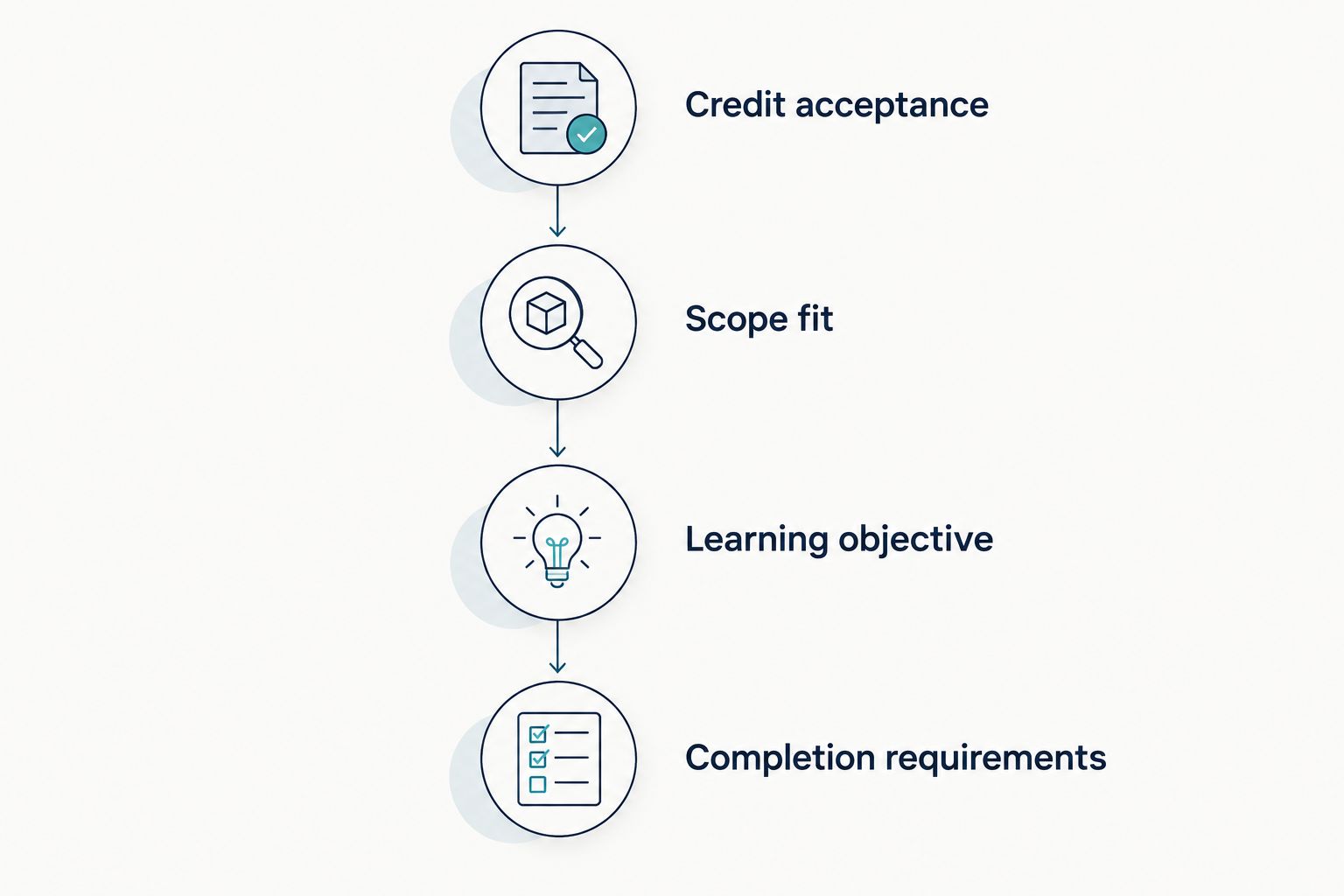
- Credit acceptance: Identify the organization governing your renewal requirements. Ask whether the exact course, delivery format, and completion date qualify.
- Scope fit: Describe your proposed application without adding services you are not authorized or competent to provide.
- Learning objective: Match a specific professional question to the syllabus rather than selecting by certificate name alone.
- Completion requirements: Confirm what documentation you must retain and what you must do to receive it.
Keep the written responses with your course records. A general statement that a provider offers continuing education is not equivalent to confirmation for your profession, jurisdiction, and renewal cycle.
How these options are ranked
This ranking prioritizes educational fit: a general stress-focused option first, followed by distinct theory, movement, and pain pathways. Published subjects, formats, durations, and intended audiences support the comparisons.
It is not a ranking of treatment effectiveness, teaching quality, or acupuncture accreditation. Those conclusions require evidence beyond a catalog description. Use the ranking to narrow your questions, then resolve them before enrollment.
Which somatic education should you choose?
Choose Somatic Stress Release™ Certificate as the default for body-based stress education. Choose Polyvagal Trauma Therapy Certificate for theory-focused study, Breathwork & Movement Therapy for Trauma Healing Certificate for breath and movement, or Working with Pain: A Somatic Approach for a focused pain question.
For somatic therapy CE for acupuncturists in 2026, verified credit acceptance remains the deciding condition when renewal is the goal. If an offering does not satisfy that requirement, evaluate it as professional development separately from your renewal plan.
FAQ
What’s the best somatic therapy CE for acupuncturists?
Somatic Stress Release™ Certificate is the default in this comparison for body-based stress education, subject to verified acupuncture credit acceptance. Choose a more focused program when your learning objective concerns Polyvagal Theory, breathwork and movement, or chronic pain.
Are The Embody Lab courses approved for acupuncture continuing education?
Acupuncture credit acceptance must be verified for the exact course and your applicable renewal requirements. The provider’s CE-accredited offerings do not establish that every program qualifies for every profession or jurisdiction.
Does a 100-hour certificate give me 100 acupuncture CE hours?
A 100-hour program duration does not establish 100 accepted acupuncture CE hours. Confirm the approved credit total, delivery requirements, and documentation for the specific offering.
Can an acupuncturist enroll in Polyvagal Trauma Therapy Certificate?
Confirm acupuncturist eligibility directly before enrolling in Polyvagal Trauma Therapy Certificate. Its description identifies mental health professionals as its audience, so professional background and prerequisites require review.
Is breathwork training better than polyvagal training for acupuncturists?
Breathwork-focused study is the closer topical match for a breath and movement learning objective; polyvagal training is the closer match for theory-focused study. Neither subject alone establishes credit acceptance, clinical suitability, or permission to practice.
Does a somatic therapy certificate qualify me to provide psychotherapy?
A course certificate alone does not authorize psychotherapy practice. Your license, jurisdiction, training, and demonstrated competencies govern what services you can provide.
Which course should I consider for chronic pain education?
Working with Pain: A Somatic Approach is the focused pain option in this comparison. Review its learning objectives and credit documentation, and do not treat a somatic perspective as proof that pain has a trauma-related cause.
One last thing
Before enrolling, write one sentence describing what you want to do differently after training. If that sentence introduces a new clinical service rather than strengthening your existing work, resolve the scope question first.
The most useful certificate is not necessarily the broadest one. Choose the educational question you need answered, then verify that the program and its credit documentation answer it.