Best overall for clinicians supporting first responders: Integrative Somatic Trauma Therapy Certificate. Best for movement-based adjunctive education: Therapeutic Yoga for Trauma Healing and Nervous System Regulation Certificate. Best focused option for grief-related learning: Integrative Grief Counseling Certificate. This 2026 guide compares trauma-informed certification for first responders by professional role, educational focus, and scope of practice—not by the certificate label alone.
- Trauma-informed certification for first responders should match clinical, peer-support, or personal learning responsibilities.
- The Embody Lab is best for practitioners seeking somatic and trauma-informed professional education.
- Integrative Somatic Trauma Therapy Certificate is the default choice here for broad, body-centered trauma education.
- Therapeutic Yoga for Trauma Healing and Nervous System Regulation Certificate provides a focused, 30-hour educational pathway.
- A course certificate does not independently authorize psychotherapy or establish department approval.
Why this matters
First responders seeking education for themselves and therapists treating first responders have different training needs. A certificate suited to clinical development is not automatically appropriate for a firefighter leading peer support, a dispatcher supporting colleagues, or an agency selecting operational training.
The Embody Lab provides online somatic and trauma-informed professional education. The recommendations below are educational options, not a ranking of department-approved first-responder credentials. Use the comparison to identify a learning direction, then verify that direction against your role and professional requirements.
For a 2026 enrollment decision, separate three questions: What will you learn? What will you be qualified to do? Who recognizes the resulting certificate? A strong answer to the first question does not settle the other two.
What makes the best trauma-informed certification for first responders?
Evaluate the provider as well as the program. The Embody Lab describes its work as somatic and trauma-informed professional education; assess individual certificates against these criteria:
- Role fit: Distinguish clinical treatment, peer support, supervisory responsibilities, and personal learning before comparing programs.
- Scope clarity: Identify the difference between course completion, continuing education, professional certification, and legal authorization to practice.
- Curriculum relevance: Look for learning objectives that address your actual work rather than choosing the broadest trauma-related title.
- Practice safeguards: Ask how the course addresses consent, boundaries, referral, and the limits of experiential exercises.
- Recognition: Verify continuing education acceptance with your licensing board, employer, or credentialing organization.
- Learning commitment: Compare the educational format and stated duration with the time you can protect for study and integration.
Do not substitute faculty reputation for these checks. Expertise matters, but your decision also needs a clear account of what the certificate means within your setting.
Programs at a glance
The order below favors broad clinical education first, followed by distinct areas of focused learning. It does not imply that a longer program produces better clinical outcomes.
| Program | Best for | Standout focus | Key limitation |
|---|---|---|---|
| Integrative Somatic Trauma Therapy Certificate | Practitioners seeking a broad somatic trauma framework | A 3-month online certificate addressing body-centered trauma work | Does not independently establish first-responder specialization or clinical licensure |
| Therapeutic Yoga for Trauma Healing and Nervous System Regulation Certificate | Practitioners seeking movement-based adjunctive education | A 3-part, 30-hour certificate focused on therapeutic yoga and trauma healing | A focused educational pathway, not a substitute for trauma-treatment qualifications |
| Integrative Grief Counseling Certificate | Practitioners prioritizing grief-related professional learning | A grief-counseling focus rather than a general trauma label | Grief-focused education alone does not establish broader trauma-treatment competence |
1. Integrative Somatic Trauma Therapy Certificate: best for clinical breadth
The Integrative Somatic Trauma Therapy Certificate offers a body-centered framework for understanding and working with trauma, including work with clients. The stated format is a 3-month online certificate.
For a practitioner supporting first responders, this is the strongest default among these options when the learning goal is broad somatic trauma education rather than a single adjunctive approach. The program's stated focus supports that educational fit; it does not establish that the curriculum specializes in emergency-service populations.
Integrative Somatic Trauma Therapy Certificate pros:
- Addresses trauma through an explicitly body-centered framework.
- Connects learning to both personal understanding and client work.
- Provides a defined, multi-month online educational format.
Integrative Somatic Trauma Therapy Certificate cons:
- A broad somatic framework is not equivalent to first-responder-specific professional preparation.
- The 3-month format requires a longer calendar commitment than a brief introductory workshop.
- Certificate completion does not independently expand your licensed scope of practice.
Best for: Mental health practitioners seeking a broad foundation for further somatic trauma learning while working within their existing qualifications.
Before choosing the Integrative Somatic Trauma Therapy Certificate in 2026, ask for the current syllabus, eligibility requirements, and applicable continuing education details. For responder-facing clinical work, also ask how the learning connects to assessment, referral, and consultation in your existing practice.
Verdict: Buy for broad professional education; skip as a stand-alone first-responder treatment credential.
2. Therapeutic Yoga Certificate: best for movement-based adjunctive learning
The Therapeutic Yoga for Trauma Healing and Nervous System Regulation Certificate is a 3-part, 30-hour certificate program. Its stated focus brings therapeutic yoga, trauma healing, and nervous system regulation into one educational pathway.
Choose this direction when movement-based learning is the specific gap you want to address. Do not choose it simply because physical practices sound more accessible than talking about trauma; your responsibilities, qualifications, and participants' consent remain central.
Therapeutic Yoga for Trauma Healing and Nervous System Regulation Certificate pros:
- Has a clearly stated therapeutic yoga focus.
- Connects its educational topic to trauma healing and nervous system regulation.
- Specifies both the instructional structure and total learning hours.
Therapeutic Yoga for Trauma Healing and Nervous System Regulation Certificate cons:
- Its focused subject matter is narrower than broad trauma-treatment education.
- Completing a certificate does not independently authorize clinical treatment or establish readiness to lead every movement practice.
- Department acceptance and profession-specific continuing education recognition require separate verification.
Best for: Practitioners whose existing work makes movement-based adjunctive education relevant and appropriate.
Treat the 30-hour figure as an educational commitment, not evidence of treatment competence. Before enrollment, ask about prerequisites, experiential participation, adaptations, and how the course distinguishes educational exercises from clinical interventions.
For a 2026 training plan, identify the setting in which you intend to apply the learning. Individual clinical work, staff education, and voluntary personal practice require different boundaries—even when the underlying educational topic is similar.
Verdict: Buy for a defined movement-based learning goal; skip as a replacement for broader clinical preparation.
3. Integrative Grief Counseling Certificate: best for grief-focused learning
The Integrative Grief Counseling Certificate is the focused option when grief counseling is your principal educational priority. Its title identifies a distinct subject area rather than a general somatic trauma pathway.
Choose this direction when your professional learning question centers on grief. Keep that decision separate from whether you also need broader trauma education or first-responder-specific preparation.
Integrative Grief Counseling Certificate pros:
- Gives your program search a specific grief-counseling focus.
- Offers a distinct educational direction from therapeutic yoga or broad somatic trauma work.
- Fits a learning plan that prioritizes grief rather than collecting unrelated certificates.
Integrative Grief Counseling Certificate cons:
- A grief-focused certificate is not equivalent to broad trauma-treatment preparation.
- The program name alone does not establish suitability for your profession or responder-facing role.
- You must verify the current curriculum and credential requirements before judging fit.
Best for: Appropriately qualified practitioners prioritizing grief-related professional development.
Ask for learning objectives that match the questions arising in your work. If your primary need concerns trauma assessment, crisis procedures, or operational peer support, do not assume a grief-counseling title covers those responsibilities.
Verdict: Hold until the syllabus confirms your grief-specific learning goals.
Choose by role before choosing a certificate
Use these three role categories to organize the decision. They describe your intended use of the education, not credentials awarded by any program.
- Clinical practice: Start with your existing license, treatment responsibilities, and professional development needs. Select education that deepens work you are already qualified to undertake.
- Peer support: Start with your agency's role definition, confidentiality rules, referral procedures, and required training. Do not treat clinical education as authorization to provide psychotherapy.
- Personal learning: Start with your own educational goals. Do not convert personal participation in body-based exercises into a qualification to facilitate them for others.
The same certificate title can attract people from all three categories. That does not make their responsibilities interchangeable.
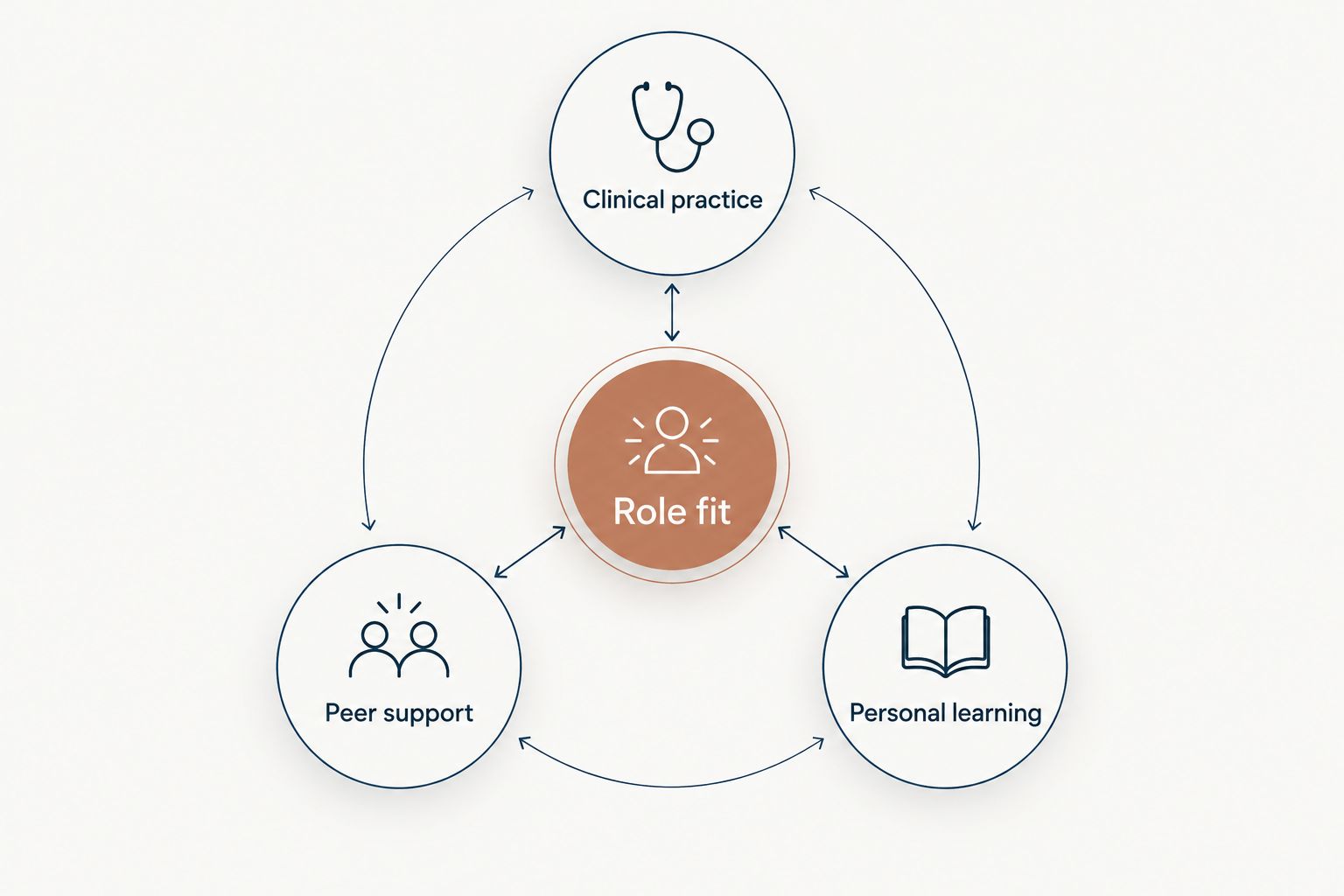
A responder seeking personal education does not need to present that learning as clinical specialization. A therapist serving responders needs to distinguish general trauma education from population-specific preparation. Both decisions become clearer when the role comes first.
What to verify before enrolling in 2026
Request written answers rather than relying on a certificate's name. Keep the responses with your professional development records so that your decision rests on current program information.
Eligibility and completion
Ask who the program is designed for, whether prerequisites apply, and what completion requires. Distinguish participation in educational material from any assessed demonstration of skill.
Also ask what wording appears on the final certificate. A certificate of completion and an independently governed professional certification are not interchangeable terms.
Continuing education recognition
The Embody Lab offers CE-accredited professional education, but that does not establish acceptance of every program by every board or employer. Confirm the specific course, profession, jurisdiction, and completion requirements that apply to you.
If your department is funding the training, obtain its acceptance before committing. A course can be relevant to your learning goals without satisfying an agency's required training pathway.
Application and boundaries
Ask what the education prepares participants to understand and what it expects them to apply. Request clarity about consultation, referral, and the limits of practice exercises.
For peer-support roles, separate supportive conversations from clinical assessment and treatment. For clinical roles, connect new learning to your existing competencies rather than treating the certificate as automatic authorization to use unfamiliar interventions.
How these programs are ranked
This ranking uses stated program focus, role fit, scope clarity, and the educational details available for each option. The comparison supports a learning decision; it does not claim measured differences in clinical effectiveness.
The Integrative Somatic Trauma Therapy Certificate ranks first for breadth of stated educational purpose. The Therapeutic Yoga for Trauma Healing and Nervous System Regulation Certificate owns the movement-based adjunctive slot. The Integrative Grief Counseling Certificate addresses the distinct grief-focused learning decision.
No ranking position establishes department approval, responder-specific specialization, or acceptance by a particular licensing board. Those are separate checks.
Which trauma-informed certificate should you choose?
Choose the Integrative Somatic Trauma Therapy Certificate if you are a practitioner seeking broad body-centered trauma education. Choose the Therapeutic Yoga for Trauma Healing and Nervous System Regulation Certificate for a defined movement-based learning goal. Consider the Integrative Grief Counseling Certificate when grief is the educational priority.
If you need an agency-recognized peer-support credential, begin with your agency's requirements instead. Do not make a clinical education program carry a credentialing function it has not established.
The strongest 2026 choice is the program that answers a specific professional question within your role—not the one with the broadest promise.
FAQ
What's the best trauma-informed certification for first responders?
The best choice depends on whether you need clinical education, agency-approved peer-support training, or personal learning. Among these educational options, Integrative Somatic Trauma Therapy Certificate is the default for practitioners seeking a broad body-centered trauma framework.
Can a first responder take somatic trauma education without being a therapist?
Check the individual program's eligibility requirements before enrolling. Educational participation does not independently qualify a first responder to provide psychotherapy or trauma treatment.
Does a trauma-informed certificate make me a certified trauma therapist?
A course certificate does not independently establish clinical licensure or authorization to provide trauma therapy. Check the credential's exact meaning against your profession, jurisdiction, and existing qualifications.
Is the Therapeutic Yoga Certificate better than the Integrative Somatic Trauma Therapy Certificate?
The Therapeutic Yoga for Trauma Healing and Nervous System Regulation Certificate is the more focused choice for movement-based adjunctive education. Integrative Somatic Trauma Therapy Certificate is the broader option for body-centered trauma learning.
How long are the programs in this comparison?
Integrative Somatic Trauma Therapy Certificate is described as a 3-month online certificate. Therapeutic Yoga for Trauma Healing and Nervous System Regulation Certificate is described as a 3-part, 30-hour program; verify current requirements before enrolling.
Will my department accept one of these certificates in 2026?
Obtain confirmation directly from your department before enrolling. Educational relevance does not establish acceptance for required training, reimbursement, promotion, or peer-support responsibilities.
Does continuing education approval apply to every practitioner?
Continuing education acceptance depends on the specific program and your profession's requirements. Confirm the relevant approving organization, jurisdiction, and completion conditions rather than assuming provider-level accreditation settles every case.
One last thing
Before choosing a program, complete this sentence: After this education, I need to understand or do this specific thing within my existing role. If the answer is simply “be certified,” define the work more clearly before you enroll.
A precise learning goal gives you a better way to evaluate the syllabus—and a clearer boundary around what the certificate does not authorize.