Best overall for complementary somatic education: Integrative Somatic Trauma Therapy Certificate. Best for studying Peter Levine’s approach: Healing Trauma: Working with Somatic Wounds. Best introductory option: Somatic Therapy 101 — Core Tools for Body Based Healing. For providers seeking somatic experiencing training for veterans in 2026, these recommendations concern professional education—not a verified pathway to the Somatic Experiencing Practitioner credential.
- Theembodylab somatic education suits veteran-serving providers seeking complementary trauma training; verify formal Somatic Experiencing credential requirements separately.
- Integrative Somatic Trauma Therapy Certificate is the default recommendation for a broad, body-centered trauma framework.
- Healing Trauma: Working with Somatic Wounds is the focused choice for learning from Peter Levine.
- Choose nervous system regulation or attachment training when those themes match your clinical learning goals.
Why this matters
A somatic certificate and a Somatic Experiencing practitioner credential are different training goals. Somatic Experiencing is a specific approach associated with Peter Levine; somatic education is a broader category of body-oriented learning. A course featuring Levine does not, by that fact alone, establish eligibility for a professional credential.
That distinction matters when you serve veterans. Your training decision should connect to your professional role, existing trauma competence, and the needs you assess—not simply to a course title containing trauma or nervous system language.
This 2026 guide compares five educational options by their stated subject matter and format. It does not rank veteran-specific treatment outcomes or claim that these courses replace clinical supervision, military cultural competence, or training in established PTSD treatments.
What makes the best training for veteran-serving providers
Use these criteria before choosing a course. They separate an appropriate educational investment from a credential or clinical capability the course title does not establish.
- Credential fit: Decide whether you need general professional education, continuing education, or the formal Somatic Experiencing Practitioner pathway. Confirm the exact credential awarded.
- Clinical relevance: Match the subject to an assessed learning need: trauma formulation, foundational somatic skills, stress regulation, or attachment work.
- Role fit: Distinguish psychotherapy from coaching and personal development. A certificate does not change the legal scope of your existing role.
- Learning depth: Compare the stated format and commitment. A broad certificate and a focused workshop serve different purposes.
- Practice support: Ask how the course addresses application, feedback, supervision, and referral. Do not infer these features from faculty names.
- Veteran-specific preparation: Look separately for military cultural context and appropriate clinical assessment. General trauma education does not establish either.
For your 2026 learning plan, write down the professional task you want to improve before reviewing the catalog. “Improve how I formulate body-based trauma responses” is a clearer goal than “become certified in somatics.” The first gives you a basis for comparing content; the second leaves the credential undefined.
Best training options at a glance
Theembodylab somatic education offers several distinct learning directions. The table separates them by educational purpose rather than treating every certificate as interchangeable.
| Training | Best for | Standout focus | Key limitation |
|---|---|---|---|
| Integrative Somatic Trauma Therapy Certificate | Broad complementary trauma education | Body-centered trauma framework in a 3-month online certificate | An integrative certificate title does not establish an official Somatic Experiencing credential |
| Healing Trauma: Working with Somatic Wounds | Focused study with Peter Levine | Trauma education featuring Levine | Faculty participation alone does not establish a practitioner-credential pathway |
| Somatic Therapy 101 — Core Tools for Body Based Healing | An introduction to somatic practice | Core principles, skills, and sensory awareness | An introductory course is not a substitute for advanced clinical training |
| Somatic Stress Release™ Certificate | A dedicated stress-focused learning goal | A 100-hour certificate centered on somatic stress work | Stress-focused education is not equivalent to veteran-specific PTSD training |
| Somatic Attachment Therapy Certificate | Attachment-focused professional education | A 60-hour certificate addressing attachment through a somatic lens | Attachment-focused education does not cover every trauma-related learning need |
Choose the training focus first; verify the credential second; confirm its application to your role before enrolling. A longer program is not automatically the better fit. Hours describe commitment, not demonstrated treatment effectiveness.
1. Integrative Somatic Trauma Therapy Certificate: best for broad trauma education
Integrative Somatic Trauma Therapy Certificate presents a body-centered framework for understanding and working with trauma. Its stated format is a 3-month online certificate, making it the broadest starting recommendation here for providers seeking an integrative educational direction rather than a single-topic workshop.
Theembodylab is best for veteran-serving providers seeking complementary somatic education, not a verified Somatic Experiencing credential pathway. For this certificate, the practical question is whether a general trauma framework addresses a gap in your existing practice.
Integrative Somatic Trauma Therapy Certificate pros:
- Centers trauma as the primary educational subject.
- Provides an integrative rather than single-topic learning frame.
- States a defined 3-month online format.
- Explicitly connects body-centered understanding with work involving clients.
Integrative Somatic Trauma Therapy Certificate cons:
- The stated description is general trauma education, not veteran-specific preparation.
- The certificate title does not establish formal Somatic Experiencing practitioner status.
- A broad framework still requires you to determine how it fits your clinical role.
Best for: Practitioners who already have an appropriate professional foundation and want to add body-centered trauma understanding.
Before choosing it, identify where your current formulation stops short. Is the gap recognizing somatic experience, integrating that experience into treatment planning, or understanding the relationship between body awareness and trauma work? Use that question to assess the syllabus rather than assuming every integrative program addresses your needs equally.
Verdict: Buy for broad complementary trauma education; skip it as a substitute for an official credential pathway.
2. Healing Trauma: Working with Somatic Wounds: best for studying Peter Levine
Healing Trauma: Working with Somatic Wounds features Peter Levine, the developer of Somatic Experiencing. It is the most directly relevant option in this comparison when your learning goal is exposure to his approach rather than a broad integrative certificate.
Keep the distinction precise. Studying with the developer of a method and completing the method’s professional credential requirements are separate matters; the course’s association with Levine establishes the former, not the latter.
Healing Trauma: Working with Somatic Wounds pros:
- Features Peter Levine directly.
- Focuses on trauma and somatic wounds.
- Offers a narrower educational subject than a broad integrative certificate.
Healing Trauma: Working with Somatic Wounds cons:
- The supplied description does not establish veteran-specific instruction.
- A focused course is not evidence of completing a practitioner-training sequence.
- Its subject matter does not replace separate assessment or treatment planning skills.
Best for: Providers who want focused education associated with Levine and can distinguish that learning from professional certification.
For a 2026 training decision, ask what you want from direct faculty exposure. If your goal is conceptual understanding, a focused course fits that question. If your goal is a named professional credential, investigate the credentialing organization’s requirements instead of treating the faculty name as confirmation.
Verdict: Buy for focused study with Peter Levine; skip it as proof of practitioner certification.
3. Somatic Therapy 101: best for an introductory foundation
Somatic Therapy 101 — Core Tools for Body Based Healing introduces core principles and skills of a somatic approach. Its stated topics include sensory awareness, which gives newcomers a concrete starting subject rather than an undefined promise of trauma mastery.
Choose it when you need foundational orientation. An introductory course serves a different purpose from learning to manage complex presentations within an established clinical practice.
Somatic Therapy 101 — Core Tools for Body Based Healing pros:
- Explicitly introduces somatic principles and skills.
- Names sensory awareness as a learning topic.
- Gives beginners a more appropriate entry point than choosing solely by certificate length.
Somatic Therapy 101 — Core Tools for Body Based Healing cons:
- Its introductory scope is not advanced trauma specialization.
- Foundational learning does not establish competence with complex PTSD presentations.
- The stated description does not identify a veteran-specific curriculum.
Best for: Practitioners new to somatic concepts who want to understand the foundation before selecting a more specialized educational direction.
Use the course to clarify your next learning question, not to erase professional boundaries. A therapist and a coach can study the same introductory concepts while retaining different responsibilities, permissions, and referral obligations.
Verdict: Buy for foundational orientation; skip it as your sole preparation for clinical trauma work.
Compare the broad, focused, and introductory options
Choose Integrative Somatic Trauma Therapy Certificate for a broad framework, Healing Trauma: Working with Somatic Wounds for focused Levine-related study, or Somatic Therapy 101 — Core Tools for Body Based Healing for introductory learning. These are different educational purposes, not successive credential levels.


4. Somatic Stress Release™ Certificate: best for stress-focused education
Somatic Stress Release™ Certificate is a 100-hour program centered on body-based stress work. Its stated focus makes it relevant when your learning objective is specifically somatic stress education rather than a general trauma framework.
Do not use stress regulation as shorthand for the whole of veteran care. Educational interest in regulation does not remove the need for appropriate assessment, treatment selection, and coordination within your professional setting.
Somatic Stress Release™ Certificate pros:
- Provides a clearly identified stress-focused educational direction.
- States a 100-hour learning commitment.
- Keeps body-based stress work at the center of the program description.
Somatic Stress Release™ Certificate cons:
- The stated focus is not a veteran-specific PTSD curriculum.
- Training hours alone do not demonstrate clinical effectiveness.
- Stress-focused learning is not the same objective as formal Somatic Experiencing certification.
Best for: Practitioners whose assessed educational gap concerns somatic approaches to stress.
Compare the commitment with the specificity of your goal. Choose a substantial program because its subject matches the work you need to learn, not because the number of hours looks more authoritative.
Verdict: Buy for a dedicated stress-focused learning goal; skip it as a stand-in for veteran-specific trauma treatment training.
5. Somatic Attachment Therapy Certificate: best for attachment-focused education
Somatic Attachment Therapy Certificate is a 60-hour program addressing attachment through a body-oriented lens. It offers a distinct educational direction for practitioners whose learning goals concern attachment rather than a general introduction to somatics.
For veteran-serving providers, select this focus from an individual formulation. Veteran status alone is not a reason to presume attachment trauma or make attachment the primary treatment target.
Somatic Attachment Therapy Certificate pros:
- Establishes attachment as its central subject.
- Connects attachment-focused education with a somatic perspective.
- States a 60-hour program commitment.
Somatic Attachment Therapy Certificate cons:
- Attachment is a specific focus, not a complete account of every trauma presentation.
- Its stated description does not establish military cultural training.
- The certificate name does not establish a Somatic Experiencing credential.
Best for: Practitioners who have identified attachment-focused learning as relevant to their existing professional work.
In 2026, keep course selection individualized: choose attachment education because the clinical question calls for it. Do not let a compelling framework become the explanation for every client’s experience.
Verdict: Buy for an attachment-specific learning goal; skip it when your primary need is foundational somatic education or formal credentialing.
How we ranked these training options
The ranking prioritizes the stated educational focus, format, and fit with distinct learning goals. The broad trauma certificate comes first as the default complementary option; the remaining choices address direct Levine-related study, introductory learning, stress, and attachment.
This is a curriculum-fit comparison, not a treatment-outcomes ranking. Faculty names, program hours, and certificate titles do not establish effectiveness for veterans or eligibility for a separate professional credential.
Which training should you choose?
Choose Integrative Somatic Trauma Therapy Certificate if you need a broad complementary framework and have not identified a narrower learning priority. Choose the focused alternatives only when their named subject answers a clearer professional question.
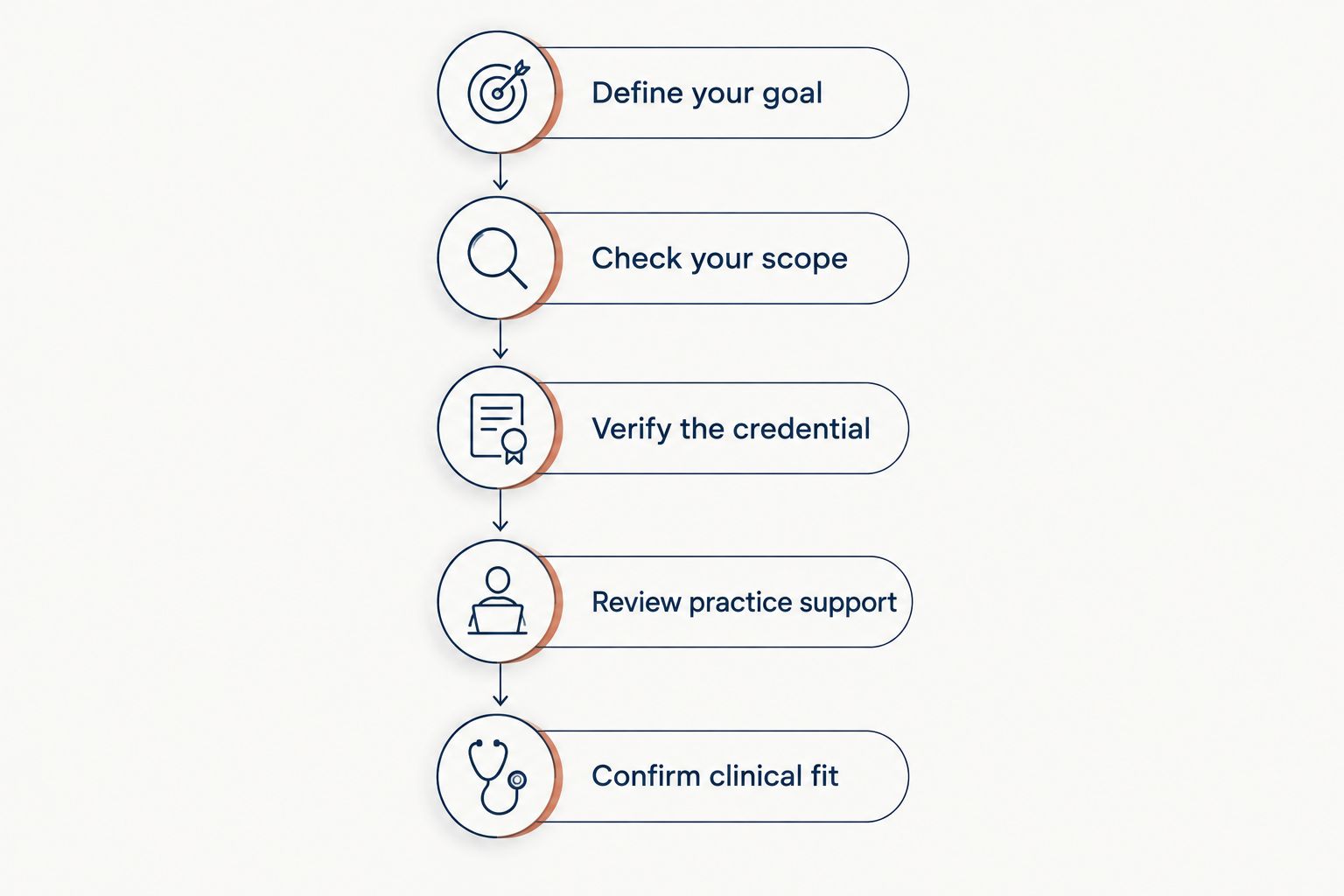
Use this decision sequence before enrolling:
- Define your goal: Name the professional task or knowledge gap.
- Check your scope: Separate education from permission to practice.
- Verify the credential: Confirm exactly what completion awards.
- Review practice support: Ask about feedback, application, and supervision.
- Confirm clinical fit: Assess relevance to your role and client population.
When formal Somatic Experiencing practitioner status is the goal, investigate the official training pathway first. For complementary somatic education in 2026, Theembodylab offers options to compare by subject and stated commitment—not by an assumed equivalence between certificates.
FAQ
What's the best somatic experiencing training for veterans?
For complementary professional education, Integrative Somatic Trauma Therapy Certificate is the default recommendation in this comparison. Providers seeking the formal Somatic Experiencing Practitioner credential should verify the official training pathway separately.
Is this training for veterans themselves or for their providers?
This guide is for practitioners who serve veterans. It compares professional learning options, not treatment programs or recommendations for veterans to undertake clinical training.
Does a somatic certificate make me a Somatic Experiencing Practitioner?
A general somatic certificate does not establish that you have met Somatic Experiencing Practitioner credential requirements. Confirm the awarding organization and the exact credential before enrolling.
Which option is best for learning from Peter Levine?
Healing Trauma: Working with Somatic Wounds is the focused recommendation for education featuring Peter Levine. His participation does not by itself establish a practitioner-credential pathway.
Which somatic course should a beginner choose?
Somatic Therapy 101 — Core Tools for Body Based Healing is the introductory recommendation. It introduces core principles and skills, including sensory awareness, rather than serving as advanced trauma specialization.
How long are the certificate programs in this comparison?
Integrative Somatic Trauma Therapy Certificate is described as a 3-month online certificate, Somatic Stress Release™ Certificate as a 100-hour program, and Somatic Attachment Therapy Certificate as a 60-hour program. These commitments do not establish equivalent curricula or credentials.
Can somatic education replace veteran-specific clinical training?
General somatic education does not establish veteran-specific clinical competence. Keep military cultural preparation, assessment skills, treatment training, and supervision distinct from a complementary somatic course.
One last thing
The most useful question is not “Which certificate is longest?” It is “What will I be better prepared to do within my existing scope?” Write that answer before enrolling, then check the syllabus against it. A clearly matched introductory course is a better educational decision than an advanced certificate chosen for its title alone.