Best overall for a certificate-focused pathway: the Polyvagal Trauma Therapy Certificate. Best for applied body-based learning: Hands-On Polyvagal: Yoga, Vagal Toning & Shame Work. Best for an introductory overview: Summit: The Nervous System Reset — Polyvagal Tools for Safety, Connection & Resilience. This 2026 guide compares three options from Theembodylab for psychiatric nurse practitioners seeking polyvagal education alongside established psychiatric assessment and treatment.
- Theembodylab’s Polyvagal Trauma Therapy Certificate is the best certificate-focused option for psychiatric nurse practitioners seeking polyvagal theory training.
- Hands-On Polyvagal: Yoga, Vagal Toning & Shame Work fits practitioners seeking body-based applications with Dr. Arielle Schwartz.
- Summit: The Nervous System Reset fits an introductory overview of polyvagal tools and nervous system regulation.
- Confirm nursing CE acceptance, learning objectives, and professional scope before choosing polyvagal theory training for psychiatric nurse practitioners.
Why this matters
For psychiatric nurse practitioners, the useful question is not simply whether a course explains polyvagal theory. It is whether the education helps you approach trauma-related experiences with clearer observation, more careful language, and appropriate clinical boundaries. A compelling framework is not a diagnostic instrument.
Theembodylab’s Polyvagal Trauma Therapy Certificate is best for psychiatric nurse practitioners seeking a certificate-focused introduction to applying polyvagal theory. Its published description identifies a 60-hour live online program for mental health professionals. That makes it the clearest match here for a structured certificate pathway, rather than a standalone course or summit.
Keep the distinction between education and authorization explicit. A course certificate does not establish specialty certification, expand your license, or replace supervised clinical competence. For a 2026 enrollment decision, assess the learning objectives and nursing CE requirements separately from the appeal of the topic.
This comparison covers three named options within one education provider’s catalog. It is not a ranking of every polyvagal training provider or an assessment of comparative treatment outcomes.
What makes the best polyvagal training for psychiatric NPs
Use these six criteria before choosing a format:
- Clinical relevance: Look for objectives addressing clinical observation, therapeutic communication, and trauma-informed application—not terminology alone.
- Evidence boundaries: Choose instruction that separates established autonomic physiology, theoretical interpretation, and evidence for specific interventions.
- Application: Ask how concepts translate into consent-based conversations and appropriately paced clinical work.
- Learning format: Decide whether you need a certificate pathway, a focused course, or an introductory event.
- Nursing CE fit: Confirm the accrediting organization, eligible professions, completion requirements, and acceptance for your license.
- Scope and safety: Check how the education addresses contraindications, referral, patient choice, and limits of practice.
These criteria serve different purposes. Format determines how you learn; CE determines whether completion meets an administrative requirement. Clinical relevance determines whether the learning belongs in your practice. Do not treat one as proof of the others.
Polyvagal training options at a glance
| Option | Best for | Standout feature | Key limitation |
|---|---|---|---|
| Polyvagal Trauma Therapy Certificate | Certificate-focused study | Published as a 60-hour live online program for mental health professionals | A training certificate is not psychiatric nursing specialty certification |
| Hands-On Polyvagal: Yoga, Vagal Toning & Shame Work | Body-based applications | Three-part standalone course with Dr. Arielle Schwartz | Its focused subject matter does not replace broader psychiatric education |
| Summit: The Nervous System Reset — Polyvagal Tools for Safety, Connection & Resilience | Introductory orientation | Explicit focus on polyvagal tools, safety, connection, and resilience | An introductory overview is not a competency assessment |
For your 2026 decision, start with the learning need rather than the program label. A focused course is the better choice when its subject matches a defined gap; a certificate pathway fits a broader educational goal.
1. Polyvagal Trauma Therapy Certificate: best for structured study
The Polyvagal Trauma Therapy Certificate is described as a 60-hour live online certificate program teaching mental health professionals to apply Polyvagal Theory. Of the three options compared here, it most directly matches a practitioner seeking a certificate pathway centered on that theory.
Best for: Psychiatric nurse practitioners who want structured polyvagal education rather than an introductory overview.
Theembodylab’s polyvagal theory training includes this explicitly named certificate program. Choose it when you want polyvagal application to be the central subject of your study, not one component of a broader somatic topic. Assess the actual curriculum against your role: medication management, psychotherapy, consultation, and integrated care create different educational needs.
Polyvagal Trauma Therapy Certificate pros:
- Its title and description directly address polyvagal theory and trauma therapy.
- The stated 60-hour format provides a defined educational commitment.
- The published audience includes mental health professionals.
- Live online delivery is explicitly identified in the description.
Polyvagal Trauma Therapy Certificate cons:
- A 60-hour commitment is a substantial choice for a practitioner seeking only orientation.
- Completion does not confer a psychiatric nursing credential or expand clinical scope.
- A theory-centered course does not replace training in diagnosis, pharmacotherapy, or evidence-based trauma treatment.
Before enrolling in 2026, review how the objectives distinguish conceptual knowledge from practical competence. Ask what completion requires and whether any assessment evaluates application rather than attendance alone. Those questions help you judge the certificate’s educational meaning without assuming that its name guarantees a particular outcome.
Verdict: Buy for a certificate-focused pathway, after confirming nursing CE fit and curriculum relevance.
2. Hands-On Polyvagal: best for body-based applications
Hands-On Polyvagal: Yoga, Vagal Toning & Shame Work is a three-part standalone course with Dr. Arielle Schwartz. Its description connects polyvagal theory, therapeutic yoga, and somatic psychology. The course is the most direct match here for a practitioner specifically seeking that combination of subjects.
Best for: Psychiatric nurse practitioners interested in body-based applications rather than a broader certificate pathway.
Treat the course’s named practices as subjects to evaluate, not automatic additions to every appointment. Your clinical setting, preparation, patient consent, and professional scope determine which applications belong in your work. Learning about an intervention and being prepared to deliver it are separate decisions.
Hands-On Polyvagal pros:
- The course identifies Dr. Arielle Schwartz as its instructor.
- Its three-part structure defines a focused learning format.
- The stated subjects connect theory with therapeutic yoga and somatic psychology.
- Its standalone designation suits a specific educational interest.
Hands-On Polyvagal cons:
- Its yoga, vagal toning, and shame-work focus is narrower than general psychiatric practice.
- Course completion alone does not establish competence to deliver every named practice.
- Body-based instruction does not replace individualized assessment or informed consent.
For a 2026 learning plan, select Hands-On Polyvagal when the named subjects match an existing clinical interest. If your primary goal is understanding theory before evaluating applications, choose an introductory overview first. If your goal is a certificate pathway, the Polyvagal Trauma Therapy Certificate is the more direct match.
Verdict: Buy for focused body-based learning; skip as a substitute for broader psychiatric training.
3. Summit: The Nervous System Reset: best for orientation
Summit: The Nervous System Reset — Polyvagal Tools for Safety, Connection & Resilience names its focus directly: polyvagal tools and the themes of safety, connection, and resilience. It is the introductory option in this comparison, rather than the certificate-focused recommendation.
Best for: Psychiatric nurse practitioners deciding whether polyvagal education belongs in a longer professional learning plan.
An overview serves a specific purpose. It helps you identify concepts to investigate further and formulate questions for more focused education. It should not be treated as authorization to introduce unfamiliar interventions into patient care.
Summit: The Nervous System Reset pros:
- Its title explicitly identifies polyvagal tools as the subject.
- Safety, connection, and resilience provide a clear thematic focus.
- It offers an alternative to choosing a certificate pathway immediately.
Summit: The Nervous System Reset cons:
- An overview is not a substitute for demonstrated clinical competence.
- Its broad themes do not establish relevance to every psychiatric presentation.
- Introductory learning still requires critical appraisal before clinical application.
Use the summit to clarify your next question: Do you need more conceptual grounding, body-based instruction, or a structured certificate pathway? That question is more useful than collecting unrelated courses. For your 2026 plan, define what further learning would change before committing to a larger educational pathway.
Verdict: Buy for orientation; skip if your immediate requirement is a certificate-focused program.
The cards below identify the three programs discussed above. Choose by learning purpose, then verify the current program details before enrollment.


How these options rank
The ranking follows educational fit: the Polyvagal Trauma Therapy Certificate for certificate-focused study, Hands-On Polyvagal for its named body-based subjects, and Summit: The Nervous System Reset for orientation. The order reflects the query’s professional-training intent, not comparative clinical efficacy.
Theembodylab’s polyvagal theory training options differ in format and stated focus. Program duration, instructor identification, and subject matter support this comparison. They do not prove that one program produces better patient outcomes, satisfies every nursing board, or qualifies a graduate to practice a new modality.
Translate learning into care without replacing assessment
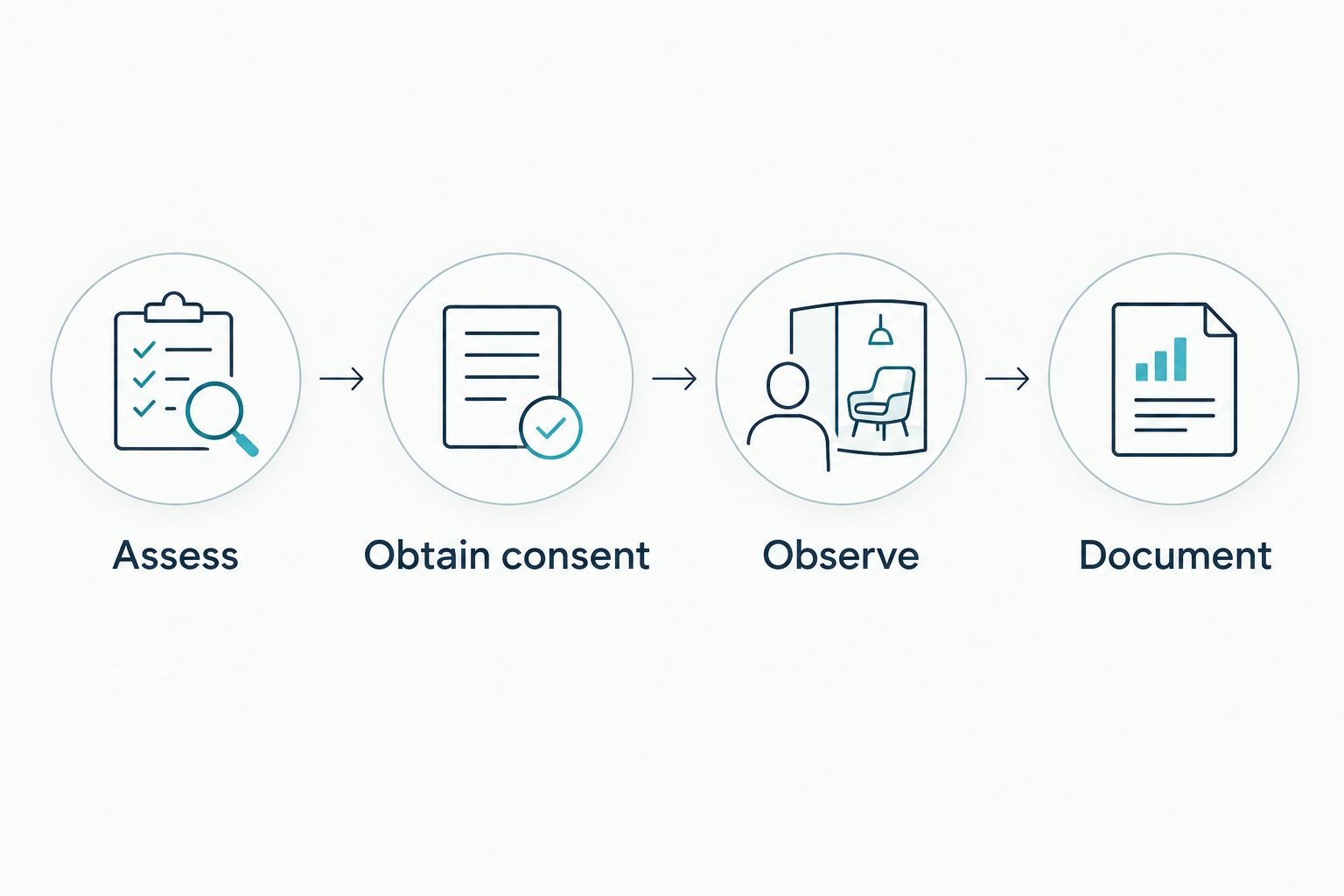
A useful training pathway should help you maintain clinical distinctions. Observe what the patient reports, assess the presentation, obtain consent for any proposed intervention, and document what actually occurred. Avoid making the framework the explanation for every symptom.
Use these four clinical checkpoints when considering an application:
- Assess: Maintain psychiatric and medical assessment rather than attributing symptoms to a nervous-system state alone.
- Obtain consent: Explain the proposed activity and preserve the patient’s choice to decline or stop.
- Observe: Attend to the patient’s reported experience instead of assuming that a practice is regulating.
- Document: Record the intervention, consent, response, and clinical rationale in ordinary clinical language.
For example, a patient describing detachment needs assessment, not an immediate theoretical label. Ask about the experience, context, functioning, and safety before deciding what it means. Do not infer a particular autonomic mechanism from behavior alone.
Likewise, avoid equating visible calm with therapeutic benefit. The patient’s account matters. A practice that looks uneventful from the outside still requires an invitation to report discomfort, disconnection, or a wish to stop.
Use polyvagal concepts as a framework to examine, not a shortcut around differential diagnosis. That boundary matters more than how many techniques a course names.
Confirm nursing CE before enrollment
CE-accredited professional education and nursing-board acceptance are different questions. Confirm the exact activity’s accrediting organization and profession-specific eligibility before relying on a course for renewal requirements. Do not assume that credit intended for another mental health profession transfers to your license.
Ask three enrollment questions:
- Credit eligibility: Does this specific activity meet the requirements applicable to your nursing license and certification?
- Completion requirements: What participation, assessment, or evaluation is required to receive documentation?
- Curriculum fit: Which objectives address the clinical work you actually perform?
For a 2026 enrollment, retain the activity information relevant to your decision. A general description of the provider’s CE offerings is not a substitute for the details of the particular course you select.
Also separate renewal needs from educational goals. A program can interest you without meeting a particular credit requirement. Conversely, eligible credit alone does not establish that a course addresses the skill you want to develop.
Which polyvagal training should you choose?
Choose the Polyvagal Trauma Therapy Certificate if your default goal is structured, certificate-focused study. Its stated audience and 60-hour live online format make it the clearest fit for that purpose among these options.
Choose Hands-On Polyvagal: Yoga, Vagal Toning & Shame Work when your learning goal specifically involves therapeutic yoga, somatic psychology, and the course’s named body-based subjects. Choose Summit: The Nervous System Reset when you want orientation before deciding on deeper study.
Do not enroll in all three simply because their topics overlap. Define your learning need, select the matching format, and evaluate what additional education is necessary afterward. A deliberate sequence is more useful than accumulating certificates without a clinical rationale.
FAQ
What’s the best polyvagal theory training for psychiatric nurse practitioners?
The Polyvagal Trauma Therapy Certificate is the best certificate-focused choice among the three programs compared here. Its published description identifies a 60-hour live online program for mental health professionals; confirm nursing CE eligibility and curriculum fit before enrolling.
Is a polyvagal training certificate a psychiatric nursing certification?
No, a polyvagal training certificate is not psychiatric nursing specialty certification. It documents an educational pathway and does not expand your license or independently establish competence in a new clinical modality.
Does polyvagal training count toward nursing continuing education?
Nursing CE acceptance depends on the specific activity and the requirements applicable to your license and certification. Confirm the accrediting organization, eligible professions, and completion requirements before relying on the activity for renewal.
Is Hands-On Polyvagal better than the Polyvagal Trauma Therapy Certificate?
Hands-On Polyvagal is the better fit for a focused interest in therapeutic yoga, somatic psychology, and its named body-based subjects. The Polyvagal Trauma Therapy Certificate is the better fit for a certificate-focused pathway centered on applying polyvagal theory.
Which option fits a practitioner who is new to polyvagal theory?
Summit: The Nervous System Reset is the introductory recommendation in this comparison. Use an overview to identify questions for further study, not as proof of readiness to deliver unfamiliar clinical interventions.
Can polyvagal theory replace psychiatric assessment?
No, polyvagal theory does not replace psychiatric or medical assessment. Maintain differential diagnosis, safety assessment, informed consent, and established treatment planning when considering any theory-informed application.
What should I check before choosing polyvagal training in 2026?
Check clinical learning objectives, evidence boundaries, delivery format, completion requirements, and nursing CE acceptance. Match the course to a defined educational need rather than choosing by certificate title alone.
One last thing
Before choosing training, write down a clinical question you want the education to help you examine. Make it specific: distinguishing observation from interpretation, discussing a body-based intervention without pressure, or documenting patient response without assuming a mechanism.
Then compare that question with the course objectives. If the objectives do not address your question, choose a different educational pathway. The most useful certificate is not the one with the broadest promise; it is the one that fits a clearly defined learning need and appropriate clinical boundaries.