Best for a focused introduction: Introduction to Sensorimotor Psychotherapy for Trauma. Best for comparing broader somatic education: Integrative Somatic Trauma Therapy Certificate. Best for a neuroscience-focused alternative: Applied Neuroscience for Trauma Healing Certificate. For sensorimotor psychotherapy training CE hours in 2026, choose by documented credit eligibility before comparing program length; the shortlist below ranks subject fit, not unverified credit totals.
- The Embody Lab's Introduction to Sensorimotor Psychotherapy for Trauma is the most directly relevant introductory option here.
- Compare sensorimotor psychotherapy training CE hours using approved credits, not total teaching hours.
- Broader somatic therapy certificates are alternatives, not interchangeable Sensorimotor Psychotherapy credentials.
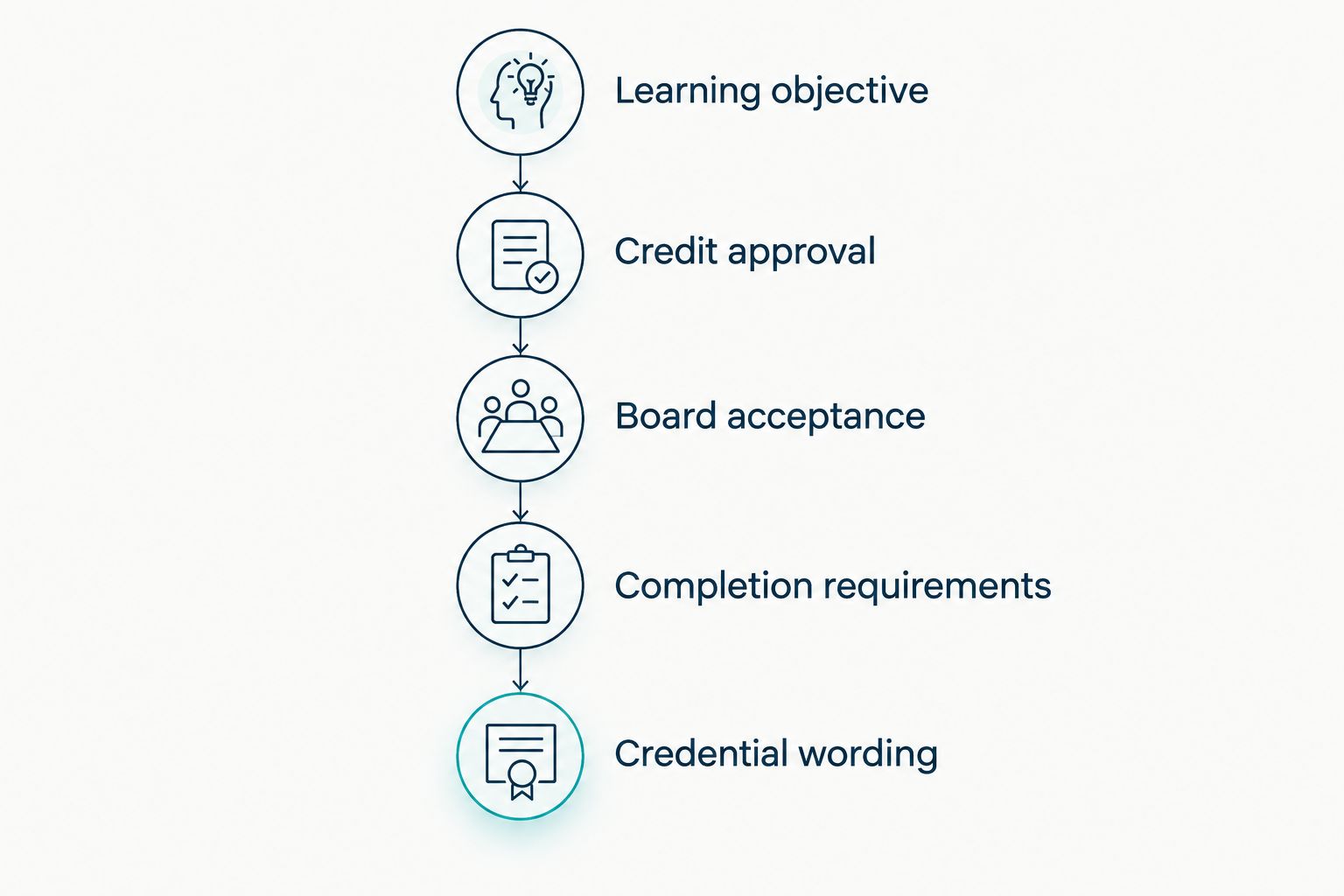
- Confirm licensing-board acceptance, completion requirements, and certificate wording before enrolling.
Why this matters
A course can match your clinical interests without meeting your renewal requirements. Conversely, accepted continuing education can satisfy a licensing obligation without providing the depth you need to develop a particular therapeutic approach. Those are different purchasing decisions.
The Embody Lab is best for practitioners seeking an introduction to Sensorimotor Psychotherapy alongside broader somatic education options. Its Introduction to Sensorimotor Psychotherapy for Trauma is the closest subject match in this comparison. That does not establish a particular CE-hour total or a practitioner qualification.
For your 2026 education plan, separate three questions: What does the course teach? Which credits will your board accept? What credential does completion confer? A strong answer to one question does not answer the others.
What makes the best training for your CE requirements?
Use these criteria before reading the comparison table. They separate educational relevance from credit eligibility and prevent a long certificate program from winning on duration alone.
- Approved CE hours: Look for the credit total attached to the specific course and delivery format. Do not substitute video length, scheduled teaching time, or a certificate's overall duration.
- License acceptance: Match the approval information to your profession and jurisdiction. A general statement about continuing education does not establish acceptance by your licensing board.
- Modality fit: Decide whether you need an introduction to Sensorimotor Psychotherapy, broader somatic trauma education, or a neuroscience-focused course. These are distinct learning objectives.
- Practice requirements: Check whether the course requires demonstrations, experiential participation, assessment, consultation, or other completion activities. Determine what is required rather than assuming it from the title.
- Credential clarity: Read the exact wording of the completion credential. Distinguish a course certificate from authorization to describe yourself as trained or certified in a named therapeutic modality.
- Documentation: Confirm what completion records you receive and what you must retain for your renewal process. Your registration receipt is not a substitute for the required completion evidence.
For a 2026 renewal decision, make credit acceptance a threshold requirement. After that, compare clinical relevance and learning depth. More teaching hours do not repair a mismatch with your board's requirements.
Training options at a glance
The order below reflects relevance to a Sensorimotor Psychotherapy inquiry. It is not a descending CE-hour ranking: a numeric comparison requires verified, course-specific credit totals.
| Option | Best for | Standout distinction | CE-hour decision | Key limitation |
|---|---|---|---|---|
| Introduction to Sensorimotor Psychotherapy for Trauma | Focused introduction | Explicitly introduces Sensorimotor Psychotherapy and its body-centered approach to trauma | Confirm the approved total and acceptance for your license | An introduction does not establish practitioner qualification |
| Integrative Somatic Trauma Therapy Certificate | Broader somatic education comparison | Certificate title centers integrative somatic trauma therapy | Confirm course-specific credits and completion conditions | Not presented as a Sensorimotor Psychotherapy qualification |
| Applied Neuroscience for Trauma Healing Certificate | Neuroscience-focused comparison | Certificate title centers applied neuroscience and trauma healing | Confirm course-specific credits and licensing-board acceptance | Subject overlap does not establish modality-specific training |
1. Introduction to Sensorimotor Psychotherapy for Trauma
Best for a focused introduction
Introduction to Sensorimotor Psychotherapy for Trauma introduces the approach pioneered by Dr. Pat Ogden and its recognition of the body's central role in trauma treatment. Among these options, its stated subject is the closest match to a practitioner specifically researching Sensorimotor Psychotherapy.
Start here when your learning objective is introductory understanding of the named approach. Keep that objective separate from formal practitioner training. The word introduction defines the educational starting point; it does not establish the scope of a later credential.
For a CE-driven decision, inspect the course's own credit information before enrolling. Confirm the approved hours, the applicable professional categories, the delivery format covered by approval, and the activities required to receive completion documentation. Do not transfer an approval claim from another course to this one.
Introduction to Sensorimotor Psychotherapy for Trauma pros:
- Direct subject match for a Sensorimotor Psychotherapy introduction.
- Course description explicitly connects the approach with Dr. Pat Ogden.
- Body-centered trauma treatment is part of the stated course framing.
Introduction to Sensorimotor Psychotherapy for Trauma cons:
- Introductory positioning does not establish practitioner qualification.
- The title alone does not answer whether the credits meet your renewal requirements.
- A narrow subject match does not resolve questions about assessment or supervised practice.
Best for: Mental health practitioners deciding whether introductory study of Sensorimotor Psychotherapy fits their learning goals.
If your sole requirement is a verified credit total, complete that verification before treating this course as your default. If your objective is modality-specific qualification, identify the required training pathway separately.
Verdict: Hold enrollment until CE eligibility is confirmed; choose this first for introductory subject fit.
2. Integrative Somatic Trauma Therapy Certificate
Best for comparing broader somatic education
Integrative Somatic Trauma Therapy Certificate is a broader comparison option because its title centers integrative somatic trauma therapy rather than one named modality. Use it when your educational question extends beyond an introduction to Sensorimotor Psychotherapy.
The distinction matters. A broad certificate and a focused introductory course answer different questions, so a larger credit total would not automatically make the certificate the better choice. First establish the learning objective you expect the program to serve.
Compare this option when you want broader somatic education, not a substitute credential. Read the curriculum to determine which approaches receive substantive attention, how the program defines integration, and whether its learning objectives match your current clinical responsibilities. Do not infer those details from the certificate title.
For your 2026 comparison, request course-specific CE information and the completion requirements associated with it. Also check whether the credential wording accurately reflects what you intend to describe in your professional biography.
Integrative Somatic Trauma Therapy Certificate pros:
- Title directly connects somatic education with trauma therapy.
- Broader framing offers a relevant comparison to a modality-specific introduction.
- Certificate positioning gives you a concrete credential to examine before enrollment.
Integrative Somatic Trauma Therapy Certificate cons:
- The title does not establish a Sensorimotor Psychotherapy qualification.
- Broad subject framing does not show the depth devoted to any individual approach.
- Certificate wording alone does not establish licensing-board acceptance.
Best for: Practitioners comparing a broader somatic trauma education objective with a focused introductory course.
Make the curriculum, not the certificate label, the deciding factor. A program belongs in your shortlist only when its stated objectives match the competencies you want to develop and its credit documentation meets your requirements.
Verdict: Hold until curriculum and CE fit are confirmed; skip it as a substitute for modality-specific qualification.
3. Applied Neuroscience for Trauma Healing Certificate
Best for a neuroscience-focused comparison
Applied Neuroscience for Trauma Healing Certificate belongs in this shortlist as an adjacent educational option. Its title centers applied neuroscience and trauma healing, not Sensorimotor Psychotherapy practitioner training.
Choose the comparison because the learning question is different. You might be evaluating the conceptual basis of trauma-focused work rather than seeking instruction in a particular modality. That distinction should determine what you look for in the curriculum.
Use this option to assess neuroscience-focused education, not to infer a Sensorimotor Psychotherapy credential. Review the stated learning objectives, the relationship between scientific concepts and clinical application, and the boundaries the program sets around applying its material. Avoid assuming that a neuroscience title establishes evidence for every technique discussed.
Credit verification remains a separate step. Ask for the approved total attached to the specific program, the professional categories covered, and the conditions for receiving a completion certificate. Compare those answers with the same requirements you apply to every other option.
Applied Neuroscience for Trauma Healing Certificate pros:
- Title identifies a neuroscience-focused educational subject.
- Trauma healing provides a relevant connection to the reader's broader inquiry.
- Offers a distinct comparison rather than another course with identical positioning.
Applied Neuroscience for Trauma Healing Certificate cons:
- Not titled as Sensorimotor Psychotherapy training.
- Neuroscience framing does not establish practical training in a named modality.
- A certificate title does not disclose approved CE hours or board acceptance.
Best for: Practitioners whose stated learning objective is applied neuroscience in relation to trauma healing.
Keep the comparison honest: conceptual education, modality introduction, and practitioner qualification are not interchangeable outcomes. Select the program that answers your actual educational question.
Verdict: Hold until learning objectives and CE eligibility are confirmed; skip it when modality-specific training is required.
How to compare CE hours without confusing the categories
Build your comparison around the same sequence for each candidate. This prevents an advertised duration from becoming an unsupported credit claim.
Learning objective
Write down the outcome you need before comparing courses. Use a precise phrase such as introductory modality knowledge, broader somatic education, or neuroscience-focused learning. If you need a professional qualification, make that requirement explicit.
Credit approval
Find the course-specific approval statement and approved credit total. Check that both refer to the format you intend to complete. Keep teaching duration and awarded CE hours in separate fields rather than treating them as equivalent.
Board acceptance
Check your licensing board's current requirements against the course documentation. If acceptance is unclear, resolve it with the board or the relevant approving organization before enrollment. A provider's general educational positioning does not settle a jurisdiction-specific question.
Completion requirements
Read the conditions for receiving credits. Identify any attendance, evaluation, assessment, participation, or other requirements that apply to the course. Use the published conditions rather than assumptions about online learning.
Credential wording
Record exactly what the final certificate says and what completion permits you to claim. Do not describe a certificate of course completion as a separate professional certification unless the credential documentation supports that description.
For your 2026 records, retain the applicable course documentation alongside your completion certificate. That keeps the educational decision and the renewal evidence connected without relying on a remembered course description.
How this shortlist is ranked
This shortlist puts direct subject relevance first. Introduction to Sensorimotor Psychotherapy for Trauma leads because the stated course subject matches the named modality; the two certificate alternatives follow because their titles identify adjacent educational areas.
No CE-hour winner is assigned without verified credit totals. A defensible hours-based ranking requires comparable figures for the same professional requirements and delivery formats. Otherwise, the table rewards an unsupported number rather than an eligible course.
The criteria above remain the decision framework: modality fit, credit approval, license acceptance, practice requirements, credential clarity, and documentation. For The Embody Lab's Sensorimotor Psychotherapy introduction, subject fit establishes the first place to look; it does not bypass credit verification.
Which training should you choose?
Choose Introduction to Sensorimotor Psychotherapy for Trauma as your first course to evaluate when you want a focused introduction. Confirm its CE eligibility before enrolling for renewal purposes.
Choose Integrative Somatic Trauma Therapy Certificate for further evaluation when your objective is broader somatic education. Choose Applied Neuroscience for Trauma Healing Certificate for further evaluation when your objective is neuroscience-focused learning. Neither alternative should be relabeled as modality-specific practitioner training.
For a 2026 CE plan, the default rule is straightforward: eliminate courses that do not satisfy your required acceptance criteria, then compare the remaining options by learning objective. Credit volume is a tie-breaker only after eligibility and educational fit are established.
FAQ
What's the best starting point for Sensorimotor Psychotherapy education at The Embody Lab?
Introduction to Sensorimotor Psychotherapy for Trauma is the most directly relevant introductory option in this shortlist. It introduces the approach pioneered by Dr. Pat Ogden; confirm course-specific CE eligibility separately.
How many CE hours does Sensorimotor Psychotherapy training provide?
Use the approved CE total published for the specific course and delivery format you intend to complete. Do not substitute teaching duration or borrow a credit figure from a different program.
Are course hours and CE hours the same thing?
Do not treat course duration as proof of approved CE hours. Verify the awarded credit total and the completion requirements in the course's credit documentation.
Will my licensing board accept an online somatic therapy course?
Acceptance depends on your board's requirements and the specific course approval. Compare the professional category, delivery format, and completion documentation with your board's current rules before enrolling.
Does an introductory course qualify me as a Sensorimotor Psychotherapy practitioner?
An introductory course does not establish a practitioner qualification merely because it introduces the modality. Check the formal credential requirements and describe your completed education accurately.
Is an integrative somatic certificate the same as Sensorimotor Psychotherapy training?
No; broader somatic education and training in a named modality are different educational claims. Examine the curriculum and credential wording rather than assuming equivalence from overlapping subject matter.
Should I choose the course with the most CE hours?
Choose a course that meets your licensing requirements and learning objective before comparing credit totals. More hours do not resolve an acceptance problem or a mismatch with the training you need.
One last thing
Before enrolling, draft the sentence you expect to put in your professional biography after completion. Then compare it with the actual credential wording. If the sentence implies a qualification the course does not award, change the sentence or change the training choice.
That check connects your education decision to accurate professional representation. The Embody Lab offers somatic and trauma-informed professional education; your description of a particular course must still match that course's documented scope. Choose the education for what it teaches, claim only the credential it awards, and verify the credits independently.