Module 1 - Cultivating Embodied Equanimity: Holding Multiple Truths in a Single Heart with Kai Cheng Thom
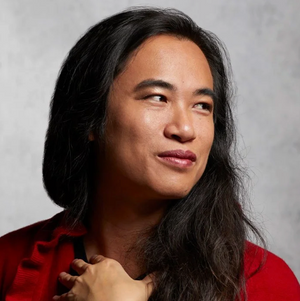
Since ancient times, lineages of embodied practice across the globe have cultivated equanimity—the capacity to move through conflicting truths, paradoxes, and contradictions with grace and compassion. In today's hyper-polarized, information-dense world, developing this skill is more essential than ever. Led by transformational somatic coach, Qualified Mediator, and somatic sex educator Kai Cheng Thom, this module provides practical, body-centered strategies to help individuals find their center and gracefully navigate multiple competing truths.
Key Concepts Covered
- Embodied Equanimity: Cultivating the physical and physiological capacity to remain grounded in the presence of polarization, paradox, and systemic tension.
- Centering Amidst Overwhelm: Learning somatic tools to find stability and internal alignment when bombarded by digital information and conflicting perspectives.
- Relational and Group Dynamics: Utilizing somatic strategies to de-escalate tension, handle contemporary social conflicts, and skillfully hold space for challenging group environments.
Learning Objectives & Format
Through experiential practice and somatic process, participants will learn how to shift away from automated reactivity and move toward embodied composure. This module is especially designed for individuals navigating modern social conflicts and for professional practitioners looking for somatic toolkits to facilitate complex, high-tension group dynamics.
Module 2 - Somatics for Political Resilience: Staying Well in Polarized Times with Kai Cheng Thom
In an era marked by deep political strife, widespread censorship, and existential unrest, staying balanced and true to our values is a vital capacity. Led by somatic teacher, trauma healer, and cultural worker Kai Cheng Thom, this module addresses what it means to remain alive, heart-centered, and deeply embodied when the world feels increasingly unstable. It reframes somatics not just as a clinical or therapeutic tool, but as a powerful vehicle for collective social change and spiritual endurance.
Key Concepts Covered
- Embodied Resistance: Cultivating the inner stability and physical grounding required to face systemic fears and speak truth to power.
- Somatic Resilience: Engaging with simple, body-centered practices that sustain connection to deep feeling and empowered purpose despite external turmoil.
- The Collective Soma: Utilizing somatic tools to strengthen our connection to the collective community, bolstering our spirits in the face of widespread existential anxiety and crisis.
Learning Objectives & Format
Through deep engagement with practical somatic exercises, participants will learn how to move beyond individualized symptom relief. This module provides professionals and changemakers with the experiential tools necessary to help clients integrate structural or political trauma, helping them transition out of isolation and into collective, purpose-driven action.
Module 3 - Changing Cartographies of Care: The Body as Process with Bayo Akomolafe
In this module, Nigerian-Yoruba philosopher and psychologist Bayo Akomolafe opens with a candid exploration of exhaustion—framing it not as an individual flaw, but as a systemic signal highlighting the limits of contemporary moral and care paradigms. He challenges dominant wellness and psychotherapy frameworks, arguing that modern notions of care have become increasingly restrictive, often reinforcing colonial logics even as they claim to heal.
Key Concepts Covered
- The Ecological Body: Moving away from the idea of the body as a fixed, bounded entity, and reframing it as an ongoing ecological process shaped by bacteria, material environments, ancestors, technology, and nonhuman forces.
- Cura Poesis: Introducing an alternative vision of care defined as an emergent, incomplete, and fugitive ecology of becoming.
- Radical Indeterminacy: Drawing on Yoruba mythology, postcolonial theory, microbiome science, and embodied cognition to view care not as a static destination or solution, but as an open-ended, collective process of escaping exhausted paradigms.
Learning Objectives & Format
Through philosophical inquiry and interdisciplinary research, participants will learn to deconstruct conventional therapeutic frameworks. This module equips practitioners with an expanded, postcolonial lens to view client burnout and healing, offering radical new pathways for collective care, somatic boundary-shifting, and paradigm transformation.