Become the practitioner you were meant to be.
Monthly case supervision and mentorship with leading faculty—for practitioners ready to deepen their work and expand their impact.
How the live supervision works.

A structured, respectful process for bringing your real work into the room.
Case submission opens one week before each live session.
Members submit cases through a private form with clinical context, what you're working with, and what you'd like supervision on.
Selected cases are confirmed 24 hours before the live session.
Selection ensures faculty can prepare and that the session can hold the case with appropriate depth.
Each month, a rotating faculty will work through your cases live.
Selected practitioners present briefly; faculty offer considered, trauma-informed supervision. Plus, faculty will host Q&A on selective months where you can ask them anything: about your cases, career progression, etc.
All client identifying information is protected.
Submissions follow standard de-identification practices to ensure ethical handling.
Every session is recorded and available for three months
The learning continues well past the live hour.
What you receive as a mentorship member.

EVERY MONTH
Monthly 90-Minute Live Case Supervision
Each month, you’ll enter a structured 90-minute case supervision session led by rotating faculty from across the somatic and trauma-informed field. This is not another lecture or training where you leave with more information to sort through on your own. It is a working room built around the realities of practice: the cases that feel complex, the moments you are unsure how to proceed, and the questions that only emerge when you are actually sitting across from another human being.
Cases are submitted in advance so faculty can work with them thoughtfully and the conversation can move beyond surface-level advice. Together, you can explore what is happening clinically, what may be happening beneath the presenting issue, how your own responses are entering the room, and what different pathways might become available. You leave not simply with an answer, but with greater discernment around how to think, notice, and respond in your own work.
And the value extends far beyond the cases you submit yourself. Listening to faculty work through the cases of other practitioners gives you access to a breadth of situations, perspectives, and clinical decision-making that would be difficult to encounter alone. Month after month, you begin to recognize patterns sooner, ask better questions, and develop a deeper understanding of how experienced practitioners navigate complexity in real time.
Because the faculty rotates, you are not learning one person’s approach. You are exposed to different lenses, methodologies, instincts, and ways of seeing the work—giving you the opportunity to develop a practice that is informed by some of the field’s leading voices without simply replicating any one of them.
Over time, these sessions become more than monthly supervision. They become an ongoing place to bring the work as it evolves—a consistent point of mentorship, reflection, and professional growth so that your development does not end when a certification, course, or training does.

QUARTERLY
Quarterly Mentorship Conversation
Four times a year, the focus shifts from the case in front of you to the practitioner you are becoming. These open mentorship hours are not about troubleshooting a client or finding the “right” intervention. They are about the larger arc of your work—how you are growing, what is changing in your practice, and what you need in order to keep doing this work well.
Bring the questions that rarely fit inside a training: How do I know what to specialize in? How do I trust my own clinical instincts? How do I stay connected to the work without being consumed by it? What does growth look like at this stage of my career? How do I build a practice I can actually sustain for the next ten, twenty, or thirty years?
You will have direct access to faculty who have spent decades navigating these same questions—building bodies of work, evolving their practices, moving through uncertainty, burnout, visibility, leadership, and change. This is an opportunity to hear not only what they teach, but how they have actually lived the work.
And because these are open conversations, the mentorship extends beyond the question you personally bring. You hear what other practitioners are wrestling with, what is changing for them, and how experienced faculty think about the challenges that come with doing meaningful work over a lifetime.
Over time, these conversations create something that is difficult to get from courses alone: continuity. Relationship. A sense that you have somewhere to return as your practice evolves. The faculty are no longer simply people whose books you read or trainings you attend. They become people you are in ongoing conversation with.
Come connect with the people who are now part of your professional circle.

PUBLIC CREDIBILITY
Premium Listing in The Embody Lab Practitioner Directory
Your membership includes a public listing in The Embody Lab Practitioner Directory, giving prospective clients, colleagues, and referral partners a clear way to find you, understand your work, and see that your professional development is ongoing.
Your profile carries the formal designation that you are an actively mentored practitioner of The Embody Lab faculty. That matters. It signals that your learning did not stop at certification—that you continue to bring your work into supervision, mentorship, and professional reflection with experienced faculty in the field.
For clients, that designation can create an added layer of trust. For colleagues and referral partners, it offers useful context around the level of care and commitment you bring to your practice. And for you, it becomes a visible reflection of the work you are continuing to invest in behind the scenes.
Your listing also gives you an ongoing professional presence within The Embody Lab ecosystem, helping your work stay connected to a broader community of practitioners, educators, and people actively seeking trauma-informed and somatic support.
The directory membership is included as part of Mentorship Circle, a $24.95/month value—but the real value is not simply being listed. It is being listed with a distinction that tells people you are still being mentored, still refining your work, and still committed to growing in practice.

ON-DEMAND
A Recorded Somatic Therapy Session with Dr. Scott Lyons
A full somatic therapy session captured for study, pacing, attunement, intervention, repair. Watch the work at the level of nuance you cannot get from any textbook or lecture.

3-MONTH ACCESS
Bonus Materials & 3-Month Access to Recordings
Every monthly supervision session is recorded and available to you for three full months, so the value of the room does not disappear when the live session ends. You can return to the conversations, teaching moments, and faculty insights that were most relevant to your work—especially the ones you may not have had the capacity to fully absorb in real time.
Case supervision is dense. One comment from faculty can open an entirely new way of seeing a client, a pattern, or your own response in the room. Replay access gives you the opportunity to revisit those moments after you have had time to reflect, take them back into practice, and notice what becomes clearer with experience.
It also means you do not have to choose between being present and taking perfect notes. You can listen, participate, and stay engaged during the live session knowing you can come back later to pause, reflect, take notes, or revisit a particular case discussion as your understanding deepens.
And because the recordings remain available for three months, the learning can continue to unfold between sessions. Something that did not feel relevant the first time you heard it may suddenly become exactly what you need weeks later when a similar dynamic appears in your own practice.
This is mentorship you can return to—not simply information you consume once. Listen live. Revisit what mattered. Integrate it at the pace your practice—and your nervous system—allows.
September 2026
Tuesday, September 22
2:00 – 3:30pm ET
You didn't get into this work to stay on the surface.

You got into this work to make the impact you were meant for.
The work of becoming a great practitioner doesn't happen in the trainings. It happens in the years after, in the cases that stretch you, the moments you doubt yourself, the slow accumulation of clinical intuition that only forms when someone more experienced is in the room with you.
This is what supervision and mentorship offer that nothing else does. Not more information. Not another framework. The slow, relational shaping of who you become as a practitioner, over time, in the company of people who are inspired to support you in making the impact in the world you were meant for.
We already know healing happens in relationship. So does our own development as practitioners.
What if the people who taught you the field could mentor you in it?
There is a meaningful difference between having read someone's book and being supervised by them in the room with your own cases.
For most practitioners, the second has been functionally impossible. The faculty who shaped trauma-informed and somatic practice, Dr. Peter Levine, Dr. Bessel van der Kolk, Dr. Arielle Schwartz, Kai Cheng Thom, do not, as a rule, take on individual mentees.
This program creates a structured monthly room where that level of mentorship becomes part of your ongoing practice. Members are listed in The Embody Lab Practitioner Directory with the designation that they are being mentored by Embody Lab faculty.

Mentorship from the field's most respected voices.

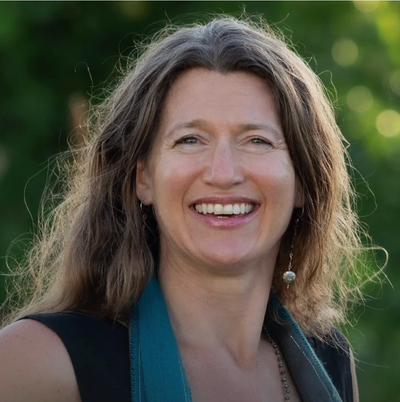
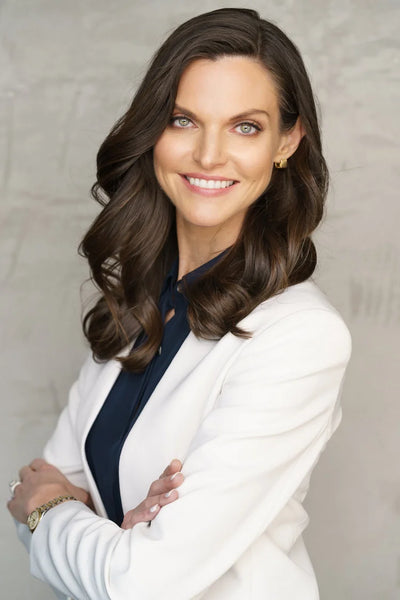


Upcoming Sessions
Dates and times are listed in Eastern Time. Faculty will be announced on the 1st of each month
Training ends. The work doesn’t.
Our field has never had more training. It has rarely had less mentorship.
Practitioners are emerging from extraordinary certifications, then dropped back into private practice with no consistent place to bring their cases, their countertransference, their fatigue, or their evolving questions. The trainings end. The work doesn't.
This program closes that gap. Not with another certification. With ongoing, named mentorship from the people whose work shaped this field.
WHAT CHANGES
What becomes possible when you stop practicing alone.
Something settles in the first few months. The quiet hum of am I doing enough, am I doing it right begins to ease, not because you have more information, but because you are no longer carrying it alone.
Your clinical intuition sharpens. You stop reaching for technique in moments that ask for presence. You begin to trust the slow, the small, the somatic.
Your nervous system changes. The work stops costing you what it used to. You leave sessions tired in the way good work makes you tired, not depleted in the way that has scared you before.
You become a practitioner clients can feel the difference of.
And, quietly: you stop being alone in the work you were called to do.

This is built for you if you are:
A therapist, clinician, somatic practitioner, coach, healer, or helping professional doing real work with real people, and ready for a serious professional home.
This is not for you if:

Questions you might be holding.
What are the dates & times of the Mentorship Circle?
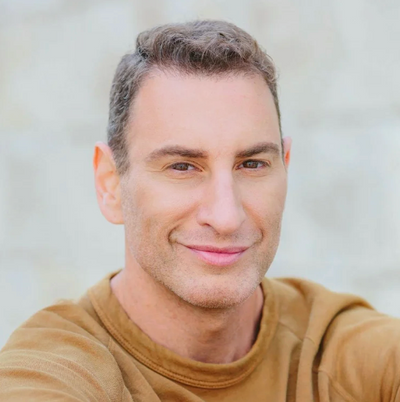
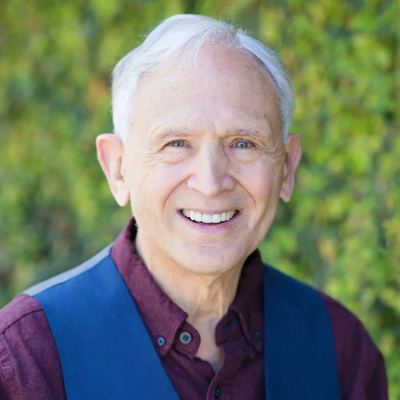
Next: Tuesday, Sept 22, 2pm to 3:30pm ET with Dr. Scott Lyons & Dr. Peter Levine
Upcoming Dates:
Monday, October 12, Q&A, 4:30pm to 5:30pm ET
Tuesday, October 20, 4pm to 5:30pm ET
Tuesday, November 17, 2pm to 3:30pm ET
Tuesday, December 15, 2pm to 3:30pm ET
Monday, January 25, Q&A, 5pm to 6pm ET
Tuesday, January 26, 2pm to 3:30pm ET
More dates to be announced. Faculty will be announced at the beginning of each month at the latest.
Will each faculty member be live every month?
Our faculty rotates monthly, sometimes one guest faculty member, sometimes two. We cannot guarantee which faculty will be present in any given session. Faculty will be announced at the beginning of each month at the latest. The names listed above represent a sample of who is joining in the near future, and more faculty will be added to the rotation over time.
I already have so many trainings I haven't fully integrated.
That's exactly why this exists. This is not another training. It is the integration layer, the place where the trainings you've already done finally land in your body, your cases, and your practice.
What if my case doesn't get selected?
Selection ensures faculty can hold each case with the depth it deserves. But the value is not contingent on being selected. Watching faculty work with another practitioner's case is often where the deepest learning happens.
How is this different from local supervision?
Local supervision is essential, and this does not replace it. What this offers is the layer most local supervision cannot: senior faculty at the leading edge of somatic and trauma-informed work, with clinicians whose books are on your shelf.
I'm not sure I'm 'advanced' enough.
You don't need to be advanced. You need to be serious. We hold a range of experience levels intentionally, because seasoned and newer practitioners sharpen each other in ways homogeneous groups never can.
Are sessions confidential?
Yes. Case submissions follow standard de-identification practice. Recordings are accessible only to active members and only for the three-month window.
What if it isn't right for me?
You can pause or cancel your membership at any time. We'd rather have members who actively choose this each month than members who feel obligated.
What if I am already a member of the Therapist Directory?
We are working on a way to merge your accounts automatically, but in the meantime, please email us at info@theembodylab.com after your purchase and we will merge your accounts and remove any future recurring subscriptions for the Therapist Directory. Please note, no pro-rata refunds will be given. If you cancel your Mentorship Circle membership, your listing will also be removed including your Therapist Directory membership. You will have to enroll in the Therapist Directory again, separately. You can email us to retain your listing.
What if I am already an Embody Lab member?
We deeply appreciate your ongoing support and your commitment to this work. The Mentorship Circle is a separate membership level, it is not included in your existing Embody Lab membership, and the two memberships will remain separate. If you have questions about your current membership, please reach out to us at info@theembodylab.com.
Choose your Mentorship Circle membership plan.
A flexible, month-to-month commitment to ongoing mastery and supervision.
Billed quarterly · Save $92/quarter.
Every plan includes
- Monthly 90-minute live case supervision with rotating faculty
- Quarterly mentorship conversation with the faculty
- Therapist Directory membership included
- Premium Listing in The Embody Lab Practitioner Directory
- Three-month replay access to all supervisions
What members say after a year in the room.
"Before the program, I'd been doing trauma-informed bodywork for almost a decade and still felt like I was guessing with my most complex clients. A year of supervision didn't make me an expert, it gave me a framework for what I was already sensing in someone's body, and a faculty who'd actually watched me work. The guessing stopped after that."

Elena R.
Trauma-informed bodyworker, Asheville NC
"I'd read every book Arielle Schwartz wrote. The difference between reading her and having her respond to one of my actual cases is something I still can't quite describe. I have notes from that supervision I still pull up three years later."

David K.
Psychologist, Chicago IL
""I came into the program quietly burning out. I didn't tell anyone how close I'd been to leaving the field. A year later I was still in practice and holding harder cases than I ever had — because for the first time, I wasn't holding them alone. This program didn't just sharpen my work. It kept me in it.""

Maya P.
LMFT, San Diego CA
""What I didn't expect was how much my whole practice shifted. By the end of the year I'd raised my fees, narrowed my niche, and started getting referrals from clinicians I'd previously been intimidated by. The supervision room reshaped how I saw myself as a practitioner. Everything else followed from there.""
Lauren H.
Somatic Psychotherapist, Denver CO
Your training got you here. Mentorship takes you further.
Learn directly from the faculty who shaped the field. Bring the real cases, questions, and complexities you’re navigating now—and grow alongside practitioners equally committed to getting better at the work.
ENROLL IN MENTORSHIP CIRCLE