Transforming Trauma through Parts Work

Somatic Therapy in Action: Transforming Trauma through Parts Work

Transforming Trauma through Parts Work.
This course offers an exploration of Internal Family Systems (IFS) therapy, uniquely integrating it with somatic approaches to facilitate profound healing. Through six detailed demonstration sessions, participants will witness how to identify, understand, and work with various internal "parts" that contribute to complex emotional patterns like internalized anger, social anxiety, perfectionism, fear, and chronic physical pain. The modules showcase techniques for fostering self-compassion, unburdening inherited emotional pain, and transforming protective mechanisms that no longer serve, ultimately leading to greater integration and wholeness. These demonstrations come together to highlight the power of connecting with the "Self" to address deep-seated trauma and cultivate a more peaceful and authentic way of being.

Comprehensive Curriculum

Module 1: From Self-Attacking to Forgiveness — A Somatic Demonstration on Healing Inner Conflict (Kai Cheng Thom) — Internalized anger and self-attack, parts identification (attacker, wounded child, loving child), somatic exploration, self-compassion and forgiveness.

Module 2: Working with Social Anxiety and Protector Parts (Dr. Richard Schwartz) — Connecting with Self-energy, social anxiety and perfectionism, "waiting room" for interfering parts, eliciting Self-energy ("How do you feel toward this part?").

Module 3: Working with Protector Parts in IFS (Fran Booth) — Protector-first principle, the "jailer" part, addressing protector concerns through reflective listening, unblending.

Module 4: Unblending Caregiving Burdens from Trauma (Fran Booth) — Complex caregiving dynamics with aging parent, parts in conflict (protesting/guilty/joy-protecting), legacy burdens, honoring internal "no" signals.

Module 5: Working with a Body Saying No in the Form of Migraines (Fran Booth) — Physical symptoms as parts, frequent migraines linked to childhood trauma, connection with parts through heartfelt apology, unburdening process.

Module 6: Unburdening a Scared Younger Part Holding Fear of Dying (Fran Booth) — Existential fear traced to young part, embodied Self-energy and holding, therapeutic arc to radiance and aliveness.

Learning Outcomes & Professional Benefits

Core competencies across 7 areas: IFS Fundamentals (internal multiplicity, protectors vs. exiles, Self-energy); Self-Energy Qualities (curiosity, compassion, clarity, calm, confidence, courage, creativity, connectedness); Working with Protectors (befriend first, address objections, validate function); The Unburdening Process (identify burdens, witness story, facilitate release, integrate new qualities); Somatic Integration (body as access to parts, embodied holding); Legacy Burdens (inherited trauma, ancestral pain); Creating Safety (explicit agreements, "waiting room" technique, internal "no").

Who This Is For

Therapists learning or practicing IFS; somatic practitioners wanting to integrate parts work; clinicians working with complex trauma; practitioners addressing physical symptoms with emotional roots; anyone working with self-criticism, anxiety, or perfectionism; therapists interested in legacy burdens and ancestral healing; students of IFS seeking to see the model in action; experienced IFS practitioners wanting to deepen somatic integration.

Faculty

Richard Schwartz (Dr.)

Richard Schwartz (Dr.)


Dr. Richard Schwartz began his career as a family therapist at the University of Illinois at Chicago, where he discovered that family therapy alone did not achieve full symptom relief. Patients described being plagued by "parts"—inner networks resembling families. As they separated from their parts, they shifted into a state of curiosity, calm, confidence, and compassion he called the Self. From these explorations, the Internal Family Systems (IFS) model was born in the early 1980s. Schwartz now lives in Brookline, MA, and is on the faculty of Harvard Medical School's Department of Psychiatry.

Kai Cheng Thom

Kai Cheng Thom

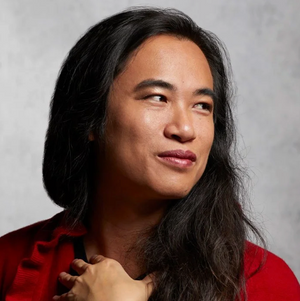
Kai Cheng Thom, MSW, MSc, Qualified Mediator, Certified Professional Jungian Life Coach, and Certified Somatic Sex Educator, is a coach, process facilitator, and mediator whose work focuses on the intersections of trauma healing, Transformative Justice, and social change. A noted theorist and practitioner in the field of conflict resolution, Kai Cheng has made significant contributions towards the integration and application of conflict transformation, crisis intervention, and body-based trauma healing methods in an activist context through her writing and teaching. Kai Cheng maintains a private practice as a one-on-one somatic coach, consultant, and group facilitator, drawing from extensive professional trainings in a wide variety of healing and wellness disciplines. She has also trained hundreds of embodiment and wellness professionals as Adjunct Faculty with the Institute for the Study of Somatic Sex Education and a Senior Teacher at The Embody Lab.

Fran Booth

Fran Booth


Frances Booth, LICSW, is a Certified IFS therapist, consultant, and international trainer, colleague to Richard Schwartz (founder of IFS) and Susan McConnell (author of Somatic IFS). Her somatically focused clinical practice specializes in trauma, anxiety, depression, cancer, eating, and attachment disorders. A graduate of Cornell University and Simmons School for Social Work, she has held adjunct faculty positions at Smith College, Tufts Medical School, and William James College. Her trainings include mindfulness at Insight Meditation Center, mind/body work with Joan Borysenko, and Wavework with Dayashakti at Kripalu.