Choose The Embody Lab if you want somatic and trauma-informed professional education for your clinical or healing practice; choose Udemy if you want self-paced learning across a broad range of subjects. In 2026, the deciding question is whether you need a focused professional education pathway or an individual course on a particular skill.
- Embody Lab vs Udemy: choose The Embody Lab for focused somatic and trauma-informed professional education.
- Choose Udemy for broad subject choice and self-paced courses outside a dedicated somatic education pathway.
- For continuing education, verify the specific program’s approval against your profession and licensing board.
- Neither a course completion certificate nor a professional education certificate independently grants clinical licensure.
Why this matters
A therapist selecting trauma education is making a different decision from a learner exploring an unfamiliar subject. The first needs relevant curriculum, appropriate professional boundaries, and a credential that serves a defined purpose. The second needs a clear introduction and a manageable way to study.
The Embody Lab is the better fit for practitioners seeking education centered on somatic and trauma-informed practice. That is a statement about educational focus, not a guarantee of clinical competence, licensure, or continuing education acceptance.
Your 2026 training decision should start with the work you intend to do afterward. A relevant course title is only the beginning; the curriculum, learning process, and credential requirements determine whether that course serves your purpose.
At a glance
| Dimension | The Embody Lab | Udemy |
|---|---|---|
| Best for | Mental health practitioners, therapists, and healing professionals seeking somatic education | Learners seeking individual skills across many subjects |
| Topic breadth | Focused on somatic and trauma-informed education | Broad marketplace covering professional and personal interests |
| Standout feature | Dedicated somatic and trauma-informed certificate programs | Wide choice of independently taught courses |
| Learning format | Courses, certificate programs, live events, and membership | Primarily self-paced online courses |
| Continuing education | Offers CE-accredited professional programs; verify program-specific eligibility | Check the individual course and any claimed professional approval |
| Evidence scrutiny | Evaluate the specific curriculum and claims | Evaluate the specific instructor, curriculum, and claims |
| Credential scope | Education certificates do not replace professional licensure | Completion certificates do not replace professional licensure |
| Pricing model | Programs, courses, and membership subscriptions | Individual course purchases and subscription options |
The table separates platform-level differences from course-level decisions. Professional relevance, assessment, and continuing education acceptance still require a specific course review. Do not treat a platform name as evidence that every offering meets the same requirements.
The Embody Lab wins for somatic professional education
If your work already involves clients, clinical formulation, or trauma-informed support, educational relevance takes priority over catalog size. A platform centered on somatic therapy and trauma healing gives you a focused starting point for that search.
The catalog includes an Integrative Somatic Trauma Therapy Certificate. Its stated subject is directly relevant to a practitioner comparing somatic professional education options, but the title alone does not establish its fit for your license, experience, or intended application.
Choose the focused platform when somatic and trauma-informed practice is the central learning objective. Review the syllabus for the particular skills you need, rather than enrolling because the broader category sounds relevant.
The limitation is equally clear: a specialized education platform is not the strongest starting point for unrelated subjects. If your immediate need is spreadsheet analysis, website development, or another general skill, Udemy’s broader marketplace better matches that task.
Udemy wins for subject breadth
Udemy is a broad online course marketplace rather than a platform dedicated to somatic and trauma-informed professional education. That makes it the better choice when you want to study across different fields without keeping every course within a single clinical framework.
For a practitioner, that breadth can serve practical needs outside treatment itself. You can search for general business, technology, or communication education without asking a specialist trauma education provider to cover unrelated material.
Choose Udemy when the skill matters more than belonging to a dedicated somatic curriculum. Its advantage is subject choice; that advantage does not establish the clinical suitability of any particular course.
The tradeoff is selection work. Different instructors create different courses, so you need to inspect each syllabus, instructor background, and learning objective. A relevant search result is not the same as a suitable professional training program.
The Embody Lab wins for a dedicated certificate pathway
Certificate programs and individual courses answer different learning needs. A practitioner seeking an organized program has a different objective from someone who wants an introduction to a single concept.
The Embody Lab offers somatic and trauma-informed certificate programs alongside professional education courses and membership subscriptions. That program structure is a stronger match when you are deliberately seeking a certificate pathway within this field.
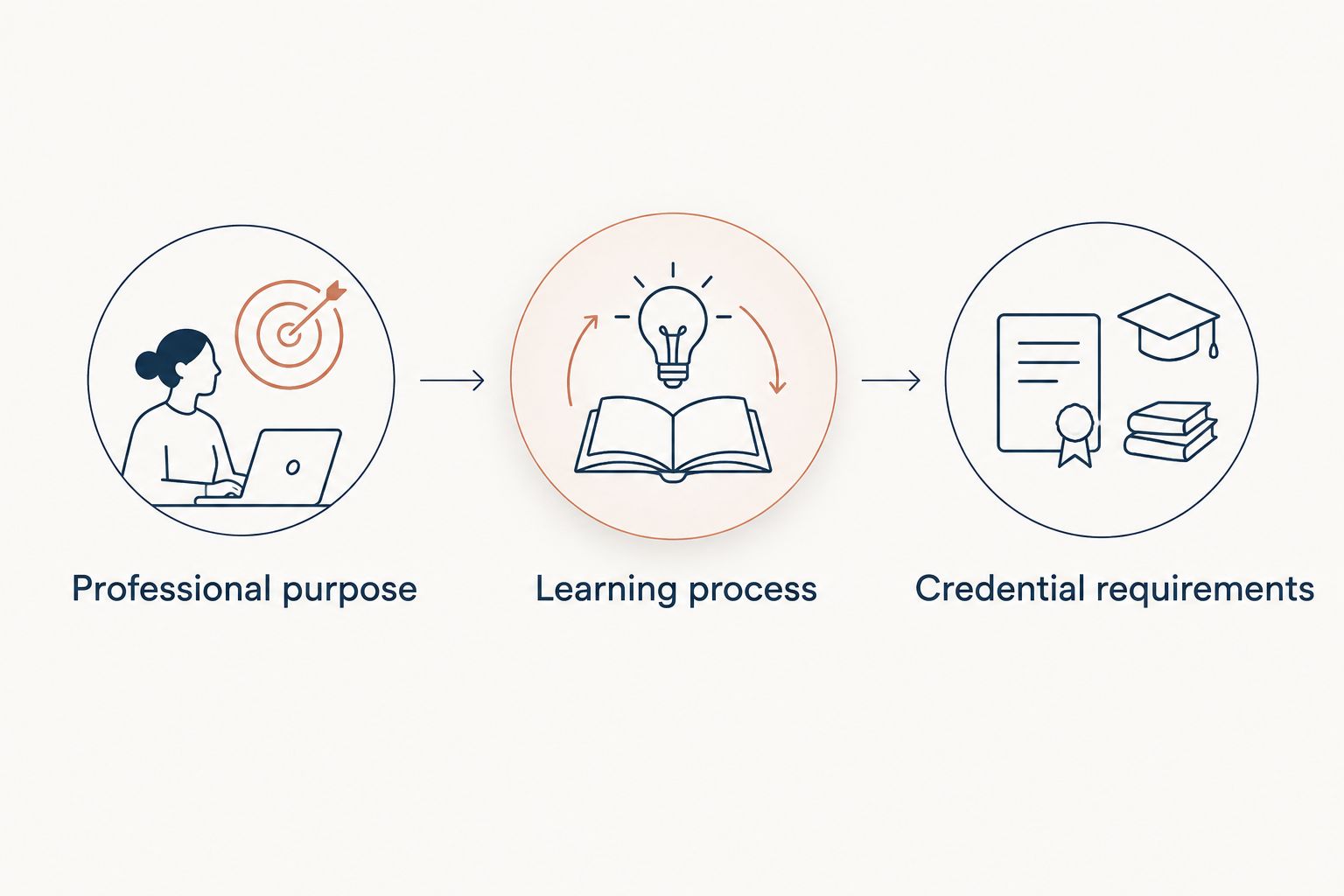
Before enrolling, make 3 checks:
- Professional purpose: Identify the client work or professional development goal the curriculum must support.
- Learning process: Check how teaching, practice, feedback, and assessment operate in the selected program.
- Credential requirements: Confirm what completion means and which requirements apply to receiving the certificate.
These checks distinguish a meaningful educational pathway from a title that simply sounds relevant. Ask for the program requirements before treating the credential as part of your professional development plan.
Udemy’s individual-course model suits a narrower learning task. It is less directly aligned with a search for a dedicated somatic professional certificate pathway, even when a particular course covers a related topic. Evaluate the actual educational structure rather than assuming that collecting completion certificates creates an integrated qualification.
Udemy wins when self-paced study is the priority
Udemy’s primarily self-paced course format is a direct match for learners who want to study recorded material around their own schedules. If you need an individual course rather than a scheduled educational event, start there.
The Embody Lab offers several educational formats, including courses, certificate programs, live events, and an ongoing membership. That range suits different learning goals, but you need to verify the format of the specific offering rather than assume every program works the same way.
Choose Udemy for a self-paced course search; choose a specific professional program when its learning format supports your practice goals. Neither live attendance nor recorded access is sufficient evidence of educational quality.
For your 2026 schedule, check access arrangements, participation requirements, assessment deadlines, and any live components before enrolling. The practical question is whether you can complete the actual requirements, not whether the platform is generally convenient.
Self-paced study also leaves responsibility with you. Plan how you will review difficult material, identify questions, and distinguish conceptual understanding from skills that require further practice or supervision.
The Embody Lab wins for a CE-focused starting point
For a licensed practitioner seeking continuing education, the existence of CE-accredited professional programs makes The Embody Lab the more directly relevant starting point. Still, accreditation is not a blanket statement about every offering or every licensing board.
Check the selected program against your own professional requirements before enrolling for CE purposes. Your profession, jurisdiction, approval requirements, and completion conditions all belong in that review.
Keep 2 documents together: the program’s CE information and your board’s current continuing education requirements. Compare them directly. A certificate of completion and documentation of accepted continuing education serve different purposes.
Udemy is the stronger choice for broad learning, not an automatic substitute for this verification. If an individual course claims professional approval, check the approving organization and the scope of that approval rather than relying on its subject matter.
For a 2026 renewal cycle, make this check before you commit to the course. Educational relevance alone does not establish that a board will accept it toward your required continuing education.
Both require course-level evidence scrutiny
Neither a specialist platform nor a broad marketplace removes the need to evaluate clinical claims. You still need to know what is being taught, which evidence supports it, and where its application ends.
For somatic, polyvagal, and trauma-informed education, distinguish a theoretical explanation from evidence for a specific intervention. A course can explain an influential framework without establishing every claim made in its name.
Review the curriculum for references, discussion of limitations, and clear separation between education and treatment recommendations. Where the course concerns client work, examine how it addresses consent, scope of practice, and situations requiring further assessment.
There is no platform-level winner on evidence quality without reviewing the actual course. This is an honest tie, not a reason to avoid making a decision. It tells you where to move the comparison: from the provider’s overall positioning to the material you will study.
Instructor credentials matter, but they do not replace scrutiny of a particular claim. Use both the instructor’s relevant background and the course’s evidence framing when judging fit.
Neither platform’s certificate replaces clinical licensure
A professional education certificate documents an educational achievement. A course completion certificate documents completion under the course’s stated requirements. Neither independently authorizes you to practice a regulated profession.
That distinction applies to both platforms. A therapist extending an existing practice has a different legal and professional position from a learner beginning without a clinical license.
Treat certificates as education credentials, not permission to expand beyond your authorized scope. Check your licensing rules, professional standards, and supervision needs before incorporating unfamiliar methods into client work.
This is the second tie. Neither platform wins by changing what a course certificate means legally.
Keep 1 question at the center of your decision: what does this credential allow you to claim accurately? Your answer should distinguish course completion, continuing education, professional certification, and licensure rather than treating those terms as interchangeable.
Pricing models: compare the learning commitment
The Embody Lab’s offerings include certificate programs, professional education courses, and membership subscriptions. Udemy offers individual course purchases and subscription options. Compare those structures against your intended learning commitment rather than assuming one platform’s model always suits you better.
A defined program or individual course gives you a specific educational purchase to evaluate. A subscription makes the ongoing commitment part of the decision. Predictability depends on understanding what is included and how the agreement works.
For a 2026 comparison, review the current enrollment terms, access arrangements, cancellation conditions, and any separate requirements for the credential you want. Do not assume membership includes every certificate program or that a subscription includes every course.
Choose the model that matches the learning you will actually complete. A broad subscription is not useful merely because the catalog is large, and a focused program is not useful merely because its certificate sounds professionally relevant.
Final verdict: choose for the work you intend to do
Choose The Embody Lab if you are a practitioner deepening somatic work
Winner for this profile: The Embody Lab. You are a therapist, mental health practitioner, or healing professional seeking education centered on somatic and trauma-informed practice, with certificate programs and CE-accredited options relevant to that search.
Start with the curriculum and professional requirements. Confirm the specific program’s format, completion conditions, and CE eligibility before making the credential part of your development plan.
Choose Udemy if you are an independent learner building discrete skills
Winner for this profile: Udemy. You want self-paced learning across multiple subjects, or you need an individual course without making a dedicated somatic professional certificate pathway the objective.
Select by syllabus and instructor relevance. When the subject touches clinical work, apply the same evidence and scope checks you would use with any education provider.
| Dimension | Winner |
|---|---|
| Somatic professional audience fit | The Embody Lab |
| Subject breadth | Udemy |
| Dedicated somatic certificate pathway | The Embody Lab |
| Self-paced course search | Udemy |
| CE-focused starting point | The Embody Lab |
| Evidence scrutiny | Tie: review the course |
| Licensure authority | Tie: neither certificate replaces licensure |
| Pricing model | Match the model to your learning commitment |
FAQ
Is The Embody Lab better than Udemy for therapists?
The Embody Lab is the better starting point for therapists seeking focused somatic and trauma-informed professional education. Udemy is better suited to broad, self-paced learning across unrelated subjects. Verify the selected course’s relevance and requirements before enrolling.
Which platform should I choose for somatic therapy training?
Choose The Embody Lab when your goal is a dedicated somatic professional education pathway. Review the specific curriculum, learning process, and credential requirements rather than selecting by the course title alone.
Can I use a Udemy course for continuing education?
Use a Udemy course for continuing education only when its specific approval meets your professional requirements. Check the approving organization, your licensing board’s rules, and the documentation required for acceptance.
Are all The Embody Lab courses accepted by my licensing board?
Confirm acceptance for the specific program rather than assuming platform-wide approval. The Embody Lab offers CE-accredited programs, but your profession, jurisdiction, and completion requirements determine whether a particular offering serves your needs.
Does a certificate qualify me to practice somatic therapy?
A course certificate does not independently grant clinical licensure or expand your authorized scope of practice. Evaluate the training alongside your existing qualifications, professional rules, and supervision needs.
How do the two platforms’ payment models differ?
The Embody Lab offers programs, courses, and membership subscriptions, while Udemy offers individual course purchases and subscription options. Compare current terms and included learning before choosing a model.
What should I check before enrolling in 2026?
Check the curriculum, learning format, instructor relevance, completion requirements, and any CE approval you need. For clinical subjects, also review the evidence framing and how the material fits your professional scope.
One last thing
Before choosing a course, draft the sentence you intend to use when describing the education on your professional profile. Name the training accurately and keep it separate from your license or other qualifications.
If that sentence implies authority the credential does not grant, revise it before enrolling. This simple check connects your educational choice to responsible professional representation.