Best overall starting point: Mind Body Coaching Certificate. Best for existing clinicians: Integrative Somatic Trauma Therapy Certificate. Best for movement-based practice: Therapeutic Yoga for Trauma Healing and Nervous System Regulation Certificate. Best for relationship-focused coaching: Embodied Intimacy and Relationship Coaching Certificate. If you want a trauma-informed coaching certification for career coaches in 2026, start by evaluating the Mind Body Coaching Certificate against your scope of practice—not by choosing the most clinical-sounding credential.
- For trauma-informed coaching certification for career coaches, evaluate Mind Body Coaching Certificate first; confirm curriculum and eligibility.
- The Embody Lab offers somatic education; a course certificate does not confer mental health licensure.
- Integrative Somatic Trauma Therapy Certificate is a better subject match for existing clinicians than nonclinical career coaches.
- Choose specialized nervous system regulation education only when it supports your existing professional scope.
Why this matters
Career coaching addresses work-related goals: decisions, transitions, interviews, leadership, and professional development. Trauma-informed practice changes how you approach those goals; it does not turn career coaching into trauma treatment.
A client can decline an exercise, request a different pace, or keep personal history private without losing access to useful coaching. Your training should help you preserve that agency while recognizing when the work requires a qualified mental health professional.
The Embody Lab is best for career coaches seeking somatic professional education, not a substitute for mental health licensure. This 2026 shortlist compares programs within its catalog, rather than claiming a market-wide ranking or equivalent recognition across certificates.
What makes the best trauma-informed coaching certification?
Use these six criteria before comparing program names. A strong subject match is only the beginning; you also need an appropriate learning environment and a defensible description of your competence.
- Coaching fit: Look for explicit application to coaching conversations, goal setting, and client choice—not just clinical treatment language.
- Scope boundaries: Ask how the program distinguishes education, coaching, psychotherapy, and referral.
- Practice feedback: Establish whether you receive observation, feedback, or assessment rather than assuming attendance demonstrates competence.
- Consent and pacing: Look for permission-based practices, alternatives to body-focused exercises, and clear stopping points.
- Credential clarity: Verify the exact award, eligibility requirements, and any recognition relevant to your profession.
- Workplace relevance: Decide how the learning supports career decisions without interpreting every workplace difficulty as a trauma response.
For your 2026 decision, ask for written answers to these questions. A certificate title alone cannot establish supervised competence, coaching accreditation, or permission to practice a regulated profession.
The programs at a glance
The order below prioritizes career-coaching relevance, then separates specialist use cases. The durations describe educational commitments, not equivalent levels of qualification.
| Program | Best for | Standout focus | Key limitation |
|---|---|---|---|
| Mind Body Coaching Certificate | Career coaches evaluating a coaching-centered starting point | Explicit coaching focus in the program title | Confirm trauma-specific curriculum, assessment, and credential recognition |
| Integrative Somatic Trauma Therapy Certificate | Existing clinicians adding body-centered trauma education | A 3-month online certificate covering a body-centered trauma framework | Therapy-focused education is not a clinical qualification for nonclinicians |
| Therapeutic Yoga for Trauma Healing and Nervous System Regulation Certificate | Practitioners whose existing scope includes yoga or movement | A 3-part, 30-hour certificate | Specialized movement education is not a general career-coaching foundation |
| Embodied Intimacy and Relationship Coaching Certificate | Coaches with an established relationship-focused practice | An 80-hour program centered on intimacy and relationship coaching | Relationship specialization is not the same as workplace coaching preparation |
1. Mind Body Coaching Certificate: best for coaching-first fit
Mind Body Coaching Certificate is the first program to evaluate when your professional identity is career coach rather than therapist. Its title explicitly places coaching at the center, making it a more direct starting point than a therapy-labeled certificate.
That is a fit-based recommendation, not confirmation of specific modules or external accreditation. Before choosing Mind Body Coaching Certificate in 2026, establish how the curriculum addresses trauma-informed boundaries and whether learning is assessed.
Mind Body Coaching Certificate pros:
- Coaching is explicit in the program title.
- Mind-body subject matter matches an interest in somatic education.
- It provides a focused starting point for discussing coaching applicability with the provider.
Mind Body Coaching Certificate cons:
- The title does not establish trauma-specific learning outcomes.
- Coaching recognition, observed practice, and assessment require separate verification.
- It does not confer mental health licensure.
Best for: Career coaches seeking a coaching-centered route into somatic professional education.
Ask how the learning translates into a career conversation. For example, can you support a client's choice to pause an interview rehearsal without diagnosing the reason for their discomfort? That application matters more than adding clinical language to your website.
Verdict: Hold until coaching-specific outcomes, boundaries, and assessment are confirmed.
2. Integrative Somatic Trauma Therapy Certificate: best for clinicians
Integrative Somatic Trauma Therapy Certificate offers a body-centered framework for understanding and working with trauma. The program is described as a 3-month online certificate, giving you a defined learning commitment to compare with other professional education.
The therapy focus makes it a stronger subject match for an existing mental health practitioner who also supports career transitions. A nonclinical coach should not treat that focus as permission to provide trauma therapy.
Integrative Somatic Trauma Therapy Certificate pros:
- Trauma is the central subject rather than an inferred theme.
- The description explicitly identifies a body-centered framework.
- The 3-month online format provides a concrete planning reference.
Integrative Somatic Trauma Therapy Certificate cons:
- Its therapy orientation is less directly aligned with nonclinical career coaching.
- Completion does not replace the qualifications required for clinical practice.
- Career-specific application and coaching credential recognition need separate confirmation.
Best for: Licensed clinicians whose existing practice includes career-related concerns and who want additional somatic trauma education.
Keep your professional roles explicit. A practitioner qualified in both coaching and psychotherapy still needs a clear agreement about which service the client is receiving; additional education does not remove that distinction.
For a nonclinical coach, the decision is narrower: determine whether the educational objectives fit your role without introducing treatment responsibilities you cannot accept.
Verdict: Hold for nonclinical career coaching; consider it within an existing clinical scope.
3. Therapeutic Yoga Certificate: best for movement-based practice
Therapeutic Yoga for Trauma Healing and Nervous System Regulation Certificate is a 3-part, 30-hour program. Its stated focus combines therapeutic yoga, trauma healing, and nervous system regulation.
That specialization fits a practitioner whose existing work already includes appropriate yoga or movement instruction. It is not the default choice for a career coach whose primary service is helping clients make work-related decisions.
Therapeutic Yoga Certificate pros:
- The 30-hour duration makes the educational commitment explicit.
- The 3-part structure identifies a defined program format.
- The subject directly addresses movement and nervous system regulation.
Therapeutic Yoga Certificate cons:
- Movement specialization is narrower than general coaching preparation.
- Career-coaching applications are not established by the program description.
- A course certificate does not independently establish competence to treat trauma.
Best for: Appropriately qualified movement practitioners adding relevant education alongside career-focused work.
Before introducing movement into coaching, establish why it belongs in the service. Explain the purpose, obtain consent, and offer a nonmovement alternative; declining an exercise should not become evidence that a client is resistant.
Also separate your learning objective from a promised client outcome. Completing 30 hours of education is a training fact, not evidence that a particular exercise will resolve a client's work-related distress.
Verdict: Skip as a first career-coaching qualification; consider it for an established movement-based practice.
4. Embodied Intimacy Certificate: best for relationship specialists
Embodied Intimacy and Relationship Coaching Certificate is an 80-hour program focused on intimacy and relationship coaching. Its description frames intimacy as felt closeness in relationship with yourself, others, and the world.
That focus is distinct from preparing someone for a promotion or career transition. Choose this specialization because relationship coaching is already part of your professional direction—not because workplace communication also involves relationships.
Embodied Intimacy Certificate pros:
- Coaching is explicitly named in the program.
- The 80-hour duration states the educational commitment.
- The relationship focus gives the specialization a clear subject boundary.
Embodied Intimacy Certificate cons:
- Intimacy coaching is not interchangeable with career coaching.
- The description does not establish workplace-specific training.
- Broader trauma-treatment competence cannot be inferred from completion.
Best for: Coaches with an established relationship-focused practice who also encounter career-related concerns.
Before adding this training to a career practice, define the service you intend to provide. Helping a client prepare a workplace boundary conversation differs from exploring intimate relationship patterns; the coaching agreement should make that distinction clear.
The 80-hour commitment is a reason to examine fit carefully, not a reason to assume this certificate outranks a shorter program.
Verdict: Skip for a career-only practice; consider it for an intentional relationship-coaching specialization.
How the programs are ranked
This 2026 ranking places coaching relevance ahead of clinical terminology or duration. The Embody Lab program titles and descriptions establish subject focus and the stated commitments; they do not establish equivalent assessment standards or external recognition.
The criteria therefore separate two decisions: whether the subject fits your work, and whether the qualification meets your professional requirements. A relevant topic is not automatically the right credential.
Which certificate should you choose?
Evaluate Mind Body Coaching Certificate first if career coaching is your primary service. Then obtain the curriculum, eligibility requirements, assessment details, and exact credential wording before committing.
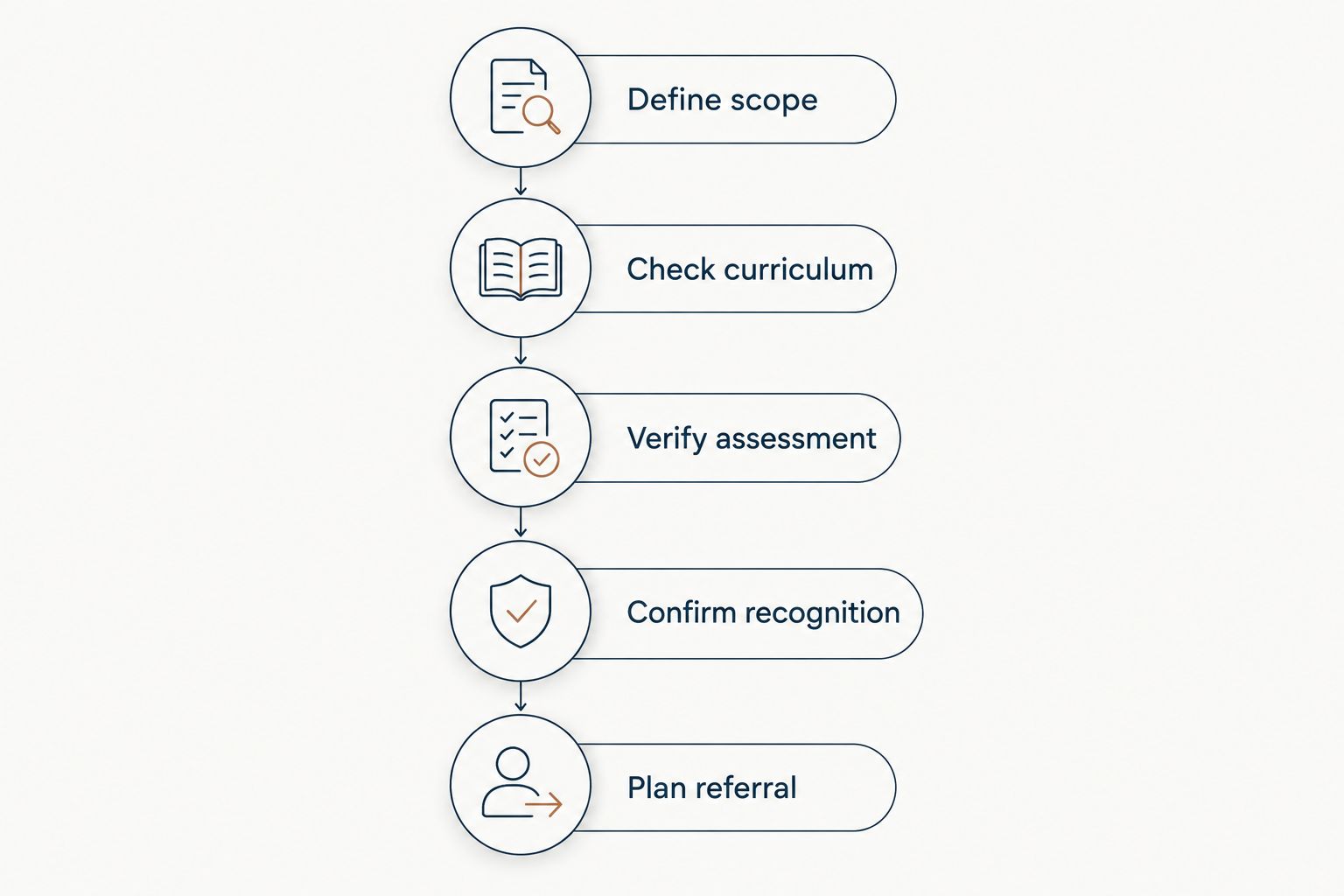
Use this sequence to make your 2026 decision:
- Define scope: Write down the career-related service you provide and the work you do not offer.
- Check curriculum: Match learning objectives to your actual client conversations.
- Verify assessment: Establish how the program evaluates applied learning.
- Confirm recognition: Check acceptance with any relevant credentialing organization directly.
- Plan referral: Identify qualified professionals for needs outside your competence.
For an existing clinician, Integrative Somatic Trauma Therapy Certificate has the clearest trauma-centered subject match in this shortlist. For movement or relationship specialists, the corresponding certificate is a more deliberate choice than collecting unrelated qualifications.
Do not rank these programs by hours alone. A 30-hour movement certificate and an 80-hour relationship certificate address different subjects; neither duration establishes readiness for career coaching or trauma treatment.
FAQ
What's the best trauma-informed coaching certification for career coaches?
Mind Body Coaching Certificate is the first option to evaluate in this shortlist because coaching is explicit in its title. Confirm trauma-specific content, scope boundaries, assessment, and any credential recognition before choosing it.
Does a trauma-informed coaching certificate make me a therapist?
No, a trauma-informed coaching certificate does not confer mental health licensure. Keep your services within your existing qualifications and refer needs that require clinical assessment or treatment.
Is Integrative Somatic Trauma Therapy Certificate better than a coaching certificate?
Integrative Somatic Trauma Therapy Certificate is a better subject match for existing clinicians seeking body-centered trauma education. A career coach should prioritize coaching applicability and scope rather than assume therapy-focused training is a higher qualification.
How long do the programs in this comparison take?
The stated commitments include a 3-month online Integrative Somatic Trauma Therapy Certificate, a 3-part, 30-hour Therapeutic Yoga Certificate, and an 80-hour Embodied Intimacy and Relationship Coaching Certificate. These different formats and subjects do not represent equivalent qualifications.
Can I use somatic practices during career coaching?
Use only practices within your demonstrated competence and agreed coaching scope. Explain the purpose, obtain consent, offer alternatives, and do not present an exercise as trauma treatment.
Does continuing education accreditation mean a certificate is recognized for coaching?
No, continuing education accreditation does not by itself establish recognition by a coaching credentialing organization. Verify the specific program and recognition you need directly with the relevant organization.
What should I ask before enrolling in 2026?
Ask for the curriculum, eligibility requirements, assessment method, exact certificate wording, and scope guidance. Also establish whether the program includes feedback on practice and whether its recognition meets your professional requirements.
One last thing
A client's willingness to describe painful experiences is not permission to make those experiences the focus of career coaching. You can acknowledge what the client shares, preserve choice, and return to the agreed work without eliciting a fuller trauma history.
Before enrolling, write the sentence you would use to explain your new qualification to a client. If that sentence implies treatment authority the certificate does not confer, change the sentence—not the boundary.