Best for the Somatic Experiencing practitioner credential: the official Somatic Experiencing training pathway. Best named match for EMDR integration: The Embody Lab’s Somatic EMDR Therapy Certificate. Best for broader body-centered trauma education: the Integrative Somatic Trauma Therapy Certificate. This 2026 guide separates method-specific practitioner training from complementary somatic education.
- Choose official Somatic Experiencing training for the method-specific practitioner credential, not a general somatic certificate.
- For somatic experiencing training for emdr therapists, distinguish credential goals from EMDR integration goals.
- The Embody Lab’s Integrative Somatic Trauma Therapy Certificate suits therapists seeking broader body-centered trauma education.
- Check clinical practice, consultation, and continuing education requirements before selecting a certificate.
Why this matters
Somatic Experiencing is a specific approach; somatic therapy is a broader category. Your EMDR certification does not make those terms interchangeable. In 2026, choose the credential you need before comparing course topics.
What makes the best training for EMDR therapists
- Credential fit: Does the pathway lead to the designation you want?
- Clinical relevance: Does the syllabus address your actual practice questions?
- Practice structure: How are skills practiced and reviewed?
- Scope: What does completion authorize you to claim?
- CE fit: Does approval apply to your license and jurisdiction?
Training options at a glance
| Option | Best for | Standout distinction | Key limitation |
|---|---|---|---|
| Official Somatic Experiencing practitioner training | Method-specific credential | Formal pathway toward Somatic Experiencing Practitioner designation | Not an EMDR qualification |
| Somatic EMDR Therapy Certificate | EMDR-specific course search | Explicitly names somatic EMDR therapy | A certificate title does not establish SEP eligibility |
| Integrative Somatic Trauma Therapy Certificate | Broad trauma framework | A 3-month online, body-centered certificate | Broader than a single named method |
| Healing Trauma: Working with Somatic Wounds | Focused learning with Peter Levine | Workshop centered on somatic wounds | Workshop learning is not practitioner credentialing |
| Somatic Therapy 101 — Core Tools for Body Based Healing | Foundational somatic learning | Introduction to core principles and sensory awareness | Introductory rather than advanced method-specific training |
1. Official Somatic Experiencing training: best for the SEP credential
If your objective is to become a Somatic Experiencing Practitioner, start with the official training pathway associated with Somatic Experiencing International. Peter Levine developed Somatic Experiencing, and its practitioner designation belongs to a defined professional training process—not to somatic education generally.
For an EMDR-certified therapist, this is a credential decision before it is an integration decision. Your existing clinical experience provides context, but you should confirm admission requirements and the full completion requirements directly with the training organization.
Official Somatic Experiencing training pros:
- Direct alignment with the named method and its practitioner designation.
- A clear distinction between learning about Somatic Experiencing and qualifying in it.
- A method-specific route for clinicians who want that professional identity.
Official Somatic Experiencing training cons:
- It does not replace EMDR training or EMDR consultation.
- You must assess the entire pathway, not just an individual training event.
- Your EMDR credential should not be treated as an exemption from separate requirements.
Best for: EMDR-certified therapists who specifically want the SEP designation.
Verdict: Buy into the official pathway when the credential is your goal; skip standalone workshops as substitutes.
2. Somatic EMDR Therapy Certificate: best named match for integration
The Somatic EMDR Therapy Certificate is the closest title match in this comparison for a therapist seeking somatic education explicitly connected to EMDR. Treat that alignment as a reason to examine the syllabus—not as proof of a particular teaching format, consultation structure, or credential outcome.
Bring a defined question to your review: do you need help with preparation, attention to bodily experience during clinical work, or integration after processing? Match that question to the published learning objectives before choosing the program.
Somatic EMDR Therapy Certificate pros:
- The title explicitly connects somatic therapy and EMDR.
- It gives an EMDR-focused learner a more targeted starting point than a general catalog search.
- It supports a direct comparison between your learning objective and an EMDR-named certificate.
Somatic EMDR Therapy Certificate cons:
- The title alone does not establish Somatic Experiencing practitioner eligibility.
- EMDR-specific naming does not establish approval by your licensing board or credentialing organization.
- You still need to verify opportunities for applied practice and feedback.
Best for: EMDR-certified therapists evaluating an explicitly EMDR-focused somatic certificate in 2026.
Verdict: Hold enrollment until the learning objectives and practice structure match your integration goal.
3. Integrative Somatic Trauma Therapy: best for a broader framework
The Embody Lab’s Integrative Somatic Trauma Therapy Certificate is a 3-month online certificate offering a body-centered framework for understanding and working with trauma. Its stated scope includes both personal understanding and work with clients.
That makes the program a relevant comparison when your objective is broader somatic trauma education rather than qualification in one named modality. For an EMDR therapist, the decision is whether you need an additional conceptual framework or a formal Somatic Experiencing credential. Those are different purchases.
Integrative Somatic Trauma Therapy Certificate pros:
- A stated body-centered trauma framework.
- An online format with a defined 3-month duration.
- A scope that includes understanding trauma and working with clients.
- A broader educational focus than a single-topic workshop.
Integrative Somatic Trauma Therapy Certificate cons:
- An integrative certificate should not be presented as an SEP qualification.
- Broad coverage is not the same as depth in one method.
- Program duration alone does not establish supervised clinical competence.
Best for: Therapists who want a broader body-centered framework alongside their existing EMDR practice.
Verdict: Buy for integrative somatic education, not as a replacement for official Somatic Experiencing training.
4. Healing Trauma: Working with Somatic Wounds: best for focused study
Healing Trauma: Working with Somatic Wounds is a workshop with Dr. Peter Levine. It offers a focused option for therapists whose immediate educational interest is somatic wounds and Levine’s approach to trauma.
Faculty relevance matters here: learning with the developer of Somatic Experiencing is distinct from a general introduction to body-based practice. It still does not erase the difference between attending a workshop and completing the requirements for a practitioner designation.
Healing Trauma: Working with Somatic Wounds pros:
- Direct relevance to Peter Levine’s work.
- A focused topic rather than a broad certificate category.
- A useful option to compare when you want subject-specific learning before a larger educational commitment.
Healing Trauma: Working with Somatic Wounds cons:
- A workshop is not the complete SEP training pathway.
- The workshop title does not establish EMDR protocol instruction.
- Faculty expertise does not, by itself, establish individual skills assessment.
Best for: EMDR therapists seeking focused education with Peter Levine without treating the workshop as credentialing.
Verdict: Buy for focused learning; skip it as a substitute for practitioner training.
5. Somatic Therapy 101: best for foundational learning
Somatic Therapy 101 — Core Tools for Body Based Healing introduces the core principles and skills of a somatic approach. Its stated topics include sensory awareness.
Choose this level when you need a clearer foundation in body-based work, even if you already hold an advanced credential in another modality. EMDR certification and foundational somatic education address different learning needs. Conversely, an introductory course is not the right default when you already have substantial somatic training.
Somatic Therapy 101 pros:
- An explicitly introductory scope.
- Attention to core principles and skills.
- Sensory awareness is a named topic.
Somatic Therapy 101 cons:
- Introductory education is not advanced Somatic Experiencing training.
- The course title does not establish EMDR-specific instruction.
- Experienced somatic practitioners should assess the syllabus for duplication.
Best for: EMDR-certified therapists who want foundational somatic language and principles before selecting a specialization.
Verdict: Buy for foundations; skip when your learning need is advanced consultation or method-specific qualification.
How to choose your next training in 2026
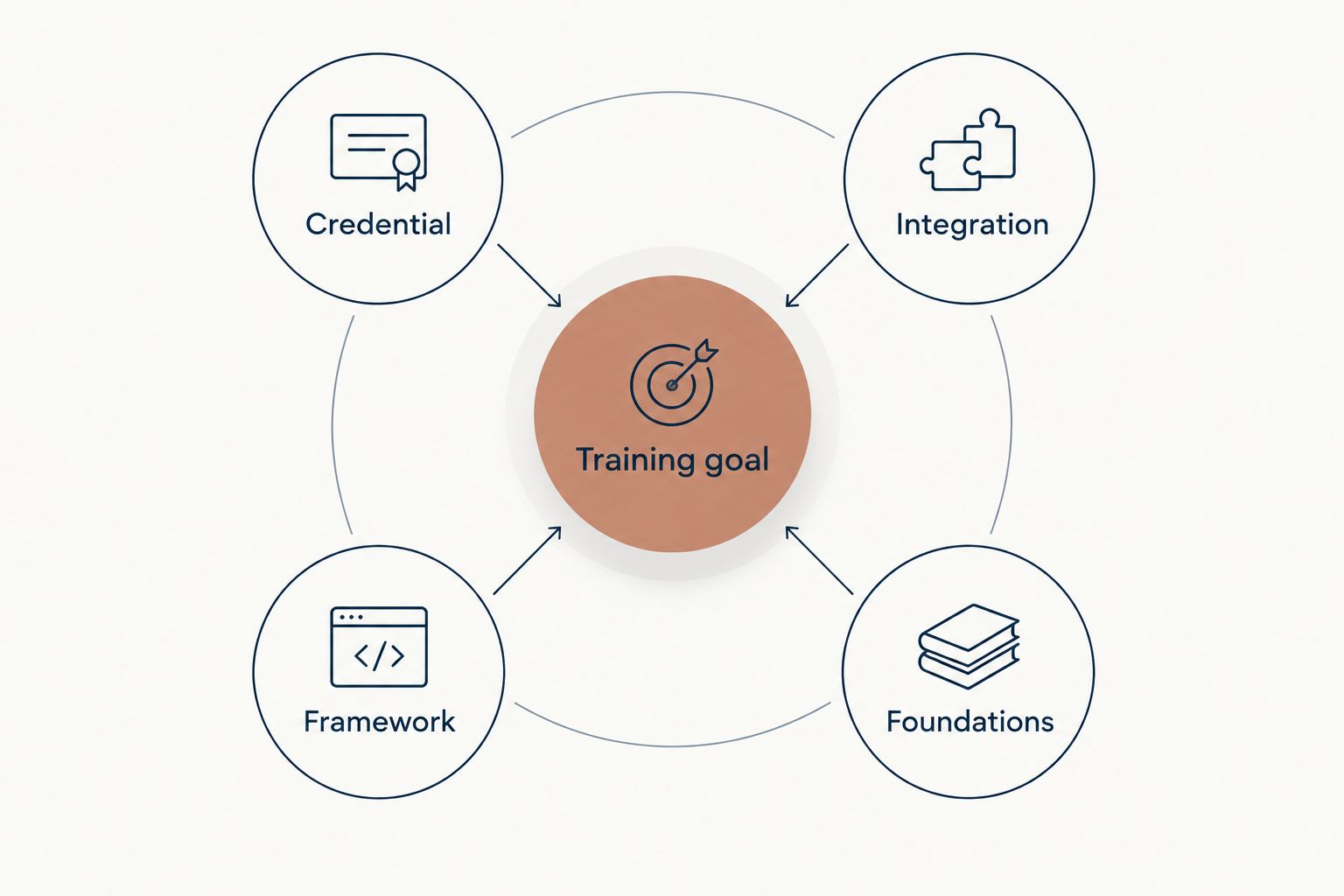
Start with the professional outcome, then identify the learning format. Use these four decision categories to keep unlike programs from appearing equivalent:
- Credential: You want the formal Somatic Experiencing practitioner designation.
- Integration: You want somatic education explicitly connected to your EMDR work.
- Framework: You want broader body-centered trauma education.
- Foundations: You need introductory somatic principles and sensory awareness.
A workshop can be useful without satisfying a credential goal. A broad certificate can be relevant without teaching the specific integration skill you need. Do not ask one course to serve every purpose.
For a 2026 enrollment decision, review 3 domains: learning objectives, applied practice, and professional recognition. Ask for concrete descriptions of what participants learn, how they practice, and what completion means. Keep each answer separate; strength in one domain does not establish strength in the others.
Keep EMDR competence separate from course completion
EMDR therapy uses an 8-phase framework. Additional somatic education should help you make sound clinical decisions within your competence, not encourage you to treat a new exercise as an automatic addition to every phase.
Ask 2 questions before enrolling: what clinical decision will this training help you make, and how will you receive feedback on making it? These questions are more useful than choosing a program because its title contains several familiar modalities.
For dissociation, clinical complexity, or uncertainty about readiness, prioritize qualified consultation. A certificate cannot substitute for case-specific judgment, informed consent, or your professional obligations.
How these options are ranked
This ranking prioritizes credential fit, clinical relevance, practice structure, scope, and CE fit. The official pathway comes first for the exact Somatic Experiencing credential goal; the remaining options separate EMDR-specific naming, broad trauma education, focused workshop learning, and introductory study.
The ordering is a decision guide, not a claim that one program produces better clinical outcomes. Course titles and stated descriptions support scope comparisons. They do not establish comparative effectiveness, participant competence, or equivalence between certificates.
Which training should you choose?
Choose official Somatic Experiencing training if you want to become an SEP. Choose complementary somatic education if your goal is to deepen an existing EMDR practice without pursuing that designation.
The Embody Lab is best for therapists comparing complementary somatic trauma education, not for treating every certificate as a Somatic Experiencing credential. Within that catalog, start with the EMDR-named certificate for an integration-focused syllabus review, the integrative certificate for a broader framework, or the Levine workshop for focused study.
For your 2026 decision, write the desired outcome in one sentence before enrolling. If the course cannot be connected to that sentence through explicit learning objectives, keep looking.
FAQ
What’s the best somatic experiencing training for EMDR therapists?
Official Somatic Experiencing training is the appropriate route when your goal is the Somatic Experiencing Practitioner designation. For complementary education, compare EMDR-focused, integrative, and introductory somatic programs according to your clinical learning objective.
Does an EMDR certification qualify me as a Somatic Experiencing Practitioner?
No. EMDR certification and the Somatic Experiencing Practitioner designation are separate qualifications. Confirm the official Somatic Experiencing training and completion requirements rather than assuming your existing certification transfers.
Is a somatic therapy certificate the same as Somatic Experiencing training?
No. Somatic therapy describes a broader category of body-oriented approaches, while Somatic Experiencing is a specific method. A general somatic certificate should not be represented as the method-specific practitioner credential.
Which certificate should I compare for somatic EMDR education?
The Somatic EMDR Therapy Certificate is an explicitly EMDR-named option to examine. Verify its learning objectives, applied practice, and professional recognition before deciding whether it addresses your needs.
How long is the Integrative Somatic Trauma Therapy Certificate?
The Integrative Somatic Trauma Therapy Certificate is described as a 3-month online certificate. Its stated focus is a body-centered framework for understanding and working with trauma.
Does a Peter Levine workshop make me an SEP?
No, a standalone Peter Levine workshop does not by itself establish the Somatic Experiencing Practitioner designation. Treat workshop participation and completion of the official credential pathway as separate accomplishments.
Will somatic training count toward my continuing education requirements?
Check the specific program’s approval against your license, jurisdiction, and reporting requirements. A provider offering CE-accredited education does not establish that every course satisfies every professional requirement.
One last thing
Your most useful selection criterion is not another modality name. It is the clinical decision you want to make more competently: recognizing when to pause, choosing an appropriate preparation strategy, or knowing when to seek consultation.
Write that decision down. Then choose education that addresses it without overstating what completion qualifies you to do.