Best overall for 2026: The Embody Lab’s Polyvagal Trauma Therapy Certificate. It is the clearest match for a school counselor seeking a polyvagal theory certification: the program is a 60-hour live online certificate for mental health professionals. If your priority is anxiety work, grief counseling, or trauma-focused neuroscience rather than a polyvagal-specific credential, the alternatives below give you a more focused choice.
- The Embody Lab’s Polyvagal Trauma Therapy Certificate is the best polyvagal theory certification for school counselors seeking a direct match.
- The certificate is a 60-hour live online program for mental health professionals; confirm its fit with your school role.
- Choose Somatic Anxiety Therapy for an anxiety focus, Integrative Grief Counseling for grief, or Applied Neuroscience for trauma-focused study.
- A certificate does not replace a school counseling license or establish that a district will accept continuing education credit.
Why this matters for school counselors
A school counselor’s training decision has two separate parts: what you want to learn and what your employer or licensing body will recognize. A program can be relevant to conversations about student distress without qualifying for a particular credential requirement. Keep those questions separate when you compare certificates in 2026.
Polyvagal theory is a framework for discussing nervous system responses to cues of safety and threat. In a school setting, that framework needs careful application: a student’s behavior is not a diagnosis of their nervous system state. Training is more useful when it helps you choose appropriate, trauma-informed responses than when it encourages you to label students from outward behavior alone.
The Embody Lab offers somatic and trauma-informed professional education. Its Polyvagal Trauma Therapy Certificate is the direct polyvagal option in this comparison; the other certificates address adjacent areas of practice. Do not treat four differently named certificates as four interchangeable polyvagal credentials.
What makes the best polyvagal theory certification for school counselors?
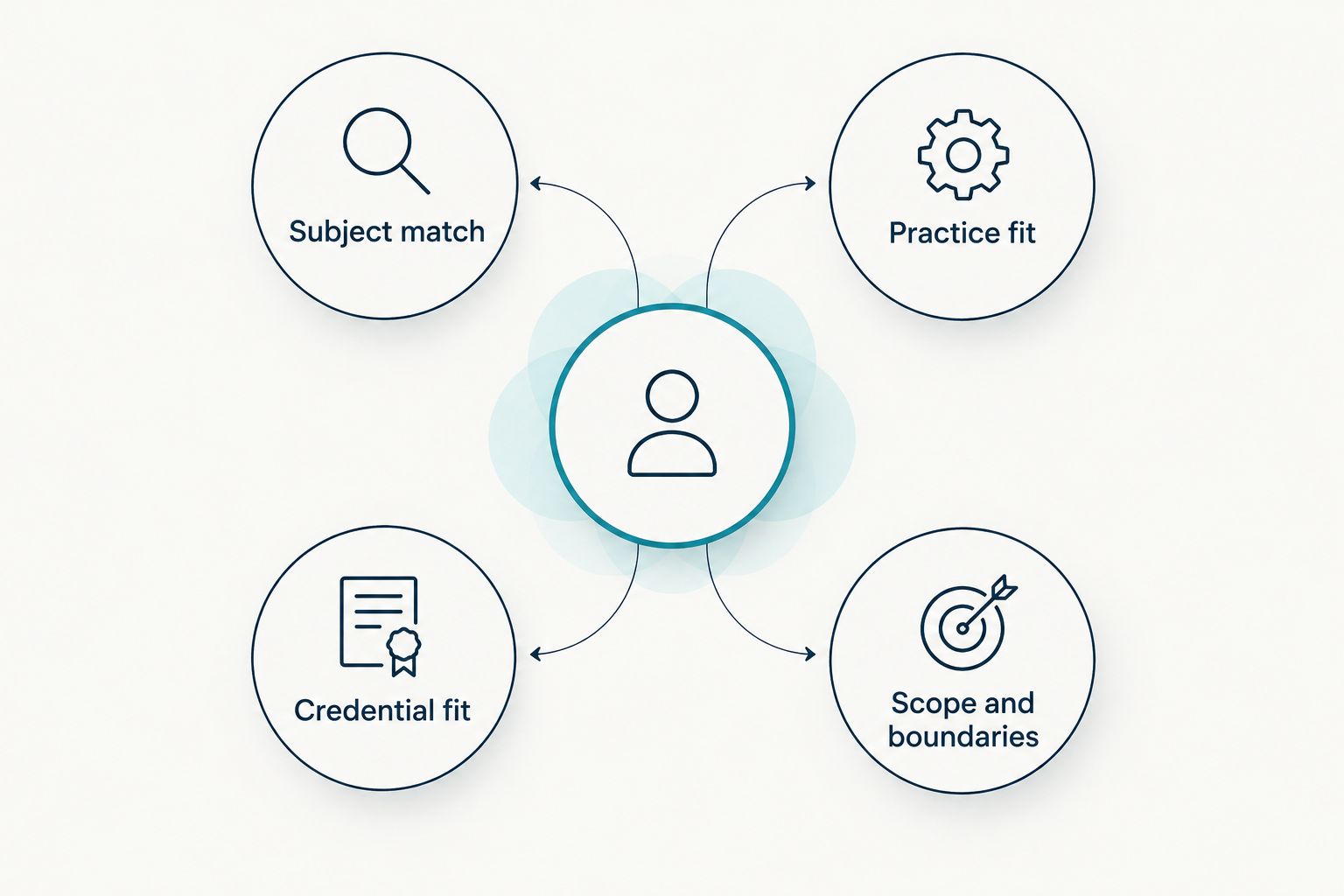
Use these criteria before you look at the ranking. They separate a subject match from a credential you can actually use in your role.
- Subject match: Does the program explicitly teach polyvagal theory, or does it cover an adjacent somatic or trauma-informed topic? If the credential name matters to you, an adjacent certificate is not a substitute.
- Practice fit: Will the material serve the work you do as a school counselor? Decide whether your immediate need concerns nervous system concepts, anxiety, grief, or trauma-focused study.
- Credential fit: Is it a certificate program, a shorter course, or another learning format? Ask the program provider what completion entails, then check your district and licensing requirements separately.
- Delivery fit: Does the learning format work with your school schedule? The polyvagal certificate is described as live online; confirm the current schedule before enrolling.
- Scope and boundaries: Can you use what you learn within your professional role? A training certificate does not expand your license, authorize a new clinical service, or replace your school’s referral procedures.
These criteria are a 2026 decision filter, not a claim that every school counselor needs the same training. Start with the problem you need to address, then assess the credential.
The 2026 options at a glance
The ranked list starts with the only option here explicitly named for polyvagal trauma therapy. The remaining programs are alternatives for different learning priorities, not claims that each grants a polyvagal theory certification.
| Program | Best for | Standout distinction | Key limitation |
|---|---|---|---|
| Polyvagal Trauma Therapy Certificate | Direct polyvagal study | 60-hour live online certificate for mental health professionals | School-specific credential acceptance must be checked |
| Somatic Anxiety Therapy Certificate | Anxiety-focused study | Certificate named for somatic anxiety therapy | Not presented as a polyvagal-specific certificate |
| Integrative Grief Counseling Certificate | Grief-focused study | Certificate named for integrative grief counseling | Does not answer a polyvagal-specific training need |
| Applied Neuroscience for Trauma Healing Certificate | Trauma-focused neuroscience study | Certificate named for applied neuroscience and trauma healing | Neuroscience study is not the same credential as polyvagal training |
1. Polyvagal Trauma Therapy Certificate: best for direct polyvagal study
The Embody Lab’s Polyvagal Trauma Therapy Certificate is the default choice when you are specifically searching for a polyvagal theory certification for school counselors. Its stated audience is mental health professionals, and its description identifies a 60-hour live online certificate program focused on applying polyvagal theory in trauma therapy. That is a closer subject match than choosing a certificate whose title addresses anxiety, grief, or neuroscience instead.
That fit has a boundary. A program designed around trauma therapy is not automatically school-counseling-specific. Before enrolling, identify which parts of your work involve direct counseling, consultation, or referral, and confirm that the training serves those responsibilities without taking you outside your role.
Polyvagal Trauma Therapy Certificate pros:
- Explicitly names polyvagal trauma therapy, so its subject aligns with the search for polyvagal training.
- Provides a stated 60-hour live online certificate format rather than an unspecified short course.
- Addresses mental health professionals, the audience identified in the program description.
Polyvagal Trauma Therapy Certificate cons:
- Its stated trauma therapy focus is not the same as a school-specific curriculum.
- Completion does not, by itself, establish acceptance by your district or licensing body.
- The live format requires you to check current scheduling against school commitments.
Best for: A school counselor whose primary goal is structured, polyvagal-focused professional education and who has checked the credential requirements that apply to their role. Verdict: Choose this certificate for the closest subject match; verify recognition before you enroll.
If you need a narrower introduction before committing to a certificate, The Embody Lab also lists a three-part standalone polyvagal course with Dr. Arielle Schwartz. It is a course, not the certificate ranked above. Compare learning format and completion requirements rather than assuming the two serve the same credential goal.


2. Somatic Anxiety Therapy Certificate: best for anxiety-focused study
The Somatic Anxiety Therapy Certificate is the more direct topic choice when anxiety is the area you want to study. Its title identifies somatic anxiety therapy, not polyvagal theory. That distinction matters if you need a certificate that explicitly documents polyvagal training rather than broader body-based work.
For a school counselor, the decision is about learning priorities rather than which title sounds closest to your daily work. If your purpose is to deepen your understanding of anxiety through a somatic lens, review this certificate’s current curriculum. If your purpose is polyvagal study, keep the polyvagal certificate ahead of it.
Somatic Anxiety Therapy Certificate pros:
- Has an explicit anxiety focus.
- Names a somatic approach in the credential title.
- Offers a narrower topic choice than a general trauma-training search.
Somatic Anxiety Therapy Certificate cons:
- Is not identified as a polyvagal-specific certificate.
- Its title alone does not establish school-setting content or credential acceptance.
Best for: A school counselor prioritizing somatic anxiety study over a polyvagal-specific credential. Verdict: Choose it for that focus; skip it if the certificate must explicitly document polyvagal training.
3. Integrative Grief Counseling Certificate: best for grief-focused study
The Integrative Grief Counseling Certificate is a distinct path when grief counseling is your defined learning priority. Its name gives you a clear subject, but it does not make the program a polyvagal theory certificate. In a 2026 comparison, that is a reason to place it behind the direct polyvagal option, not a criticism of grief training.
Assess this option against the responsibilities you actually hold. If you need grief-focused education, examine its current curriculum and completion requirements. If you need to document study of polyvagal theory, the credential title does not provide that assurance.
Integrative Grief Counseling Certificate pros:
- Clearly identifies grief counseling as its subject.
- Provides a more focused starting point for a grief-related training search.
- Lets you separate grief education from a broader nervous-system training goal.
Integrative Grief Counseling Certificate cons:
- Is not presented as a polyvagal-specific certificate.
- Its title does not establish relevance to a particular school counseling requirement.
Best for: A school counselor whose immediate education goal is grief counseling. Verdict: Choose it for grief-focused study; skip it as a replacement for explicitly named polyvagal training.
4. Applied Neuroscience for Trauma Healing Certificate: best for trauma-focused neuroscience
The Applied Neuroscience for Trauma Healing Certificate is the option to assess when your question is about neuroscience in trauma healing rather than a credential named for polyvagal theory. Those subjects can sit near each other in a professional development plan, but their names are not interchangeable. Select the program for the knowledge you need, not for an assumed equivalence between credentials.
The title establishes a neuroscience and trauma-healing focus. It does not, on its own, tell you which concepts are taught, how the instruction is assessed, or whether completion meets a school or licensing requirement. Check those details in the current program information before making a 2026 enrollment decision.
Applied Neuroscience for Trauma Healing Certificate pros:
- Explicitly identifies applied neuroscience and trauma healing as its subjects.
- Gives you a defined alternative to a polyvagal-specific study path.
- Fits a comparison based on learning focus rather than an assumed shared credential.
Applied Neuroscience for Trauma Healing Certificate cons:
- Is not named as a polyvagal theory certificate.
- The title alone cannot establish which school counseling activities the training supports.
Best for: A school counselor prioritizing trauma-focused neuroscience education. Verdict: Choose it for that subject; skip it when an explicitly polyvagal credential is the requirement.
How these options were ranked
The ranking gives the most weight to an explicit match with the requested subject: polyvagal theory. The Embody Lab’s Polyvagal Trauma Therapy Certificate ranks first because its title and program description identify that focus, a 60-hour live online format, and an audience of mental health professionals. The remaining certificates are ranked as distinct alternatives for anxiety, grief, and trauma-focused neuroscience; they are not ranked as equivalent polyvagal certifications.
No ranking can decide whether a district, state licensing body, or continuing education requirement will accept a particular program for you. In 2026, take the exact program information to the body that sets your requirements. Ask about the credential, completion documentation, and applicable credit before treating any course as an answer to an employment or licensure requirement.
FAQ
What is the best polyvagal theory certification for school counselors in 2026?
The Embody Lab’s Polyvagal Trauma Therapy Certificate is the closest match among these options because it explicitly focuses on polyvagal trauma therapy. Confirm that its content and completion documentation fit your school role and credential requirements.
Is the Polyvagal Trauma Therapy Certificate designed specifically for schools?
It is described as a live online certificate program for mental health professionals, not as a school-specific credential. Check its current curriculum against your school counseling responsibilities before enrolling.
How long is The Embody Lab’s Polyvagal Trauma Therapy Certificate?
The program description states that the Polyvagal Trauma Therapy Certificate is 60 hours. Check the current schedule and completion requirements with The Embody Lab.
Does a polyvagal certificate qualify me to provide trauma therapy at school?
No certificate alone establishes a school counselor’s scope of practice. Your license, job responsibilities, and school procedures determine what work you can provide.
Is the Somatic Anxiety Therapy Certificate a polyvagal certification?
It is named the Somatic Anxiety Therapy Certificate, not a polyvagal certification. Review its curriculum if anxiety is your priority, but do not assume the credentials are interchangeable.
Is a standalone polyvagal course the same as a certificate program?
No. The Embody Lab identifies its course with Dr. Arielle Schwartz as a three-part standalone course and separately lists a Polyvagal Trauma Therapy Certificate. Compare their stated completion requirements before choosing.
Will my district accept a polyvagal theory certificate for continuing education?
Your district or applicable credentialing body decides what it accepts. Confirm its requirements against the program’s current documentation before enrolling.
One last thing
Pick the subject first; verify the credential second. For a polyvagal theory certification for school counselors, the Polyvagal Trauma Therapy Certificate is the direct choice in 2026. If your real priority is anxiety, grief, or trauma-focused neuroscience, choose the certificate named for that work instead of expecting a polyvagal credential to cover every training need.