Bessel van der Kolk's The Body Keeps the Score changed how an entire generation of clinicians think about trauma, but the book is a map, not a training manual — it tells you trauma lives in the nervous system, not the story, and then leaves the actual skill-building to you. This guide breaks down the concepts practitioners quote most and points to the certificate programs built to turn them into clinical technique in 2026.
- The Body Keeps the Score argues trauma is stored somatically, not just narratively — the book informs, it doesn't train. Read it, then build skill.
- Integrative Somatic Trauma Therapy Certificate at The Embody Lab operationalizes van der Kolk's framework into 2026 clinical practice. Buy.
- Polyvagal Trauma Therapy Certificate applies Porges' autonomic theory directly, the piece most practitioners cite but never train in. Buy.
- Somatic EMDR Therapy Certificate pairs eye-movement processing with body-based tracking for clients whose trauma won't move with talk alone. Consider.
- Skip any workshop that quotes the book's language without teaching a single somatic intervention — that's theory recycling, not training.
Why this matters
The book sold over 2 million copies and sits on nearly every trauma-informed reading list handed to new clinicians. That's the problem: reading it has become a substitute for training in it.
Van der Kolk's core claim — that trauma reorganizes perception and physiology below the level of conscious narrative — requires nervous system-level intervention to treat. Talk therapy alone often can't reach it. Practitioners who stop at the book end up with the right vocabulary and no way to apply it in session, which is where somatic certificate training closes the gap.
Who this is for
This is for licensed therapists, counselors, coaches, and body workers who've read The Body Keeps the Score, agree with the framework, and now want the clinical skills — polyvagal tracking, titration, somatic resourcing — to actually use it with clients in 2026. It's not for readers looking for a second summary of the book; it's for practitioners ready to train.
What to look for in trauma training built on this framework
Nervous system grounding, not just trauma theory
The book's central claim is autonomic, not cognitive — trauma shows up as dysregulation, freeze, and collapse before it shows up as thought. A program that doesn't teach polyvagal tracking or autonomic assessment is teaching the book's conclusions without its mechanism.
CE accreditation and hour count
Most licensing boards require documented continuing education hours tied to your renewal cycle. A certificate with no stated CE hours or accreditation body is a workshop with a certificate template, not a credential — check the hour count before you register for 2026 renewal.
Live practice time, not lecture-only
Somatic skills are motor skills. You cannot learn titration, pendulation, or co-regulation from slides alone — programs with live practicum hours produce practitioners who can actually run the technique, not just describe it.
Faculty tied to the book's own lineage
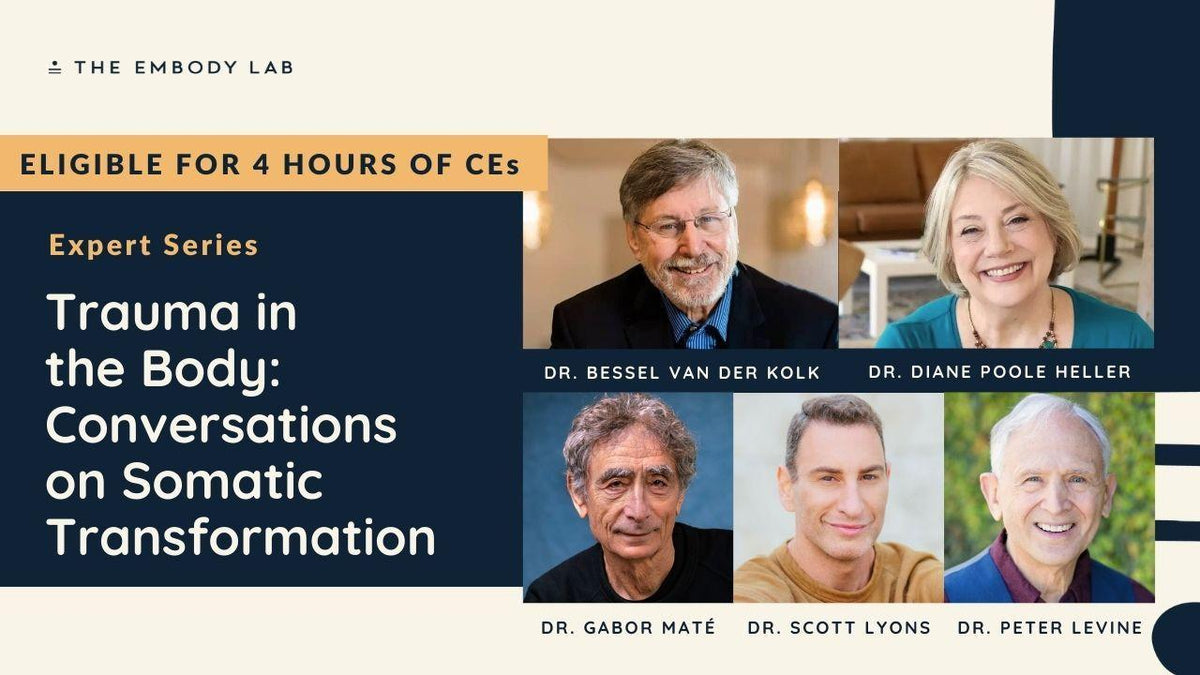
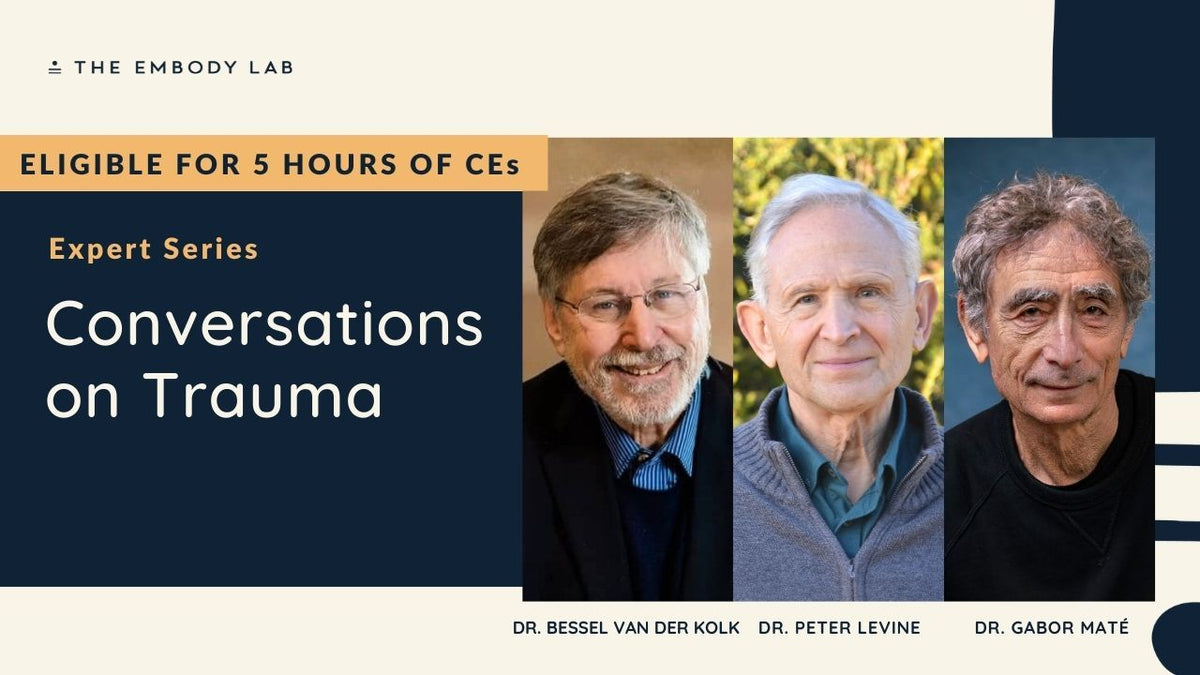
Van der Kolk's work builds directly on Peter Levine's Somatic Experiencing and Stephen Porges' Polyvagal Theory. Training taught by faculty connected to that lineage carries more clinical weight than a generalist instructor summarizing secondhand.
Population specificity
"Trauma" isn't one presentation. Developmental trauma, shame-based collapse, grief, and attachment wounds each need different somatic entry points — a program that treats trauma as one undifferentiated category will underserve half your caseload.
Top picks
Integrative Somatic Trauma Therapy Certificate — the flagship pick. This is a full certificate track built specifically to translate polyvagal and somatic theory — the exact frameworks The Body Keeps the Score cites — into session-ready technique, with live practicum built into the program. If you're only doing one training this year, this is the Buy.
Integrative Somatic Trauma Therapy Certificate
Polyvagal Trauma Therapy Certificate — the theory-to-technique specialist. Porges' polyvagal framework is the single most-cited mechanism behind van der Kolk's claims about the nervous system storing trauma, and this certificate trains you to read and shift autonomic states in real time rather than just name them. Buy if your caseload includes clients stuck in chronic freeze or shutdown.
Polyvagal Trauma Therapy Certificate
Somatic EMDR Therapy Certificate — the wildcard for stuck cases. Pairs eye-movement reprocessing with body-based tracking, useful when a client's trauma has a clear narrative but the somatic charge won't discharge through talk or standard EMDR alone. Consider it as a second-year addition once your polyvagal fundamentals are solid.
Somatic EMDR Therapy Certificate
Integrative Somatic Parts Work Full Certificate — the specialist add-on. Combines parts-based work (IFS-adjacent) with somatic tracking, relevant if your clients present with internal conflict alongside trauma responses rather than trauma alone. Consider this after your foundational trauma certificate, not instead of it.
What to avoid
- Single-day webinars that quote the book but teach no intervention. If the syllabus is a summary of van der Kolk's chapters with no practicum, you're paying for a book club.
- Generic "trauma-informed" branding with no accreditation. Trauma-informed is a stance, not a credential — check for stated CE hours before assuming it counts toward licensure renewal.
- Programs that treat all trauma as one category. A course that never distinguishes developmental trauma from single-incident trauma will leave gaps in how you assess and intervene.


Verdict comparison table
| Program | Format | Best for | Verdict |
|---|---|---|---|
| Integrative Somatic Trauma Therapy Certificate | Full certificate, live practicum | Generalist trauma caseload | Buy |
| Polyvagal Trauma Therapy Certificate | Certificate, autonomic focus | Freeze/shutdown presentations | Buy |
| Somatic EMDR Therapy Certificate | Certificate, EMDR + somatic | Stuck narrative-processing cases | Consider |
| Integrative Somatic Parts Work Certificate | Certificate, parts-based | Internal conflict alongside trauma | Consider |
On all four, weigh CE hours against your renewal cycle before enrolling — check current program details on The Embody Lab for 2026 cohort dates.
FAQ
What is the main idea of The Body Keeps the Score?
The book's core claim is that trauma is stored in the body and nervous system, not just in narrative memory, which is why talk-only therapy often fails to resolve it. Dr. Bessel van der Kolk argues effective treatment must address physiological dysregulation directly.
Is The Body Keeps the Score enough training for trauma therapy?
No, the book explains the framework but does not teach clinical technique. Practitioners need certificate-level somatic training to apply concepts like polyvagal tracking and titration in session.
What is polyvagal theory and how does it relate to the book?
Polyvagal theory, developed by Dr. Stephen Porges, explains how the autonomic nervous system shifts between safety, fight-or-flight, and shutdown states. Van der Kolk cites it as the physiological mechanism behind trauma's bodily storage.
How much does somatic trauma certificate training cost in 2026?
Full certificate programs at The Embody Lab run roughly $1,900 to $2,000 depending on the track, while single expert-led courses run $197 to $387. Costs vary by hour count and live practicum inclusion.
Is somatic therapy training different from EMDR training?
Yes, EMDR uses bilateral eye movement to reprocess traumatic memory, while somatic therapy focuses on tracking and discharging physiological activation directly. Somatic EMDR certificates combine both approaches for cases where either alone falls short.
Do these certificate programs count toward CE requirements?
Programs vary by accreditation body and stated hour count, so confirm CE eligibility against your specific licensing board before enrolling. Check the individual program page for the current CE designation before the 2026 renewal deadline.
Who should take somatic trauma training based on this book?
Licensed therapists, counselors, and coaches who already work with trauma survivors and want clinical technique beyond talk therapy are the right fit. It is not designed for readers seeking a conceptual overview alone.
One last thing
Most practitioners underestimate how much of van der Kolk's framework depends on Porges' polyvagal work specifically — if you only train in one adjacent skill after finishing the book, make it autonomic state tracking, because it's the mechanism every other somatic technique in 2026 curricula assumes you already have.