A grief counseling certificate qualifies for NBCC continuing education credit only when the applicable NBCC approval and credit requirements are met; the certificate title alone does not establish eligibility. Before counting the Integrative Grief Counseling Certificate toward your 2026 requirements, verify the program’s NBCC credit statement, eligible hours, and completion conditions. The program is described as a 12-module, 30-hour live training, but instructional hours and approved continuing education hours are not interchangeable.
- For grief counseling certificate NBCC CE credit, verify the approval statement rather than relying on the certificate title.
- The Embody Lab’s Integrative Grief Counseling Certificate contains 12 modules and 30 hours of live training.
- Check NBCC credit eligibility separately from your licensing board’s continuing education acceptance.
- Keep the course-specific credit statement and completion documentation with your renewal records.
Why this matters
You are making two decisions: whether the training serves your clinical work and whether its credits satisfy a specific professional requirement. A program can address your learning needs without meeting every credentialing or licensing requirement you hold. Educational relevance does not establish credit eligibility.
For your 2026 continuing education plan, resolve the credit question before enrolling if renewal credit is essential. That prevents a clinically useful training from becoming an administrative mismatch. It also keeps a certificate of completion from being treated as something it does not independently prove: NBCC credit, board acceptance, or a new professional qualification.
Does the grief counseling certificate qualify for NBCC CE credit?
Count the grief counseling certificate as NBCC continuing education only after verifying the applicable approval information and your eligibility for the stated credits. A program’s name, duration, and subject matter do not answer that question by themselves.
The Integrative Grief Counseling Certificate is described as a 12-module, 30-hour live training combining applied neuroscience, somatic practice, ritual, and relational approaches. Those details establish its educational format and focus. They do not establish a specific NBCC credit total.
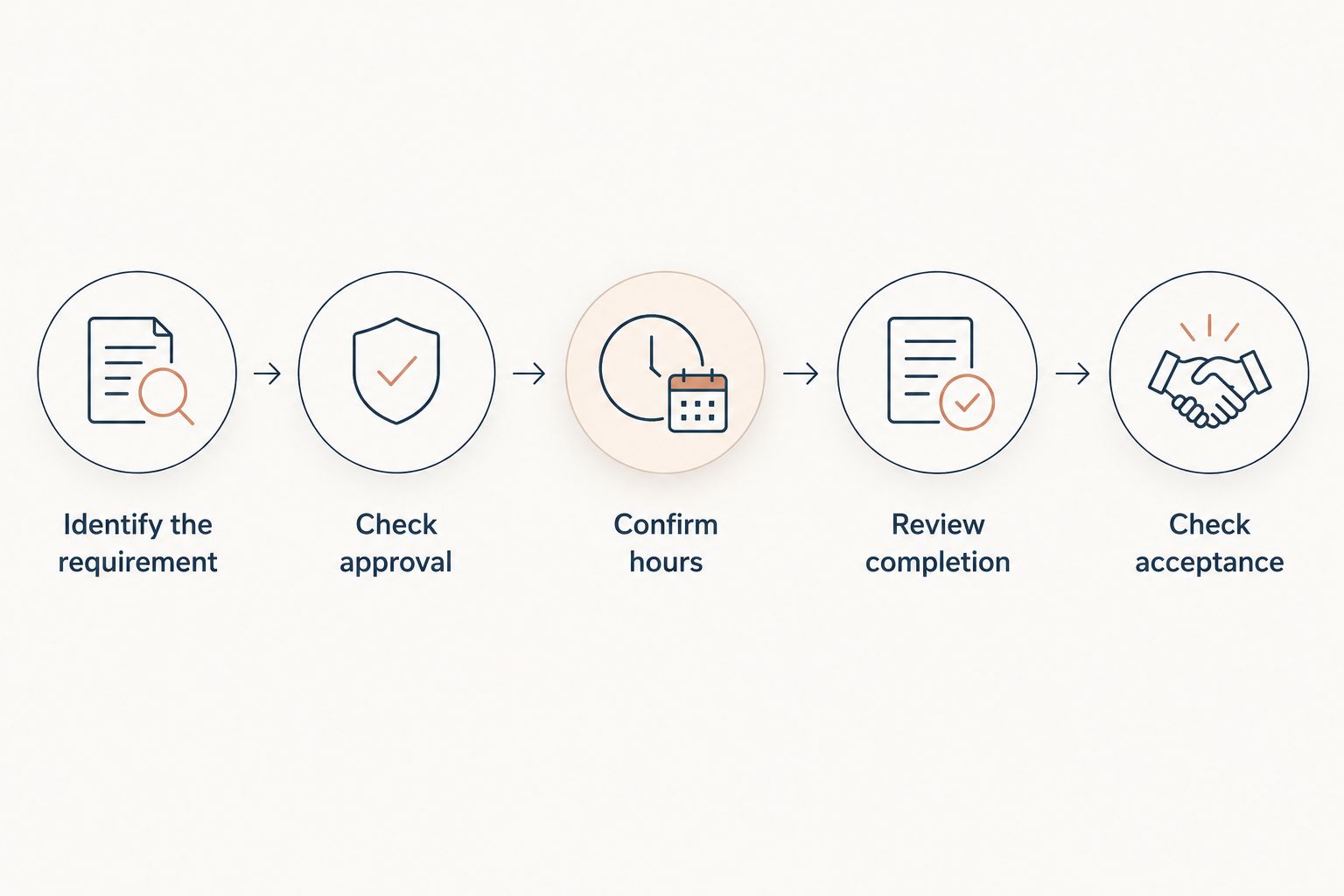
Use the following sequence to check the program against your actual requirement.
- Identify the requirement. Decide whether you need continuing education for a national certification, a state counseling license, another professional license, or an employer. Write down the receiving body’s name. Do not substitute a general requirement for continuing education for a specific requirement concerning NBCC credit.
- Check approval. Find the course-specific continuing education statement and identify who is responsible for offering the credit. Look for an explicit connection to NBCC rather than a general reference to accredited education. If the statement is unclear, request written clarification before making your enrollment decision.
- Confirm hours. Find the number of NBCC-eligible continuing education hours for the exact program you intend to take. Separate that number from total teaching time, module count, and any additional learning activities. Do not convert 30 training hours into 30 NBCC credits yourself.
- Review completion. Read the conditions attached to receiving continuing education documentation. Ask about attendance, assessments, evaluations, and any distinction between live participation and recordings. Establish what you must complete, rather than assuming that enrollment or course access earns credit.
- Check acceptance. Compare the program’s credit statement with the rules of the credentialing or licensing body receiving your submission. Keep its acceptance decision separate from the provider’s credit offering. Save the relevant documentation alongside your completion record.
This sequence protects the distinction between a course that offers credit and a participant who has satisfied the conditions for claiming it. Both matter. Your renewal file needs evidence of the applicable credit and evidence of your own completion.
Training hours, certificate completion, and NBCC credit are different
A certificate documents an educational achievement according to the issuing program’s conditions. Continuing education credit concerns the recognition of eligible learning under a particular credit system. Neither should be confused with professional licensure or permission to practice outside your existing scope.
| Term | What it tells you | What it does not establish alone |
|---|---|---|
| Training hours | The stated duration of instruction | The number of NBCC-eligible hours |
| Module count | How the curriculum is organized | Credit eligibility or completion requirements |
| Certificate of completion | Completion under the program’s stated conditions | Acceptance by every licensing or credentialing body |
| NBCC credit statement | The applicable NBCC-related credit information | Your individual completion or state-board acceptance |
| Board acceptance | Whether the receiving board accepts the education | A new license or an expanded scope of practice |
For the grief program, retain the wording 12 modules and 30 hours of live training when describing its published format. Use a separate, verified figure when documenting NBCC credit. Combining the two descriptions obscures the very distinction your credentialing records need to preserve.
In your 2026 records, label each document by its purpose. Keep the program description as curriculum information, the continuing education statement as credit information, and the completion document as evidence of participation. A clear file is easier to interpret than a collection of screenshots with no explanation of what each establishes.
Why NBCC CE eligibility varies
Your credit decision depends on the applicable approval information and the conditions attached to your participation. Check these factors instead of judging eligibility by how clinically relevant the curriculum appears.
- Approval information: Identify the provider or arrangement responsible for the NBCC credit offering. A general accreditation statement is not a substitute for the applicable NBCC information.
- Eligible learning activities: Determine which parts of the program carry the stated credit. Do not assume that every module, supplementary resource, or practice activity contributes equally.
- Participation format: Verify the credit conditions for the format you will actually use. Ask specifically about live attendance and recordings rather than transferring information from one format to another.
- Completion conditions: Establish what documentation depends on attendance, assessments, evaluations, or other stated requirements. Keep those conditions with your enrollment records.
- Receiving-body rules: Confirm what your certification body or licensing board accepts. Approval under one continuing education system does not settle every other professional requirement.
These are verification categories, not claims that the grief program imposes a particular assessment or attendance rule. The practical task is to obtain the program’s actual conditions and compare them with your own requirements.
Do not let a clear curriculum description compensate for an unclear credit statement. If credit determines your enrollment decision, resolve that administrative question first. You can then assess the training on its educational merits without mixing the two decisions.
Does a 30-hour grief counseling training mean 30 NBCC CE hours?
30 hours of training does not, by itself, establish 30 NBCC continuing education hours. The Integrative Grief Counseling Certificate’s duration describes its educational format; use the applicable credit statement to establish the eligible NBCC total. Keep both figures separately in your 2026 learning plan.
Do 12 modules each earn separate NBCC credit?
12 modules describes the curriculum structure, not separate credit awards. Verify whether credit is documented for the complete program, particular activities, or another stated arrangement. Do not divide the training duration by the module count to create your own credit allocation.
Which grief education option fits your learning goal?
Credit eligibility and curriculum fit deserve separate comparisons. Start with the question your practice needs answered: do you want a structured grief counseling certificate, or education focused on compassionate grief work?
The Embody Lab’s grief education is best for practitioners seeking somatic and trauma-informed professional learning. That educational fit does not replace course-specific NBCC verification.
| Program | Best for | Educational focus stated in the program information | Limitation for this decision |
|---|---|---|---|
| Integrative Grief Counseling Certificate | Practitioners seeking a structured grief counseling certificate | A 12-module, 30-hour live training combining applied neuroscience, somatic practice, ritual, and relational approaches | Training duration and certificate status do not independently establish NBCC credit |
| Compassionate Grief Work: Innovative Techniques for Healing | Practitioners seeking education focused on compassionate grief work | An exploration of grief as an attachment-related process | Its description does not replace a course-specific continuing education statement |
The certificate’s defined structure helps you assess the scale of the learning commitment. The focused grief course offers a different educational emphasis. Neither description supports assuming that the two offerings share the same credit approval, eligible hours, or completion conditions.
Before selecting either option, write your learning goal separately from your credit requirement. For example, distinguish developing your approach to grief counseling from satisfying a particular renewal obligation. A program needs to meet both when both are essential to your decision.


What should you ask before enrolling for NBCC credit?
Ask questions that produce a course-specific answer. A general response about the organization’s continuing education offerings leaves your actual enrollment question unresolved.
Send the exact program title, the participation format you intend to use, and the professional requirement you need to satisfy. Then request clarification on the following points:
- What NBCC approval information applies to this specific program?
- How many NBCC-eligible continuing education hours does this program offer?
- What must you complete to receive the credit documentation?
- Does the credit statement apply to your intended participation format?
- What information appears on the continuing education completion document?
- Where can you retain the applicable credit statement for your records?
For a 2026 enrollment decision, make sure the response concerns the offering you plan to attend. A statement about another training, a previous offering, or a different participation format does not answer the same question.
Written clarification gives you something concrete to compare with your receiving body’s rules. Preserve the question as well as the response so the context remains clear. If a response addresses curriculum quality but not credit eligibility, ask the credit question again rather than treating the response as confirmation.
How should you document the training after completion?
Build your record around the credit you are actually claiming. Keep the exact program title, applicable continuing education statement, completion documentation, and any written clarification that affected your eligibility decision.
Compare the final document with the information you used before enrollment. Check your identifying information, program title, completion details, and stated credit total. If something differs, resolve the discrepancy before submitting the record for renewal.
For your 2026 renewal file, keep educational notes separate from credit evidence. Notes about somatic practice, attachment, ritual, or grief counseling demonstrate what you studied; they do not replace the documentation required by the receiving body.
The same separation protects your professional descriptions. Describe completing a grief counseling certificate accurately, without presenting it as a new license or an independent authorization to practice. When you mention continuing education credit, use the verified designation and total rather than the course’s general training duration.
FAQ
Does the Integrative Grief Counseling Certificate automatically qualify for NBCC CE credit?
A certificate title does not automatically establish NBCC CE eligibility. Verify the program-specific NBCC credit statement, eligible hours, and completion conditions before counting the training toward your requirement.
How many hours is the Integrative Grief Counseling Certificate?
The Integrative Grief Counseling Certificate is described as a 30-hour live training organized into 12 modules. That instructional duration is separate from any verified NBCC continuing education total.
Can I count all 30 training hours as NBCC continuing education?
Do not count all 30 training hours as NBCC continuing education without the applicable credit statement. Use the eligible credit total stated for the specific program and participation format.
Will my state counseling board accept NBCC credit?
Your state counseling board’s rules determine what it accepts for license renewal. Check those rules separately from the program’s NBCC credit information.
Can I earn the same credit by watching recordings?
Verify the credit conditions for recorded participation before relying on recordings. Information about a live training does not independently establish the conditions for another participation format.
Does a grief counseling certificate make me a licensed grief counselor?
A grief counseling education certificate does not itself grant professional licensure. Describe the training within your existing credentials and scope of practice.
What should I request from The Embody Lab before enrolling for CE credit?
Request the exact program’s NBCC credit statement, eligible continuing education hours, participation conditions, and completion-document details. Then compare that information with the requirements of your credentialing or licensing body.
One last thing
The most useful credit document is the one that answers your receiving body’s question—not necessarily the certificate with the most prominent program title. A completion certificate and a continuing education statement serve different purposes, even when they concern the same training.
Before committing to grief counseling education, save the applicable credit statement alongside your learning goal. That small administrative step keeps your educational choice and renewal planning aligned. Assess the clinical content for its relevance to your work, then claim only the credit supported by the program’s documentation and your completed requirements.