Best overall for formal, method-specific training: Sensorimotor Psychotherapy Institute. Best introduction: Introduction to Sensorimotor Psychotherapy for Trauma at The Embody Lab. Best complementary foundation: Somatic Stress Release™ Training Level 1: Foundations. This 2026 guide separates an introduction to sensorimotor psychotherapy for trauma from professional training and adjacent somatic education, so you can choose the right route for your clinical goals.
- Sensorimotor Psychotherapy Institute is the first choice for formal, method-specific sensorimotor psychotherapy training.
- The Embody Lab is best for practitioners seeking an introduction to Sensorimotor Psychotherapy through Dr. Pat Ogden’s course.
- Somatic Stress Release™ Training Level 1: Foundations offers complementary somatic education, not Sensorimotor Psychotherapy qualification.
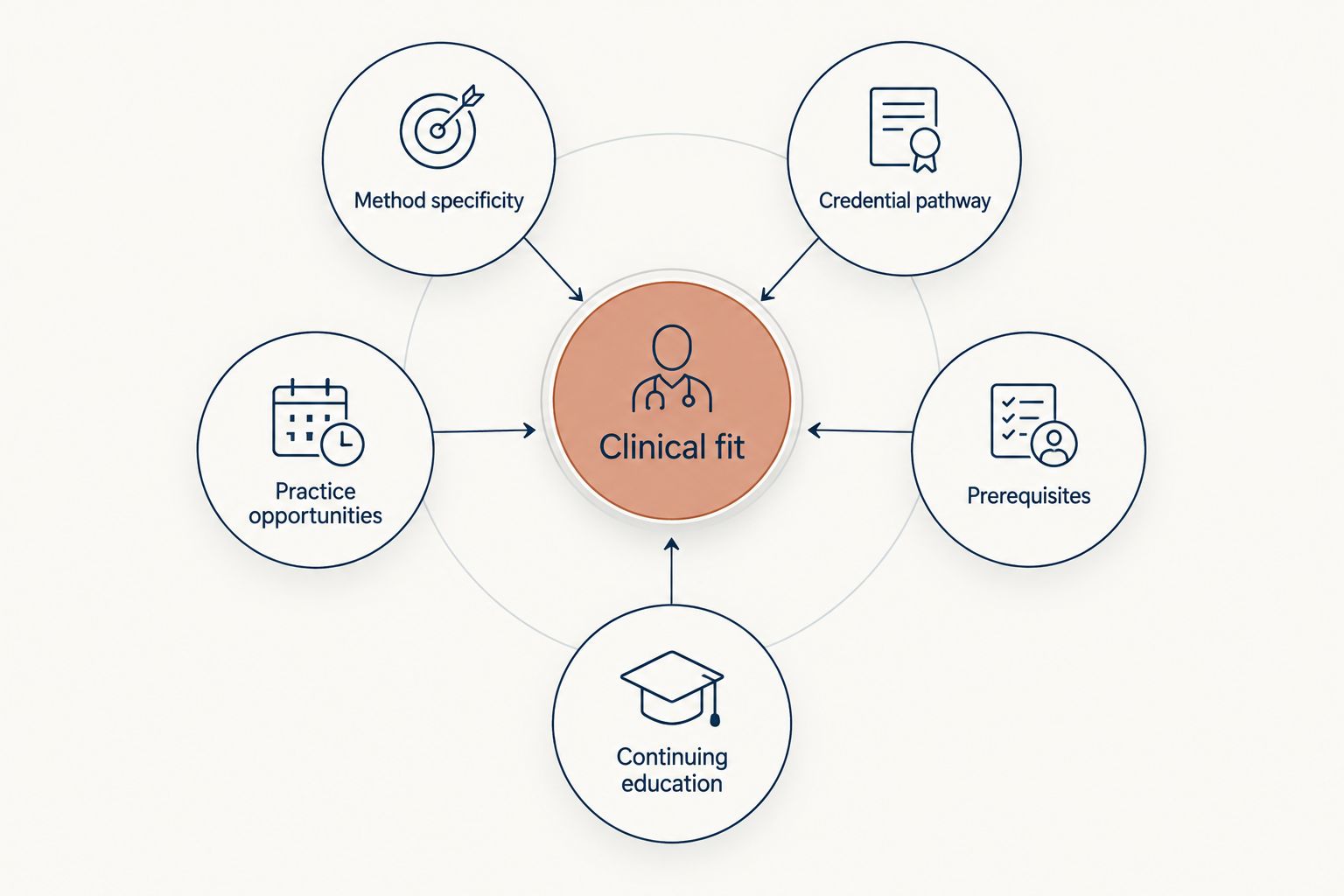
- Compare credential pathways, clinical fit, practice opportunities, prerequisites, and continuing education before enrolling.
Why this matters
Sensorimotor Psychotherapy is a specific therapeutic approach pioneered by Dr. Pat Ogden. Somatic education is a broader category. A course can address the body’s role in trauma without training you in Sensorimotor Psychotherapy itself.
That distinction determines what you should buy and how you should describe your education afterward. If your goal is method-specific professional development, start with the organization dedicated to that method. If you want an introduction before committing to a training pathway, a focused course serves a different purpose.
The Embody Lab is best for practitioners seeking an introduction to Sensorimotor Psychotherapy through Dr. Pat Ogden’s course. Its wider catalog also includes somatic and trauma-informed education, but an adjacent certificate should not be treated as an interchangeable credential.
The ranking below is a decision tree, not a claim that every option delivers the same training. The introduction comes first because it addresses the immediate learning question; the formal pathway is the overall recommendation for practitioners seeking deeper method-specific training.
What makes the best sensorimotor psychotherapy training?
For your 2026 shortlist, evaluate the training against these criteria before comparing course titles:
- Method specificity: Does the course teach Sensorimotor Psychotherapy, or does it teach another somatic approach? Shared terminology does not make two methods equivalent.
- Credential pathway: Distinguish introductory education, course completion, professional training, and practitioner certification. Ask what each designation permits you to claim.
- Clinical fit: Match the intended audience and learning objectives to your professional role, clinical population, and current competence.
- Practice opportunities: Look for opportunities to observe, practice, and receive feedback. Identify what happens within the course and what requires separate study or supervision.
- Prerequisites: Confirm eligibility before enrollment. A course suitable for broad professional education is not automatically a route into advanced psychotherapy training.
- Continuing education: Verify acceptance for your profession and licensing jurisdiction. A certificate of completion and an accepted continuing education record serve different purposes.
Ask for explicit answers. A faculty biography establishes who teaches; it does not establish the amount of guided practice, assessment, or supervision included in a particular course.
Training options at a glance
These options answer different questions. Read the limitation column first if you already know you need a method-specific professional credential.
| Training option | Best for | Standout distinction | Key limitation |
|---|---|---|---|
| Introduction to Sensorimotor Psychotherapy for Trauma | Exploring the method before deeper training | An introduction to the approach pioneered by Dr. Pat Ogden | An introductory course is not a substitute for a professional training pathway |
| Sensorimotor Psychotherapy Institute professional training | Pursuing method-specific professional development | Training through the organization dedicated to Sensorimotor Psychotherapy | Requires a closer review of eligibility and pathway requirements |
| Somatic Stress Release™ Training Level 1: Foundations | Building complementary body-based foundations | The first stage of Somatic Stress Release™ training with Dr. Scott Lyons | Teaches a different approach; it is not Sensorimotor Psychotherapy training |
1. Introduction to Sensorimotor Psychotherapy for Trauma: best for exploration
Best for: Mental health practitioners who want to understand the approach before choosing a formal training pathway.
Introduction to Sensorimotor Psychotherapy for Trauma introduces the method pioneered by Dr. Pat Ogden and the body’s central role in trauma treatment. It belongs on your shortlist when your immediate question is whether this approach warrants deeper study.
The course at The Embody Lab is the most directly relevant introductory option in its catalog for this query. Choose it for orientation, not as a shortcut around professional training requirements.
Introduction to Sensorimotor Psychotherapy for Trauma pros
- Direct topic match: The course explicitly introduces Sensorimotor Psychotherapy rather than presenting a general somatic framework.
- Relevant faculty connection: The course is associated with Dr. Pat Ogden, who pioneered the approach.
- Clear educational purpose: An introduction gives you a defined starting point before investigating further training.
Introduction to Sensorimotor Psychotherapy for Trauma cons
- Introductory scope: It does not replace the depth or requirements of a method-specific professional training pathway.
- Credential distinction: Completing an introductory course should not be represented as practitioner certification.
Before enrolling, compare the published learning objectives with the questions you want answered. For example, distinguish an interest in the conceptual model from a need for coached clinical application. Those are different learning goals.
Also check the course’s continuing education details against your license requirements. The Embody Lab offers CE-accredited professional education, but you still need to confirm the acceptance and documentation relevant to the course you select.
Verdict: Buy for an introduction; skip it as a substitute for professional qualification.
2. Sensorimotor Psychotherapy Institute: best for formal training
Best for: Practitioners pursuing method-specific professional development rather than general somatic education.
Sensorimotor Psychotherapy Institute is the organization dedicated to Sensorimotor Psychotherapy training. It is the first place to investigate when your goal is a formal pathway within the method.
The central advantage is alignment. You are investigating the approach’s own training structure instead of trying to assemble an equivalent qualification from unrelated courses.
Sensorimotor Psychotherapy Institute pros
- Method-specific focus: The training pathway centers Sensorimotor Psychotherapy rather than a neighboring body-based approach.
- Direct pathway inquiry: You can ask the organization responsible for the training about progression and credential requirements.
- Professional relevance: It is the appropriate starting point when your goal is training specifically in this method.
Sensorimotor Psychotherapy Institute cons
- Eligibility matters: A formal pathway is not the same purchase as an introductory course; confirm that you meet its requirements.
- Training and certification differ: Do not assume that enrollment or completion of one training component confers practitioner certification.
For a 2026 decision, obtain the current pathway requirements directly from the Institute. Confirm the intended professional audience, the training sequence, the assessment process, and any separate requirements associated with certification.
Ask specifically about clinical practice and feedback. Knowing what a technique looks like is different from receiving feedback on your own application. Your decision should reflect the kind of learning you need, not merely the terminology in a syllabus.
If you are not yet sure that Sensorimotor Psychotherapy is the right direction, start with introductory education. If you already know you want method-specific professional development, investigate the formal pathway before purchasing a collection of adjacent certificates.
Verdict: Buy for formal, method-specific development once eligibility and pathway requirements match your goals.
3. Somatic Stress Release™ Training Level 1: Foundations: best for complementary study
Best for: Practitioners seeking foundational education in a different body-based approach alongside their trauma-informed learning.
Somatic Stress Release™ Training Level 1: Foundations is the first stage of Somatic Stress Release™ training with Dr. Scott Lyons. Its description centers learning about how stress and trauma are held in the body.
This is a complementary recommendation, not a competing Sensorimotor Psychotherapy credential. Consider it when your goal is broader somatic education rather than qualification in Dr. Pat Ogden’s method.
Somatic Stress Release™ Training Level 1: Foundations pros
- Defined starting stage: The program is explicitly identified as Level 1: Foundations.
- Named educator: The training is associated with Dr. Scott Lyons.
- Relevant subject area: Its focus on stress, trauma, and the body connects with broader trauma-informed professional education.
Somatic Stress Release™ Training Level 1: Foundations cons
- Different method: Somatic Stress Release™ is not Sensorimotor Psychotherapy.
- Different learning objective: Foundational study in this approach does not answer a need for method-specific Sensorimotor Psychotherapy training.
Keep the two educational pathways distinct in your planning and professional biography. You can study more than one approach without presenting one program as evidence of qualification in another.
Do not choose an advanced stage simply because its title sounds more substantial. The supplied descriptions distinguish foundations from intermediate and advanced study; choose the stage that matches your preparation and confirm the entry requirements.
Verdict: Buy for complementary foundations; skip it if your sole goal is Sensorimotor Psychotherapy qualification.
Two courses for different starting points
The Embody Lab offers both the directly relevant introduction and the complementary foundational course below. Choose the introduction to explore Sensorimotor Psychotherapy; choose the foundations course to study Somatic Stress Release™. They are not interchangeable.


How the ranking works
This 2026 ranking prioritizes educational purpose, method specificity, and the distinction between introductory learning and a formal professional pathway. It does not treat all trauma-related certificates as equivalent.
Introduction to Sensorimotor Psychotherapy for Trauma earns the introductory slot because it explicitly names the method. Sensorimotor Psychotherapy Institute earns the formal-training recommendation because it is dedicated to that approach. Somatic Stress Release™ Training Level 1: Foundations occupies a separate, complementary slot.
The ranking does not claim comparative clinical outcomes or equal credential value. Those claims would require different evidence. Use the table to narrow your route, then verify the course-level requirements that govern your enrollment and professional use.
Which sensorimotor psychotherapy training should you choose?
Choose Sensorimotor Psychotherapy Institute if you already know you want formal training in the method. That is the default recommendation for practitioners whose primary goal is method-specific professional development.
Choose Introduction to Sensorimotor Psychotherapy for Trauma if you first need to understand the approach and decide whether to pursue it further. An introduction is a sensible first step when your uncertainty concerns the method itself.
Choose Somatic Stress Release™ Training Level 1: Foundations only when your goal includes broader, complementary somatic education. Do not purchase it expecting a Sensorimotor Psychotherapy credential.
Before committing in 2026, write down the outcome you need in one sentence. Be precise: understanding an approach, developing clinical skills, meeting continuing education requirements, and pursuing certification are separate outcomes. One course should not be assumed to accomplish all of them.
Then compare the program’s stated outcome with yours. If the match requires an explanation that the provider does not make, choose a different route.
FAQ
What’s the best sensorimotor psychotherapy training in 2026?
Sensorimotor Psychotherapy Institute is the first choice for formal, method-specific professional training. Introduction to Sensorimotor Psychotherapy for Trauma is the better starting point when you want an introduction before investigating a deeper pathway.
Is The Embody Lab’s introductory course the same as practitioner certification?
No. Introduction to Sensorimotor Psychotherapy for Trauma is introductory education, not a substitute for a practitioner certification pathway. Confirm formal training and certification requirements directly with Sensorimotor Psychotherapy Institute.
Is Sensorimotor Psychotherapy the same as somatic therapy?
No. Sensorimotor Psychotherapy is a specific approach pioneered by Dr. Pat Ogden, while somatic therapy is a broader category of body-oriented therapeutic approaches. A general somatic course does not automatically provide training in this particular method.
Should I choose Sensorimotor Psychotherapy or Somatic Stress Release™ training?
Choose Sensorimotor Psychotherapy training for method-specific study, and Somatic Stress Release™ training for education in that separate approach. Somatic Stress Release™ Training Level 1: Foundations is a complementary option, not an equivalent qualification.
Can I use a sensorimotor psychotherapy course for continuing education?
Continuing education acceptance depends on the specific course, your profession, and your licensing jurisdiction. Verify the provider’s course-level accreditation details and your board’s requirements before enrolling.
What should I check before enrolling in professional training?
Check eligibility, educational outcomes, practice opportunities, assessment, and credential requirements. Ask which requirements belong to the course itself and which involve separate supervision, further training, or certification steps.
Can a coach take the same training route as a licensed therapist?
Do not assume that the eligibility or professional use is the same. Confirm the program’s intended audience and entry requirements, and keep any application within your existing scope of practice.
One last thing
Write the professional biography before you buy the course. Draft the exact sentence you expect to use after completion, then check whether the program supports it.
Completed an introduction, completed a certificate program, and certified in a therapeutic method communicate different qualifications. If your intended sentence implies more than the course awards, the problem is the training choice—not the wording.
Keep that distinction visible in your 2026 education plan. The right course is the one that advances your stated goal without requiring you to overstate what you learned or earned.